
Livraison le jour même ou le lendemain

Qualité garantie

Débloquez vos offres de bienvenue: Livraison GRATUITE | Jusqu'à -80 % | 30 jours d'essai gratuits à JoyPlus
Téléchargez l'application
A sim racing cockpit is a significant investment for any die-hard racing enthusiast. A force-feedback wheel, precision pedal set, bucket seat... every component is meticulously chosen to recreate the on-track experience. However, one crucial detail is too often overlooked: screen positioning. A poorly placed, unstable, or distant monitor is all it takes to break the immersion and sabotage your performance.
A dedicated sim racing monitor stand is the cornerstone that perfects your setup. It guarantees rock-solid stability, even during the most intense sessions, and ensures optimal screen placement for a realistic field of view. This guide breaks down the essential criteria and presents our selection of the best models for 2026 to help you make the right choice.
Before you make a purchase, there are a few technical points to check to ensure the compatibility and durability of your setup.
The primary mission of a cockpit TV stand is to eliminate any screen vibration or wobble. A stand-alone mount, independent from the chassis, is often the best solution as it completely isolates the screen from the jolts generated by the wheel's force feedback. Look at the stand's base design: a wide, heavy steel base will offer flawless stability. Also, ensure its design allows it to slide as close as possible to your cockpit, right behind your wheel base, to put you at the heart of the action.
The VESA standard defines the distance in millimetres between the four mounting holes on the back of your screen (e.g., 100x100 mm or 400x400 mm). It is imperative that your chosen stand is compatible with your monitor's or TV's VESA standard. Also, remember to check the maximum supported weight and the recommended screen size (e.g., from 32 to 75 inches). Exceeding these limits would jeopardise the safety of your precious hardware. A good gaming monitor stand must combine flexibility with robustness.
Your setup might be limited to a single screen today, but who knows if you'll want to upgrade to a panoramic setup tomorrow? Some stands are designed to be upgradable. They allow you to add side arms to transform a single-screen installation into a triple monitor sim racing stand. Planning for this need by choosing an upgradable model from the start can save you a significant amount of money and prevent you from having to replace everything when you decide to expand your horizon.
Here are a few models that cater to different needs, whether you're looking for a purist racing solution or a more versatile stand.
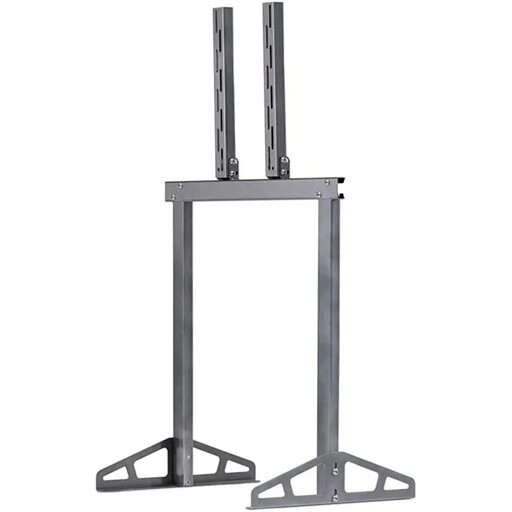
Why it stands out: This model comes from a leading name in sim racing. Its robust metal structure and sleek design are engineered to integrate perfectly with most cockpits on the market, especially those from the Playseat brand. Its key strength is its upgradability. It can be transformed into a three, five, or even seven-screen setup using separately sold expansion kits.
Advantages:
Who is it for? The virtual driver looking for a future-proof, stable, and upgradable solution designed by experts. It's the sensible choice for anyone seriously considering a triple-screen setup one day.
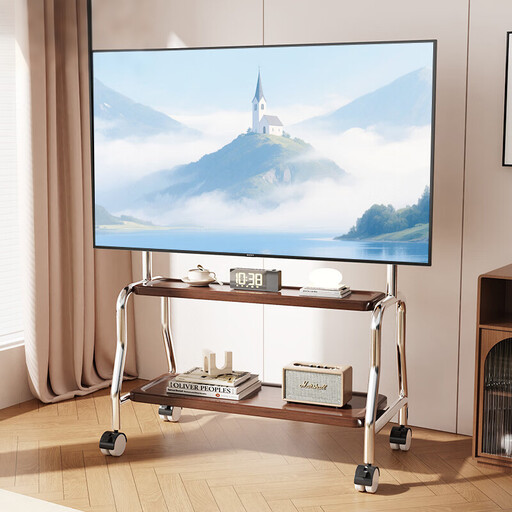
Why it stands out: This sim racing TV stand focuses on versatility and mobility. Mounted on casters (with brakes), it moves effortlessly, which is a real bonus for shared living spaces. Its compatibility with giant screens up to 75 inches makes it a prime option for those using a large TV for their simulation. Its stainless steel finish gives it a modern touch.
Advantages:
Who is it for? The sim racer whose cockpit has to share space with the living room. Perfect for those who own a very large TV and want to be able to rearrange their space in a flash.
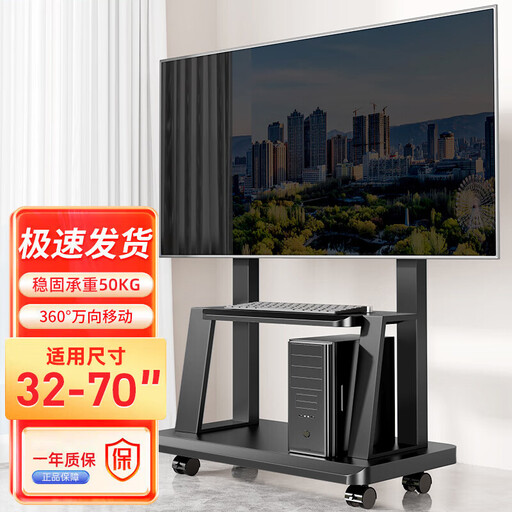
Why it stands out: This model shares the mobility of its "artistic" cousin but with a more raw, functional approach. Its "commercial" arm gets straight to the point: robustness and simplicity. It provides a stable and mobile platform for screens up to 70 inches, making it a pragmatic choice for a dedicated gaming room where function takes priority over form.
Advantages:
Who is it for? The pragmatic sim racer looking for a mobile, solid, and reliable stand for a large screen, without worrying about aesthetic details. Ideal for a "gaming room" where performance and flexibility are the only priorities.
If the models in our selection don't check all your boxes, or if you simply want to explore other styles and budgets, know that a huge variety of options are available. Every setup is unique, and the perfect stand is ultimately the one that fits your space, your gear, and your budget.
Take a look at our complete collection of raised television stands to find the model that's right for you.
For maximum immersion, the screen should be placed as close as possible to the wheel base, without obstructing your hand movements. The perfect height is when the centre of the screen is at eye level while you are in your driving position. This is the whole point of a good stand, which offers precisely this flexibility for height and depth adjustment.
In theory, yes, but in practice, it's rarely a good idea. Traditional TV units are seldom designed to allow the screen to be positioned right behind the wheel. Furthermore, their stability is often strained by the vibrations from a force-feedback wheel. A dedicated, stand-alone mount remains by far the most stable and immersive configuration.
VESA compatibility is a nearly universal standard today. To be sure, take a look at the back of your monitor or television. You should see four screw holes forming a square or a rectangle. Measure the horizontal and vertical distance (in millimetres) between these holes to find your VESA standard (e.g., 200 x 200 mm). This information is also listed in your screen's user manual.