
Livraison le jour même ou le lendemain

Qualité garantie

Débloquez vos offres de bienvenue: Livraison GRATUITE | Jusqu'à -80 % | 30 jours d'essai gratuits à JoyPlus
Téléchargez l'application
Ditching your controller or desk-mounted wheel for a true sim racing cockpit is a giant leap forward in your gaming experience. Say goodbye to instability in tight corners, uncomfortable posture, and a lack of immersion. A good racing simulation seat is the centerpiece that anchors your setup, letting you focus on one thing: your lap times.
But with an overwhelming number of options, it's hard to know where to start. This guide is here to break down the key criteria and help you choose the perfect cockpit for your needs, your gear, and your living space. Whether you're a weekend warrior or a hardcore competitor, let's dive in!
Choosing a cockpit goes far beyond aesthetics. Stability, compatibility, and footprint are the three pillars of a successful investment.
The number one quality of a cockpit? Rock-solid stability. A simple wheel and pedal stand might be enough to get started, but it will quickly show its limits with more powerful gear. The chassis's rigidity is crucial: it prevents any flex or twisting during heavy braking and aggressive counter-steering. This factor becomes non-negotiable if you own or are considering a Direct Drive wheel (Direct Drive cockpit), whose high torque would put any flimsy structure to the test. A rigid chassis ensures that every detail of the force feedback is transmitted faithfully, for an infinitely more precise driving feel.
To lap for hours without fatigue, comfort is king. A good cockpit must offer a wealth of adjustments: seat recline, wheel deck height and depth, and pedal angle and distance. This modularity is key to finding your ideal driving position (GT, Rally, or F1) and tailoring it perfectly to your body type.
Also, remember to check compatibility with your existing equipment. Most cockpits are designed to be universal, with pre-drilled plates to accommodate wheels and pedals from leading brands like Logitech, Thrustmaster, and Fanatec. Make sure the model you choose is PS5/Xbox/PC compatible, depending on your platform of choice.
Lack of space is often the biggest hurdle. A fixed gaming bucket seat is certainly very immersive, but it requires a dedicated room or a permanently cordoned-off corner. If you're short on space, a foldable cockpit is an incredibly effective solution. These models allow you to store the entire setup (seat, wheel, and pedals still mounted) in minutes, freeing up the room once your gaming session is over. It's the ideal compromise between immersion and practicality.
To help you make your decision, our editors have selected three models that cater to different profiles and budgets.
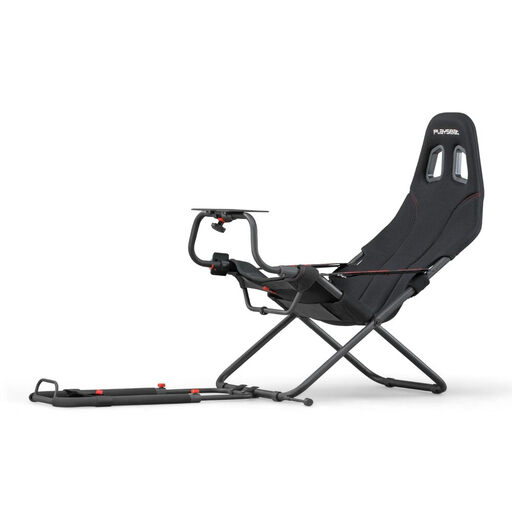
Why we love it: The Playseat Challenge is THE benchmark for gamers who are short on space. Its patented folding system is its main selling point: it folds up in seconds without you having to remove the wheel or pedals. It then becomes an ultra-compact unit, easy to slide into a closet or under a bed.
Pros:
Who is it for? This is the ideal entry point into the world of sim racing. We highly recommend it for beginner or casual drivers looking for an immersive and stable solution that is, above all, easy to store.
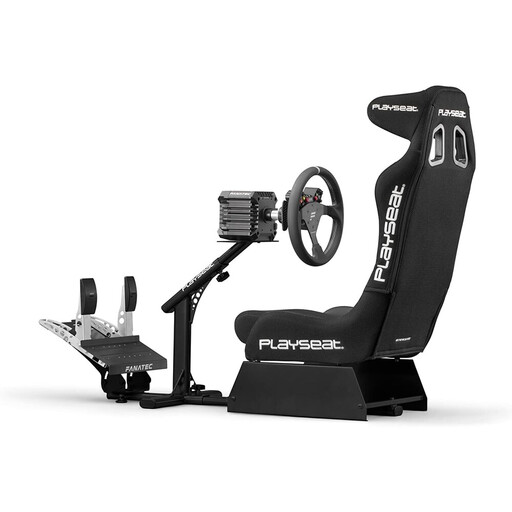
Why we love it: The Playseat Evolution Pro takes the experience up a notch, getting closer to the feel of a real bucket seat. Its robust metal frame and padded seat with an integrated headrest provide excellent support and an authentic GTR driving position. The brand notes that it was developed in collaboration with professional drivers.
Pros:
Who is it for? It's aimed at enthusiasts who want to step up their game. It's a very smart compromise between the rigidity of a fixed chassis and the practicality of a foldable model, all with the comfort of a real gaming bucket seat.
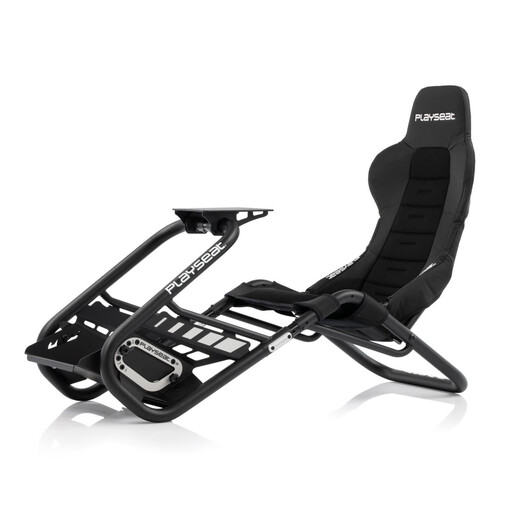
Why we love it: The Playseat Trophy is aimed at the most demanding sim racers. Its frameless structure, a patented innovation, conforms to the driver's body for optimal ergonomic support without any pressure points. Its carbon steel and aluminium chassis offers unflinching rigidity, making it perfectly suited for powerful Direct Drive wheels.
Pros:
Who is it for? This cockpit is built for seasoned drivers and esports competitors who use or plan to upgrade to a Direct Drive wheel. It's the performance choice—a concentration of technology, rigidity, and comfort for a top-tier simulation experience.
This selection is just a glimpse of the solutions available to you. To explore a wider range of models, with other brands, styles, and budgets, feel free to browse our full category.
Discover all our racing simulation cockpits.
1. Is a sim racing cockpit compatible with all wheels and pedals? Virtually all cockpits on the market, including those from Playseat, are designed with universal mounting plates. These feature pre-drilled holes that match the mounting patterns of major manufacturers like Logitech, Thrustmaster, and Fanatec. As a precaution, it's always wise to check the product's spec sheet to confirm compatibility with your specific gear.
2. What's the difference between a foldable cockpit and a fixed chassis? A foldable cockpit is designed to be easily stored after each use, making it the ideal solution for small spaces or shared living areas. Conversely, a fixed chassis, which is often heavier and more rigid, offers absolute stability—essential for powerful Direct Drive force feedback wheels. The choice therefore depends on the balance you're looking for between everyday convenience and raw performance.
3. Do I really need a bucket seat for sim racing? While it's entirely possible to start with a wheel clamped to a desk, a dedicated racing simulation seat offers three key advantages: stability, ergonomics, and immersion. It eliminates unwanted movement from the wheel and pedals, allows you to adopt a healthy and comfortable driving position for long sessions, and most importantly, it amplifies the sensations by putting you in the heart of a real race car. It makes the experience all the more intense and rewarding.