
Livraison le jour même ou le lendemain

Qualité garantie

Débloquez vos offres de bienvenue: Livraison GRATUITE | Jusqu'à -80 % | 30 jours d'essai gratuits à JoyPlus
Téléchargez l'application
Silicone kitchen utensils have taken over our drawers, and for good reason: they're flexible, colourful, and most importantly, they're the best friends of our non-stick pots and pans. But be warned—this popularity hides pitfalls that can quickly turn a great buy into a disappointment. Spatulas that melt, handles that detach, a persistent plastic smell during cooking... Fortunately, these issues aren't inevitable.
As a product expert at Joybuy, I'm here to help you see things more clearly. Let's cut through the marketing jargon and focus on what's essential: the criteria that truly make for a smart, long-lasting purchase.
The market is saturated with tempting offers, but quality is far from guaranteed. Here are the three most common mistakes to avoid.
To avoid these disappointments, you just need to check three simple but fundamental key points.
This is the non-negotiable criterion. Your utensil must be certified as food-grade. This certification guarantees a stable, non-toxic, BPA-free material that won't transfer any substances or flavours to your food, even at high temperatures. It's the absolute basics for safe and healthy silicone kitchen accessories.
A good silicone utensil should be safe to use for cooking. Always check the maximum supported temperature, which should be clearly stated on the packaging or product page.
For maximum hygiene and durability, opt for utensils with a one-piece design (made from a single mould). With no joints, neither water nor bacteria can get trapped. If you fall for a two-piece model (with a wooden or metal handle, for example), check that the joint is perfectly sealed and sturdy. The handle's ergonomics are also crucial for a good grip. Finally, the flexibility of the head is what makes these non-scratch utensils the perfect partners for preserving your non-stick coatings.
Every kitchen is unique. Here are a few products we recommend, selected for their quality and suitability for different types of users.
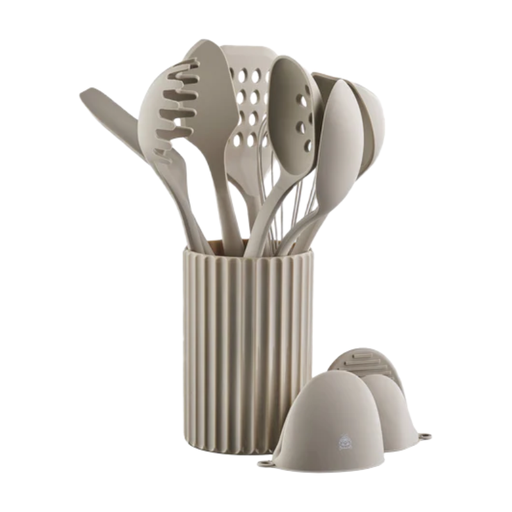
The ideal user: Perfect for those moving into a new home or looking to upgrade all their equipment at once. This kitchen utensil set covers all the basic needs, from prep to serving, with the added charm of its natural wood handles.
The heads are made of food-grade silicone, which is heat-resistant and safe for all cookware coatings. The design is intended for daily use, avoiding the common flaws of budget-friendly sets.
A comprehensive 11-piece set (spatulas, spoons, ladle, whisk...). The design, which combines wood and silicone, is as functional as it is beautiful.
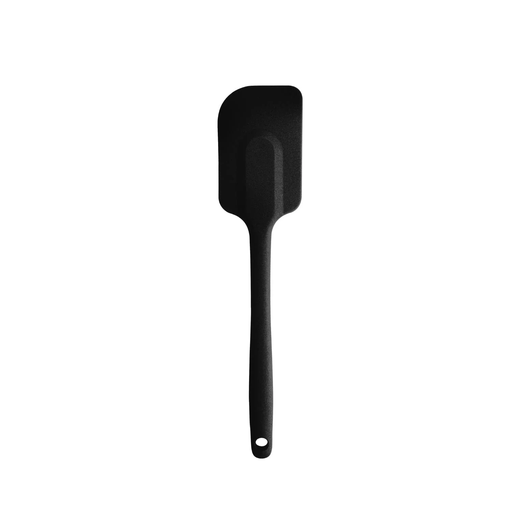
The ideal user: For passionate home cooks who use their kitchen daily and demand reliable, high-performance tools. This silicone spatula is a timeless classic—a high-quality essential built to last and withstand intensive use.
Its one-piece design eliminates any risk of water infiltration or breakage. Its heat resistance of up to 300 °C, well above average, protects it from any warping or melting.
Exceptional heat resistance (300 °C / 572°F). Hygienic and ultra-durable one-piece design. Flexible head, perfect for scraping every last bit of batter.
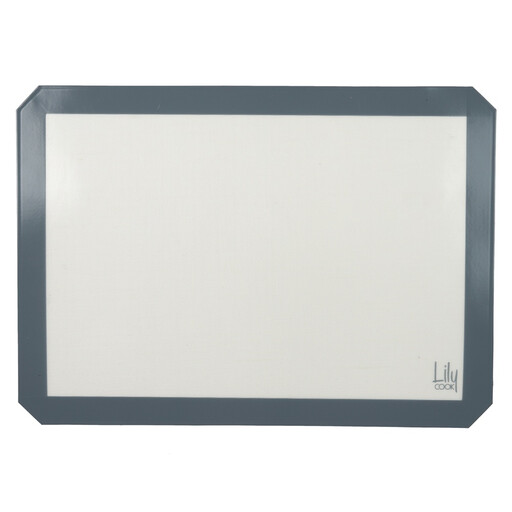
The ideal user: A must-have for baking and bread-making aficionados looking for a sustainable alternative to parchment paper. This silicone baking mat simplifies oil-free baking and serves as an ideal work surface for dough.
Made from high-quality silicone, it provides a reliable and healthy non-stick surface, freeing you from concerns about certain coatings and the waste of disposable baking paper.
Infinitely reusable and easy to wash, it's as economical as it is eco-friendly. Its large surface area (42 x 30 cm) is very practical for rolling out dough or baking multiple batches.
Discover our complete selection of silicone utensils and accessories, all rigorously chosen for their quality and durability.
It all depends on the quality of the silicone and how often you use it. A high-end, well-maintained utensil will last for many years. Signs of wear to look out for include the appearance of cracks, a change in texture (if it becomes sticky), or significant discolouration.
Yes, but only if you choose silicone that is certified "food-grade". This material is considered inert, meaning it doesn't react with food or release harmful substances under normal use (respecting the maximum indicated temperature). Steer clear of any products without a clear statement of their composition.
Most silicone utensils are dishwasher-safe. For hand washing, warm, soapy water is sufficient. Never use an abrasive sponge, which could damage the surface. If your utensils have wooden handles, it's best to hand wash them to preserve the wood. In any case, let them air dry completely before storing them.