
Livraison le jour même ou le lendemain

Qualité garantie

Débloquez vos offres de bienvenue: Livraison GRATUITE | Jusqu'à -80 % | 30 jours d'essai gratuits à JoyPlus
Téléchargez l'application
Silicone kitchen utensils have become indispensable tools for protecting your non-stick pots and pans. Flexible, heat-resistant, and easy to clean, they seem to have it all. However, not all models are created equal. A poor choice can quickly lead to disappointment: a spatula that melts, a handle that detaches, or materials with questionable food safety.
As a product expert at Joybuy, my role is to help you see things more clearly. Let's skip the marketing jargon and focus on what's essential. Here are the three most common pitfalls to avoid when buying a set of silicone kitchen utensils, and the objective criteria for making the right choice.
The 3 Pitfalls to Avoid Before Buying?:
To avoid falling into the trap, you just need to check three key points before you buy. These guidelines will help you choose a set of silicone kitchen utensils that is truly reliable and durable.
The primary safety guarantee is to choose BPA-free utensils. Opt for "food-grade" silicone. A good, though not foolproof, indicator is the "pinch test": pinch and twist the silicone part firmly. If it turns white, it likely contains fillers. Pure silicone will retain its colour. Finally, compliance with European standards (CE) is an essential seal of approval.
A reputable manufacturer will always state the maximum supported temperature. For versatile use (cooking, frying, serving), aim for a resistance of at least 200?°C. For silicone baking utensils or spatulas used for sugar work, a higher resistance (up to 230?°C or more) is a real bonus. This ensures your silicone kitchen accessories won't warp at the first sign of high heat.
The most hygienic and durable design is undoubtedly the one-piece format. A silicone spatula or ladle made from a single piece, with no joint between the head and the handle, eliminates any risk of infiltration and bacterial growth. It's also a mark of sturdiness, as there are no weak points where the utensil could break.
Because every kitchen is unique, here is a selection of products suited for different uses, all of which meet the quality criteria we've just discussed.
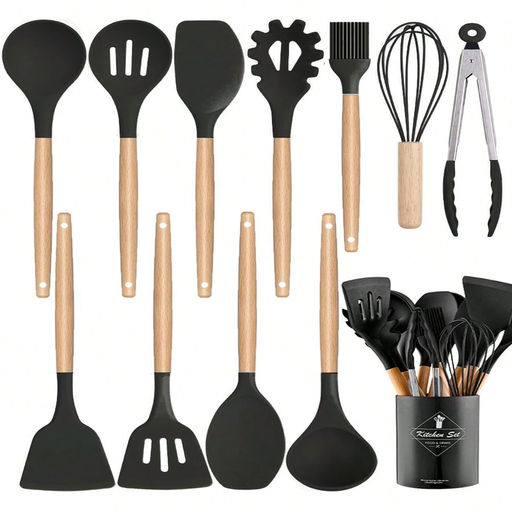
Why we love it : This kit is perfect for getting equipped without breaking the bank. It covers all the daily essentials, from a spatula and whisk to a ladle and tongs. The included holder is a real plus for keeping your countertop organised.
This complete and cohesive set saves you from buying mismatched pieces of varying quality. The food-grade silicone eliminates the risks associated with low-end materials.
Its 12 pieces ensure great versatility, and its very practical storage holder.
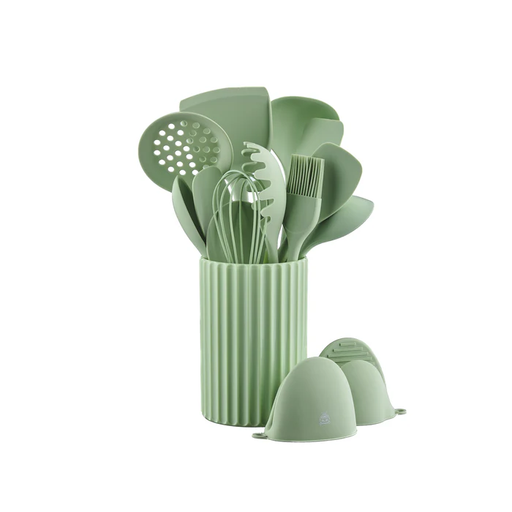
Why we love it : For those who spend a lot of time in the kitchen, sturdiness and versatility are non-negotiable. This 15-piece set is very comprehensive, with tools designed for heavy use. Ideal for effortlessly moving from preparing a sauce to a simmering stew.
Its design, combining quality silicone heads with sturdy handles (some in stainless steel), ensures excellent longevity, even with heavy use. No risk of warping or premature breakage.
An ultra-complete 15-piece set, dishwasher-safe for easy maintenance and suitable for heavy use.
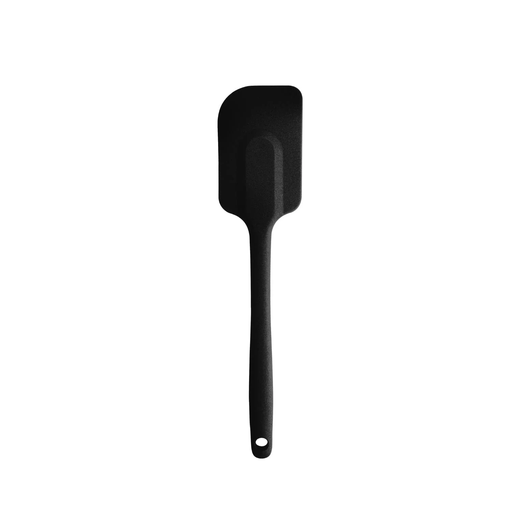
Why we love it : Sometimes, one excellent tool is better than a mediocre set. This spatula is the go-to utensil for bakers and anyone who makes no compromises on performance. It allows you to scrape bowls clean, leaving nothing behind, and work with very high-temperature preparations.
Its one-piece design eliminates any risk of breakage and all hygiene issues. Its record-breaking heat resistance (up to 300 °C!) is a guarantee of exceptional safety and durability.
An ultra-hygienic one-piece design and heavy-duty resistance, ideal for the most demanding tasks.
Discover our full selection of utensils that meet all our quality criteria and current safety standards.
The longevity of a silicone utensil kit depends on the quality of the material and the frequency of use. A well-made, well-maintained set can last for several years without any issues. It's time to replace them if you notice cracks, cuts, a sticky texture, or significant discolouration.
Most 100% silicone utensils are dishwasher-safe. However, it's always safer to check the manufacturer's recommendations. For models with wooden handles, like some sets from the BJ?RN brand, hand-washing is essential to avoid damaging the wood. One-piece utensils are best at withstanding repeated machine washing.
In addition to the "pinch test" mentioned earlier, trust your sense of smell. Food-grade silicone is virtually odourless, even when new. A strong plastic or chemical smell is a very bad sign. Also, rely on the manufacturer's information: the BPA-free mention and the maximum heat resistance temperature are true indicators of quality and transparency.