
Livraison le jour même ou le lendemain

Qualité garantie

Débloquez vos offres de bienvenue: Livraison GRATUITE | Jusqu'à -80 % | 30 jours d'essai gratuits à JoyPlus
Téléchargez l'application
The intense heat is back, and with it, the eternal quest for coolness. But how do you find an effective fan without turning your bedroom or office into an airport runway? Between concentrating while working from home and getting a restful night's sleep, the slightest background noise can quickly become a nightmare.
This guide is here to help you make the right choice. Our editorial team has scrutinised dozens of spec sheets to unearth the hidden gems that meet one non-negotiable criterion: silence, without sacrificing performance. Follow along as we explore the key features and our selection of the best models, tested for their quiet operation and effectiveness.
Before diving into our selection, let's review the few technical specifications that make all the difference.
For a bedroom fan, silence isn't an option: it's the number one criterion. Expressed in decibels (dB), the noise level is the first thing to check.
To achieve such levels of quiet, the best models incorporate a DC motor, known for being quieter, more durable, and more energy-efficient.
The device's form factor determines how air is distributed throughout the room.
Airflow, measured in cubic metres per hour (m?/h), quantifies the volume of air moved. The higher it is, the faster and more effective the cooling sensation will be.
The best fans do more than just blow air. A smart fan can be controlled from a mobile app or by voice (via Alexa or Google Assistant), which is convenient for making adjustments without leaving your couch. The classic remote control of course remains a staple for comfort.
Other options perfect the experience: specific modes (night, natural breeze, turbo), a timer to schedule shut-off, or even an air purifier fan function. These little extras make a real difference for tailored comfort and healthier air.
After analysing the market, here are three models that stand out for their quiet operation and smart features. Each was chosen to meet a specific need.
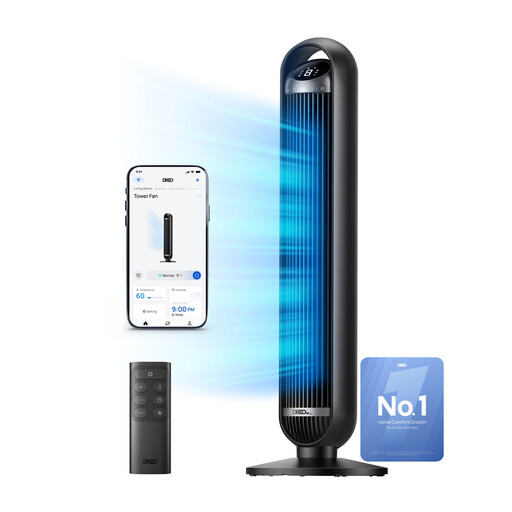
Why it stands out: This tower fan combines a sleek design with stunning acoustic performance. With a minimum noise level of just 25 dB, it ranks among the quietest on the market. Its comprehensive connectivity (Dreo app, Alexa, Google Assistant) makes it an exemplary smart fan, perfect for a modern home.
Advantages:
Who is it for?: For those looking for a discreet and effective solution for a bedroom or office, especially in an apartment. Its compact design and smart features make it an excellent choice for tech enthusiasts.
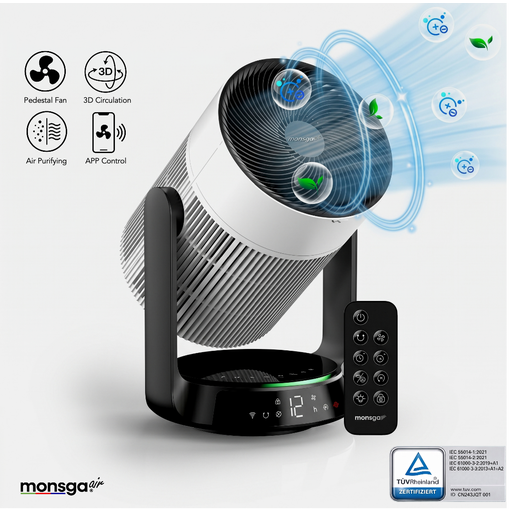
Why it stands out: This 2-in-1 model is much more than a simple fan. It's both a powerful air circulator and a true air purifier fan. While it cools, its integrated filter captures allergens, dust, and fine particles (PM2.5), with an effective CADR (Clean Air Delivery Rate) of 280 m?/h. Its key feature: omnidirectional 360° oscillation that circulates air into every corner of the room.
Advantages:
Who is it for?: A must-have for families, allergy sufferers, or anyone concerned about their indoor air quality, especially in the city. It's a smart investment for comfort and well-being 365 days a year.
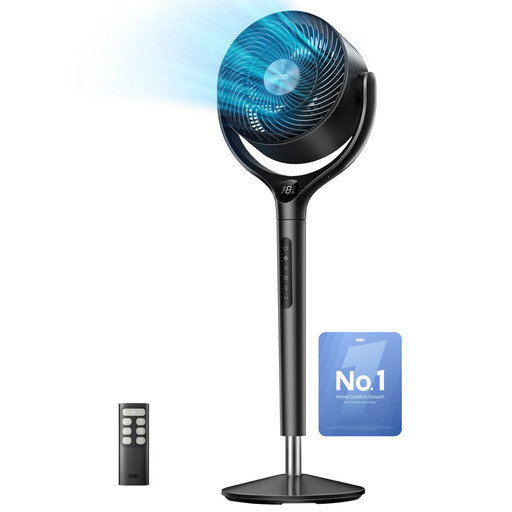
Why it stands out: Here, power takes centre stage. This pedestal fan is a true performance powerhouse, capable of projecting an airflow up to 30 metres. The most impressive part? Despite this sheer power, its noise level drops to a record-low 20 dB, an exceptional figure for an air circulator. Its adjustable height and wide oscillation make it extremely versatile.
Advantages:
Who is it for?: The obvious choice for cooling large spaces (living room, loft, open-plan office) without compromising on silence. Its efficiency in circulating air also makes it the perfect companion to an air conditioner.
If design, child safety, and ease of cleaning are your top priorities, another technology deserves your attention. Bladeless fans combine a futuristic aesthetic, enhanced safety, and a very pleasant, continuous airflow.
? Discover our selection of bladeless fans
1. What is the decibel level of a truly silent fan? For nighttime use, a fan is considered silent if it operates below 30 dB at its lowest speed. The best models go down to as low as 20-25 dB, which is equivalent to a calm breath or the gentle rustling of leaves.
2. Tower fan or pedestal fan: which is more effective? Neither is definitively better; it all depends on your needs. The tower fan is ideal for small spaces, distributing a gentle breeze over a wide vertical area. The pedestal fan (or air circulator), often more powerful, projects a concentrated stream of air, better suited for quickly cooling a large room or from a distance.
3. Is an air purifier fan really useful? Yes, and it's a significant advantage if you live in a city, are prone to allergies (pollen, dust mites), or have pets. A standard fan only circulates the ambient air, along with its dust and pollutants. An air purifier fan, on the other hand, actively filters these particles. The result: you breathe healthier air while enjoying the cool breeze. A dual benefit for your comfort and your health.