
Livraison le jour même ou le lendemain

Qualité garantie

Débloquez vos offres de bienvenue: Livraison GRATUITE | Jusqu'à -80 % | 30 jours d'essai gratuits à JoyPlus
Téléchargez l'application
Summer nights can quickly become a nightmare: the heat sets in, the air grows heavy, and sleep is hard to come by. A fan is often the go-to solution, but its constant humming can quickly turn that solution into a new problem. For remote workers or light sleepers, noise is the number one enemy of comfort.
As a product expert for Joybuy, my mission is to help you make an informed decision. This guide is designed to give you simple criteria and concrete recommendations for choosing a silent fan that is also powerful and energy-efficient—all without overwhelming technical jargon.
The ideal combination? An effective breeze in near-total silence. To make the right choice, here are the three essential criteria to consider.
For a bedroom fan, silence isn't an option—it's a must. Noise is measured in decibels (dB). To give you some reference points:
Our advice: for absolute comfort, aim for a model with a noise level that doesn't exceed 35 dB on its lowest speed setting.
The secret to a quiet and efficient fan lies in its motor.
Beyond silence, certain features dramatically improve user comfort:
After reviewing technical specifications and user reviews, here are three models that excel in silence, performance, and user comfort.
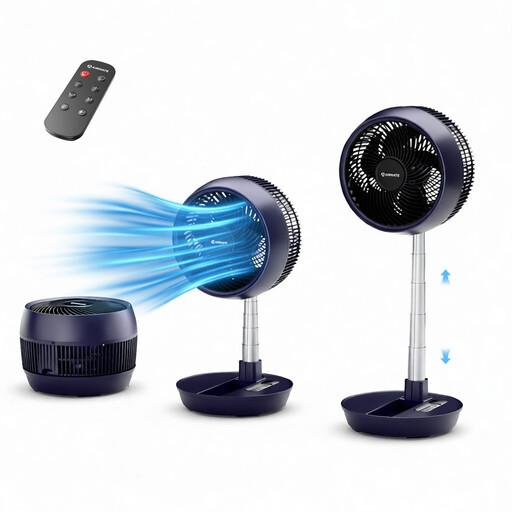
Why we love it: This model is a powerhouse of versatility and discretion. Its foldable design and adjustable height make it incredibly easy to store and move, while its DC motor ensures it runs exceptionally quietly.
Pros:
Who is it for? Perfect for apartments and studios, or for anyone looking for a portable, easy-to-store fan that can move effortlessly from the bedroom to the office.
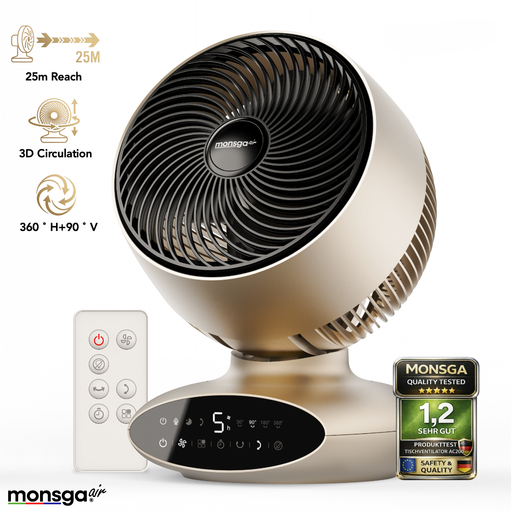
Why we love it: This is a true air circulator built for large spaces. Its dual oscillation, including a 360° option, moves air throughout the entire room to eliminate stagnant hot spots.
Pros:
Who is it for? Ideal for cooling large living rooms or spacious bedrooms. Its powerful airflow is also perfect for evening out the room's temperature when used with an air conditioner or heater.
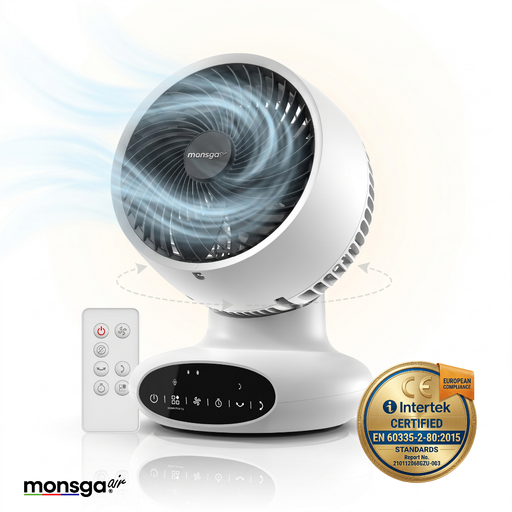
Why we love it: This is the champion of silence, designed for those who can't tolerate any noise. At just 25 dB on its lowest setting, it's virtually inaudible—the perfect ally for sleep and concentration.
Pros:
Who is it for? The obvious choice for very light sleepers, baby rooms, or home offices where quiet is essential.
Our selection highlights the champions of silence and performance. If you have different needs or simply want to explore more options, many other solutions are available.
From pedestal fans to tower models, feel free to browse our complete catalog to discover more.
Discover Our Full Range of Fans
A standard fan simply creates a direct stream of air for a very localized cooling sensation. An air circulator is much smarter: it generates a powerful, concentrated vortex of air that bounces off walls and ceilings to move all the air in the room. The effect is a more comprehensive cooling and a more even temperature. In fact, all the models in our selection are air circulators.
In a bedroom, a fan is considered quiet if it operates below 40 dB on its lowest setting. For the most sensitive ears, we recommend choosing a model that goes below 30 dB. At this level, the noise is barely perceptible.
It all depends on the motor! An older generation fan (AC motor) can easily consume between 50 and 100 watts. In contrast, a modern low-energy fan (DC motor) only uses 2 to 30 watts. Over the course of a season, the savings on your electricity bill are far from negligible.