
Livraison le jour même ou le lendemain

Qualité garantie

Débloquez vos offres de bienvenue: Livraison GRATUITE | Jusqu'à -80 % | 30 jours d'essai gratuits à JoyPlus
Téléchargez l'application
The ideal sideboard is a statement piece that combines practical storage with decorative flair. But between flattering photos and marketing descriptions, buying one can often turn into a headache. The risk? Ending up with a piece of furniture that, once delivered, simply doesn't live up to expectations. As a Product Recommendation Manager at Joybuy, my mission is to give you the keys to decode the offers and make a choice that's truly right for your home and your needs.
Before you pull out your credit card, watch out for these common mistakes that too often turn a joyful purchase into a frustrating ordeal.
To avoid these traps, there's nothing better than focusing on a few technical criteria that don't lie.
The choice of material is the crucial factor: it's what guarantees the longevity of your furniture. Here's a quick overview to help you see more clearly:
Don't just look at the external dimensions (L x W x H). The true functionality of a sideboard is measured from the inside.
Because every home is different, here is our selection of sideboards for three distinct user profiles.
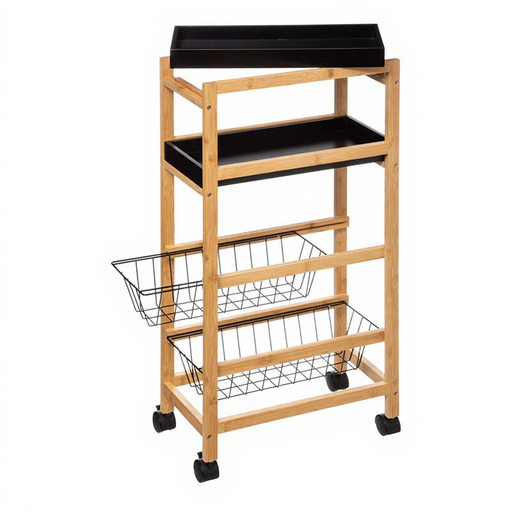
Why we love it: Perfect for small apartments, narrow entryways, or as an accent cabinet in a bathroom. It's the epitome of a smart, compact storage solution with a vertical design.
Its very shallow depth (22 cm) is clearly stated for a specific purpose, so there's no room for error. Its FSC-certified bamboo is moisture-resistant, making it perfect for bathrooms.
Its removable baskets are ultra-practical for access and cleaning. A lightweight design engineered for maximum space-saving.
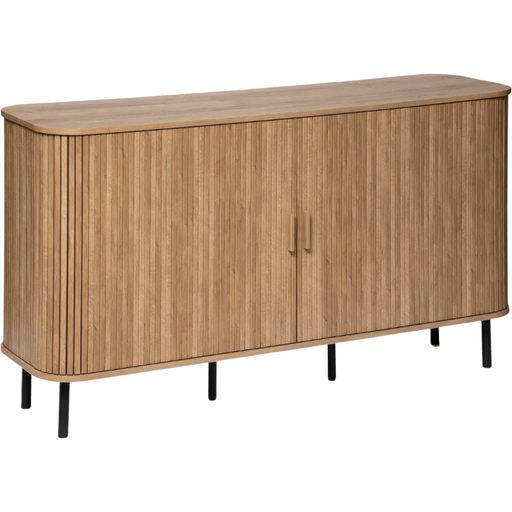
Why we love it: For anyone who wants a statement piece for their living or dining room that is both warm and modern. This Scandinavian-inspired sideboard makes no compromises between style and a very large storage capacity.
It doesn't sacrifice practicality on the altar of design. Behind its graphically textured doors lie 6 generous compartments. The combination of MDF and sturdy steel legs ensures excellent stability.
Its very large storage capacity (140 cm long) and its bold Scandinavian style, with textured doors and an oak-effect veneer.
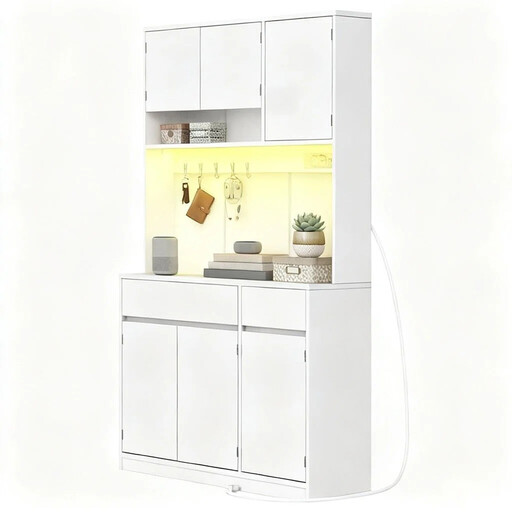
Why we love it: Much more than a simple kitchen sideboard, this is a true multifunctional station. Ideal for those who want to plug in their coffee machine, toaster, and charge their smartphone without a mess of power strips.
It shatters the "design over function" pitfall by integrating genuinely useful everyday features. The power outlets and LED lighting aren't just gimmicks; they are real solutions that make life easier.
Its built-in power strip (2 AC outlets, 2 USB ports) and its LED lighting with customisable modes.
We've compiled a comprehensive list of sideboards that meet our demanding selection criteria and current safety standards.
To store your dishes comfortably, aim for an internal depth of at least 35 cm. Since large dinner plates are typically between 27 and 30 cm in diameter, a total furniture depth of 40 cm is a standard that will save you from any nasty surprises.
There are three points to check. First, the weight and materials: heavy furniture is often a sign of stability. Second, the leg design: a wide base or well-distributed legs are preferable. Finally, a crucial point, especially if you have young children: most sideboards come with an anti-tip hardware kit. Don't skip this step, and always anchor the furniture to the wall.
The difficulty varies greatly. A good indicator? The clarity of the instructions and the labelling (numbering) of the parts. Models from well-known brands are often better designed in this regard. In any case, plan to have two people to handle the large panels and follow the instructions to the letter. This is the best way to ensure a stable and long-lasting piece of furniture.