
Livraison le jour même ou le lendemain

Qualité garantie

Débloquez vos offres de bienvenue: Livraison GRATUITE | Jusqu'à -80 % | 30 jours d'essai gratuits à JoyPlus
Téléchargez l'application
The sideboard is a storage unit that's as practical as it is versatile. But choosing one can quickly become a headache. Between flattering online store photos and slick marketing, it's easy to end up with a piece that's a poor fit for your space or needs. To prevent a promising purchase from turning into buyer's remorse, here’s how to avoid the most common pitfalls.
Often, the problem isn't the furniture itself, but the details we tend to overlook. Let's review the crucial points to help you make the right choice.
To ensure you get it right, focus on a few technical specifications that make all the difference.
The first step—obvious but essential—is to measure your space. But beyond length and height, depth is the most critical criterion.
The material doesn't just define your furniture's style; it's also the guarantee of its longevity.
A good sideboard is much more than just a storage box.
Here are a few models that meet specific needs, selected based on our criteria for functionality and durability.
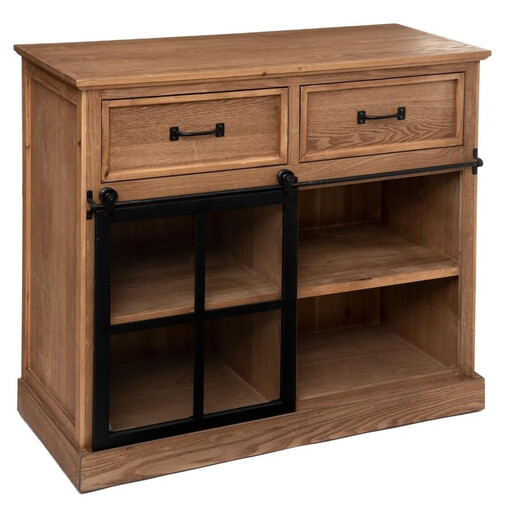
Why this profile? Perfect for small apartments or as a functional entryway piece, without sacrificing traffic flow.
With its slim 30 cm depth, it perfectly meets the need for a narrow cabinet and sidesteps the trap of bulky dimensions.
It combines a glass door to display a few decorative items and two drawers for discreet storage, optimizing its dual function.
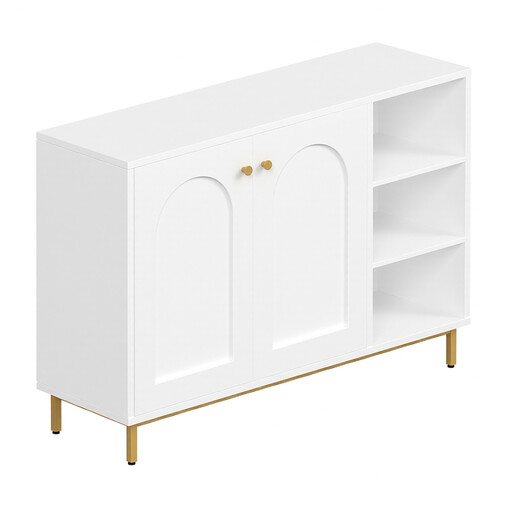
Why this profile? For those who see their furniture as true decor pieces and are looking for a model that elevates their interior's style.
Its original design, with curved doors and a two-tone white and gold finish, sets it apart from classic sideboards. It's a statement piece, not just a utility cabinet.
The interior shelves are adjustable to three levels, allowing it to escape the trap of fixed, inflexible storage.
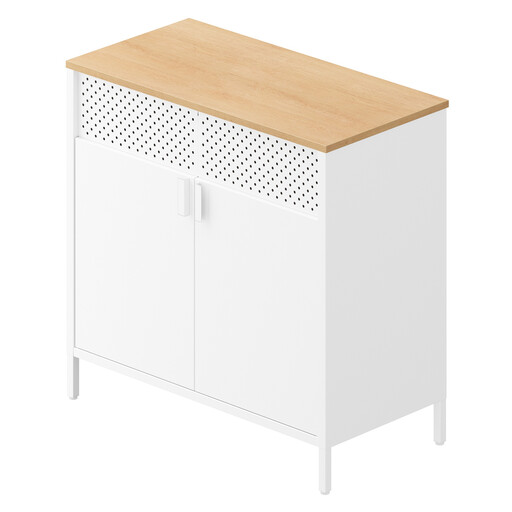
Why this profile? Ideal for those who love to evolve their interior. This chameleon-like piece can serve as an industrial sideboard in the dining room, a TV stand, or even as storage in an office.
Its all-steel construction makes it impervious to moisture and very easy to clean, thus avoiding the fragile materials pitfall. Its adjustable shelf ensures maximum modularity.
The perforated panel (pegboard) on the doors provides good ventilation and allows you to attach hooks for clever extra storage.
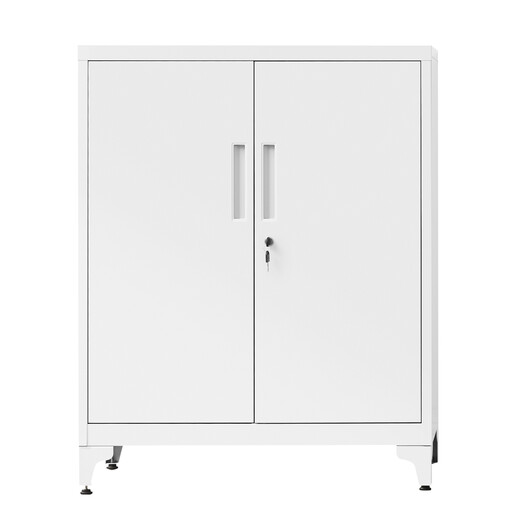
Why this profile? For those who need to store important documents, hazardous products, or valuable items, out of sight and especially out of reach of children.
Its high-quality metal lock, supplied with two keys, directly addresses the need for security—a feature almost nonexistent on classic sideboards.
Its sturdy steel structure and two height-adjustable shelves combine security, durability, and flexibility.
We have compiled a complete selection of products that meet our quality and safety criteria.
Most quality sideboards include an anti-tip kit. It usually contains one or two brackets with screws. The principle is simple: attach one part of the bracket to the top (or back) of the unit, and the other securely to the wall with an anchor suitable for your wall type (drywall, brick, concrete...). This is a crucial step for everyone's safety.
A steel sideboard, typical of the industrial style, offers far superior sturdiness and resistance to moisture and scratches, making it a long-term investment. A good MDF unit is solid but will always be more susceptible to impacts and prolonged humidity. It all depends on the use: steel is perfect for heavy-duty use (kitchen, entryway), while MDF is an excellent choice for a living room or bedroom.
Yes, absolutely. Just check two or three things. First, the height: a sideboard is often between 70 and 90?cm tall, so make sure this places the screen at a comfortable viewing height when you're seated on your sofa. Next, the weight: check the top's maximum static load capacity (indicated by the manufacturer) to ensure it can support your television. Finally, think about cables: many sideboards don't have cable management cutouts. You may need to drill one yourself for a clean setup.