
Livraison le jour même ou le lendemain

Qualité garantie

Débloquez vos offres de bienvenue: Livraison GRATUITE | Jusqu'à -80 % | 30 jours d'essai gratuits à JoyPlus
Téléchargez l'application
Furnishing a small flat or studio can often be a real puzzle. Every square centimetre is precious, and every piece of furniture must be as practical as it is stylish. In this balancing act, the side table truly shines: it can be tucked into a corner of the living room, serve a purpose next to the sofa, or be transformed into a bedside table, all while adding a touch of style.
But with an overwhelming number of options, how do you find your way? As a product recommendation expert at Joybuy, I'm here to do the groundwork and offer you concrete suggestions. This guide is designed to help you choose the ideal side table, focusing on essential criteria and tried-and-tested models.
Before you start shopping, it's essential to clearly define your needs. Ask yourself the right questions by considering three key points.
A side table can play several roles. Think about its primary use?:
Versatility is a major asset, especially if you enjoy reinventing your interior design regularly.
The style of your table should complement your existing decor. Industrial side tables, which combine raw materials, are particularly on-trend. The combination of wood and metal creates a strong visual contrast, blending the warmth of wood with the modernity of metal. For a cosier or Scandinavian-inspired interior, tables with rounded shapes, light wood finishes, or fabric baskets will integrate more seamlessly.
This is a crucial step: before any purchase, measure the intended location for your new furniture. Note the maximum height, width, and depth. This will save you the disappointment of a small coffee table that blocks a walkway or an end table that is out of proportion. Also, consider the flow of traffic around the furniture.
Here are the models that have caught our eye for their design, functionality, and excellent value for money.
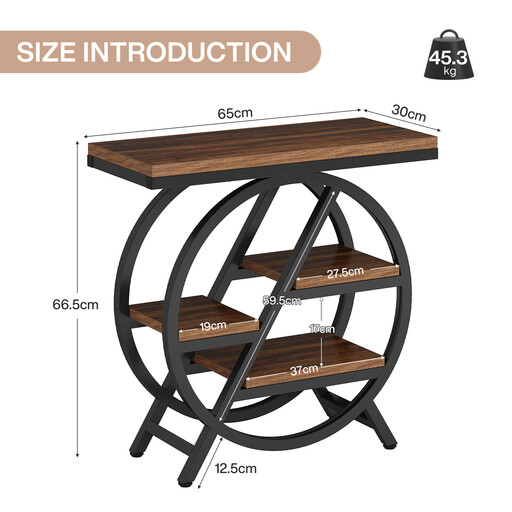
Why it stands out: This model brilliantly optimises vertical storage. With its three shelves, it offers impressive storage capacity with a minimal footprint. Its geometric metal design and rustic wood tops make it a real statement piece.
Key features:
Who is it for? The smart choice for those primarily looking for an ultra-functional side table with storage. It will appeal to fans of the industrial style and anyone needing to optimise vertical space in their living room or bedroom.

Why it stands out: Although it's a console table, its shallow depth (29.5 cm) makes it an excellent choice for awkward spaces like an entryway, a hallway, or behind a sofa. Its long 160 cm length provides a remarkable display surface.
Key features:
Who is it for? Ideal for those with a long, narrow space to furnish. It's a perfect solution for entryways, hallways, or for defining a space in a large room by placing it behind a sofa.
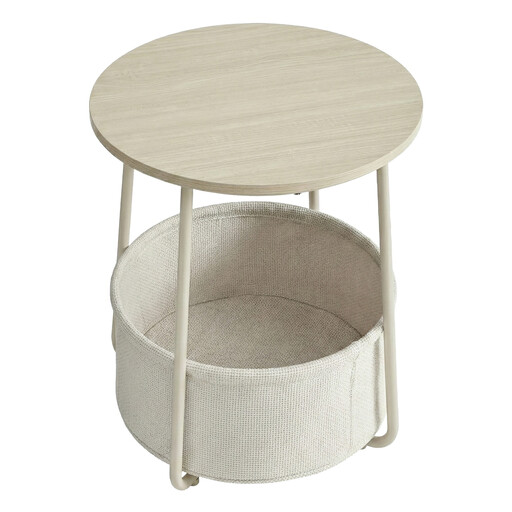
Why it stands out: This model combines a minimalist design with a clever storage solution. The integrated fabric basket offers a practical space to hide throws, magazines, or toys, while adding a cosy touch.
Key features:
Who is it for? The perfect choice for those looking for a small living room table with a modern, clean style. It is ideal for anyone who wants discreet and accessible storage next to their armchair or sofa.
The models featured here provide a good overview of the possibilities, but every interior has its own constraints and style. If you're looking for a model specifically for the bedroom, with dedicated features, other options are available.
Discover our complete selection of elegant bedside tables to find the model that will perfectly harmonise with your bedroom.
1. What is the ideal height for a side table? For an end table, the perfect height is level with or just below the sofa's armrest (usually between 50 and 60 cm). For a bedside table, aim for a height similar to your mattress so you can easily reach it from your bed.
2. How do you integrate a side table into a small living room? Opt for models that are visually light: thin legs, glass tops, or light colours. Nesting tables are an excellent trick, as they offer multiple modular surfaces with a minimal footprint. A table with shelves or a basket allows you to combine a surface for your belongings with storage.
3. What is the difference between an end table and a side table? The two terms are often used interchangeably. To be precise, an "end table" is a side table specifically placed at the end of a sofa. The term "side table" is more generic: it refers to any small table used to complete a room's furnishings, whether it's next to an armchair, in a corner, or as a stand for a plant.