
Livraison le jour même ou le lendemain

Qualité garantie

Débloquez vos offres de bienvenue: Livraison GRATUITE | Jusqu'à -80 % | 30 jours d'essai gratuits à JoyPlus
Téléchargez l'application
By the Joybuy team, your interior design experts
Finding that one small piece of furniture to complete a room isn't always easy. You're settled comfortably on your sofa with a good book, but a nagging question arises: where do you put your cup of tea or your smartphone? That's where the side table comes in. It's a solution that's as discreet as it is functional. More than just a surface, it helps structure your space, adds a decorative touch, and provides much-needed extra storage.
This guide breaks down the latest styles, materials, and features to help you find the perfect model for your living room or bedroom.
Before you commit, review a few key criteria. This will ensure your purchase is as smart as it is stylish.
The first question to ask yourself is simple: what will its role be? A simple end table to keep your remote and a drink within arm's reach? Or a modern nightstand with built-in storage?
Some models incorporate clever features. A side table with storage, equipped with shelves, drawers, or baskets, is a fantastic option for optimising small spaces and keeping your belongings tidy and out of sight. Thanks to its versatility, it fits seamlessly into any room of the house.
A side table should complement your existing decor, not clash with it. For a contemporary interior, a designer metal and wood side table creates a successful contrast of materials and adds warmth to the atmosphere. The industrial style, with its raw lines and quality materials like black steel and aged wood, remains a timeless choice for adding character to a room.
Prefer a more minimalist vibe? A model with clean lines and neutral tones will fit in naturally. Materials play a key role: metal for modernity, wood for warmth, and glass for a sense of lightness.
A small living room table must, above all, be proportionate to its surroundings. Before buying, measure the space where you plan to place it. As a general rule, the height of the side table should be equal to or slightly lower than the arm of the sofa or armchair it accompanies. This creates a more harmonious visual alignment. For a nightstand, make sure it is no more than a few centimetres higher than your mattress.
To guide you, we've selected three models that caught our eye for their design, functionality, and versatility.
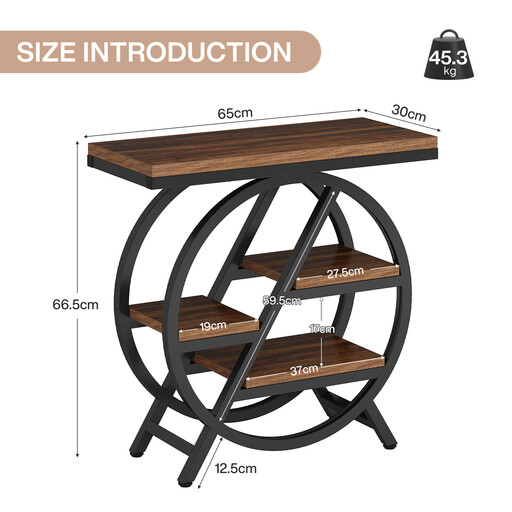
Why it stands out: This model is the perfect blend of style and function. Its industrial design with a geometric metal frame and rustic wood-finish shelves adds character, while its three tiers offer generous storage space with a minimal footprint.
Key features:
Who is it for? For those who want maximum storage in a compact format and love the ever-trendy metal and wood style.
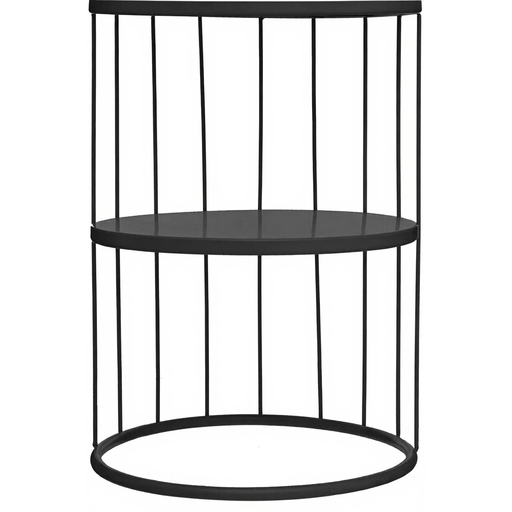
Why it stands out: The Kobu table is the epitome of minimalist elegance. Its sleek silhouette and black metal finish make it a design object in its own right, capable of enhancing a contemporary interior without overwhelming it.
Key features:
Who is it for? For purists of minimalist and contemporary design who prioritise form over storage function.
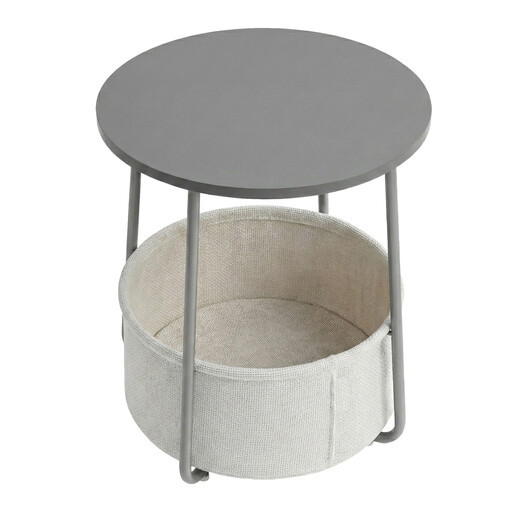
Why it stands out: This model offers a soft, original touch with its fabric storage basket. The combination of the round tabletop, U-shaped steel legs, and grey linen-look basket creates a modern and warm look.
Key features:
Who is it for? For those looking for a modern nightstand or a living room side table that combines a warm design with storage that is as practical as it is original.
Our selection is just a preview. If you're looking for a different style, specific dimensions, or other features, explore our full collection to find that perfect piece.
Discover our collection of nightstands and side tables
The golden rule: choose a table with a height that is equal to or slightly lower than your sofa's armrests (2 to 5?cm below). This creates a more harmonious visual line and keeps items on top easily accessible.
In a small space, opt for a multifunctional small living room table, such as a model with shelves or a storage basket. Models with slim legs, an airy metal frame, or a glass top create an impression of lightness and visually declutter the space.
The terms are often used interchangeably. An end table, as its name suggests, is a side table specifically designed to be placed at the end of a sofa. The term "side table" is more generic: it can refer to any small table used in a living room, a bedroom (as a nightstand), or even an entryway.