To keep your biscuit tin topped up, choose a pack of shortbread or galettes that you can enjoy in portions without leaving an open packet for long. If you only have coffee-time treats occasionally, a multipack may be more practical: the 350 g pack of LU Biscuits Thé contains four sachets, but these aren’t shortbread. In either case, check the ingredients and allergens on the pack you plan to share.
Who are these pack sizes for?
Households that regularly top up the biscuit tin
If several people regularly have a biscuit with their coffee, a large pack can make a good choice for keeping the tin stocked. St Michel offers giant packs of galettes and Sablés de Retz; check the inner packaging before you choose.
People who check ingredients
If you’re buying a pack to share, read the ingredients and allergen information for the exact recipe. The nutritional information per 100 g also lets you compare the sugar, fat and salt content of different products.
What should you check before choosing?
For a coffee-time treat, think about how much you want, how the pack opens, the ingredients and the type of biscuit. A tea biscuit, a galette and filled shortbread may not satisfy the same craving.
| What to consider |
What to check |
Who is it for? |
| Quantity |
The net weight and number of biscuits or portions, not just the words ‘family size’. |
If the tin is emptied at every snack time, I want enough to suit the number of people helping themselves. Around 40% of consumers put quantity first. |
| Portioning |
The number of inner sachets and the storage instructions on the pack. |
If coffee breaks are few and far between, I’d rather open the pack a little at a time than leave everything open. This is the top priority for around 30% of consumers. |
| Ingredients |
The ingredients, any declared allergens and the nutritional values per 100 g. |
Before offering biscuits to several people, I need to know what’s in the recipe I’ve chosen. Ingredients come first for around 20% of consumers. |
| Type of biscuit |
The name and recipe: shortbread, galette, tea biscuit or filled shortbread. |
With coffee, I’m looking for a particular recipe rather than a large pack of a different biscuit. The type of biscuit is the main consideration for around 10% of consumers. |
Two mistakes to avoid
-
Buying a giant pack without considering how often you have treats
A large number of portions is useful if you top up the biscuit tin often. If you only eat biscuits occasionally, the inner packaging matters more than the size of the pack alone.
Check whether the biscuits are divided into sachets, and follow the manufacturer’s storage instructions once the pack is open.
-
Assuming you know the allergens from the recipe name
Butter shortbread or filled shortbread can contain several allergens, and another variety from the same brand may have different ingredients. For example, Carrefour lists possible traces of nuts, soya and sesame in its Sablés Normands Reflets de France.
Check the ingredients list and allergen information on the exact pack before sharing it.
Brands and ranges to consider
St Michel
The St Michel shop offers family-size packs of galettes, as well as a giant pack of Sablés de Retz.
- The giant pack of Sablés de Retz is listed as 24 × 5 biscuits.
- Check the recipe and inner packaging if you’ll be keeping the pack open for several days.
LU
The range includes Biscuits Thé in four 350 g sachets and 294 g packs of Pépito Croc Sablé chocolate-filled biscuits, listed by Carrefour.
- The sachets of Biscuits Thé let you open the pack over several occasions.
- A tea biscuit isn’t shortbread; check the ingredients for each recipe too.
Carrefour / Reflets de France
Sablés Normands Reflets de France are available in a 175 g pack; Carrefour states that this recipe contains 27% butter.
- The product information lists the ingredients, allergens and nutritional values.
- This standard-size pack isn’t a large family-size option on its own.
E.Leclerc / Marque Repère
The E.Leclerc range includes 125 g palets bretons, 200 g petits-beurre and 2 × 250 g packs of speculoos under the Marque Repère brand.
- These pack sizes give you several options to compare for your biscuit tin.
- Palets bretons, petits-beurre and speculoos are different products, so start by choosing the type of biscuit you want.
Auchan
Auchan’s plain biscuit aisle includes its own products and national brands, including St Michel galettes in 2 × 130 g packs.
- The range of sachets and pack sizes makes it easier to choose according to how often you have a snack.
- Check the packaging and recipe for the exact product before filling your tin.
A Joybuy product for enjoying treats in portions
If you have coffee breaks over several days, this mid-sized pack of tea biscuits comes in sachets. It isn’t a substitute for a large pack of shortbread if that’s the recipe and quantity you’re looking for.
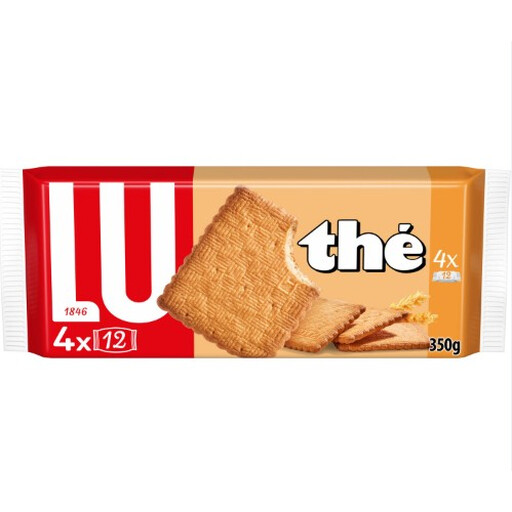 Image unavailable
LU Biscuits Thé — 350 g, 4 sachets
This pack could suit you if you enjoy biscuits with coffee on several occasions and want to open the sachets gradually. The 350 g pack is described as containing four sachets; these are tea biscuits, not shortbread. Joybuy’s product information lists wheat, milk and soya: check the exact packaging if these allergens are relevant to you.
View on Joybuy
Frequently asked questions
What should you check before sharing shortbread with someone who has an allergy?
Read the ingredients and allergen information on the exact packaging, including any warnings about possible traces. The DGCCRF states that allergens must be highlighted in the ingredients list of prepacked foods; don’t assume you know what’s in shortbread from its name alone.
How can you compare two packs of different sizes?
Start with the net weight, number of sachets and type of biscuit: a large pack and four 350 g sachets won’t be used in the same way. To compare recipes, the nutritional information per 100 g lets you compare sugar, fat and salt on a like-for-like basis, as the DGCCRF explains.
Do biscuits have to be thrown away once their best-before date has passed?
No. A best-before date, shown by the words ‘best before’, is not a use-by date. The French Ministry of the Economy distinguishes between the two: after the best-before date, consider how the biscuits have been stored, the condition of the packaging and the quality of the product before deciding whether to keep them.


