Hosts looking for a ‘sugar-free’ claim
You’re happy to have something sweet on the buffet, but want the shortbread biscuit to carry the specific ‘sugar-free’ claim. Also check the ‘of which sugars’ figure per 100 g and the ingredients list.


For a savoury birthday drinks party, choose a shortbread biscuit presented as suitable for this occasion, without assuming it is ‘sugar-free’. If that claim is essential, a sweet shortbread biscuit carrying it could have a place on the sweeter part of the buffet: under the EU regulation on nutrition claims, ‘sugar-free’ means no more than 0.5 g of sugars per 100 g, while ‘no added sugars’ has a different condition.
You’re happy to have something sweet on the buffet, but want the shortbread biscuit to carry the specific ‘sugar-free’ claim. Also check the ‘of which sugars’ figure per 100 g and the ingredients list.
You’re looking first and foremost for a biscuit presented as suitable for drinks, such as St Michel’s La Bretonne savoury shortbread. Its intended use as a drinks-party snack doesn’t, by itself, mean it’s ‘sugar-free’.
You can compare recipes labelled ‘no added sugars’ or ‘reduced sugar’ without confusing them with ‘sugar-free’. Check the nutrition information and consider whether the flavour will work on your buffet.
For this birthday, first decide whether the biscuits should go with savoury drinks or add a sweet note. Then check the exact sugar claim: it doesn’t describe how the shortbread tastes.
| Criterion | What to check | Who is it for? |
|---|---|---|
| Savoury drinks-party use | Check that the shortbread is presented as suitable for drinks, and look at the ingredients and salt content. | For a savoury spread, I’m looking for a biscuit that suits the buffet, without assuming anything about its sugar content; around 42% of shoppers make savoury use their priority. |
| ‘Sugar-free’ claim | Look for this exact claim and check the ‘of which sugars’ figure per 100 g. | If this claim is essential, I can save a sweet shortbread biscuit for another part of the buffet; around 33% of shoppers prioritise the ‘sugar-free’ criterion above all else. |
| Reduced sugar | Distinguish ‘no added sugars’ from ‘sugar-free’ and compare the sugars per 100 g. | I want to compare recipes with less sugar without insisting on the strict claim; around 25% of shoppers prioritise this reduction. |
These claims aren’t interchangeable. Under the EU regulation, ‘sugar-free’ is reserved for products containing no more than 0.5 g of sugars per 100 g of food.
If this threshold is your deciding factor, look for the exact claim and check the ‘of which sugars’ figure per 100 g.
A shortbread biscuit labelled ‘sugar-free’ may still be a sweet biscuit. Carrefour, for example, lists a Gerblé Hazelnut Chocolate Chip shortbread biscuit under this claim, while St Michel presents La Bretonne as a savoury shortbread for drinks.
Decide where the biscuit will sit on the table before comparing sugar claims.
According to the DGCCRF, displaying the Nutri-Score is voluntary in France. If it appears on a packet, it doesn’t replace checking the nutrition information, ingredients or allergens.
Use it as an additional guide when comparing similar products, but don’t assume it means a shortbread biscuit is ‘sugar-free’.
The ‘sugar-free’ claim doesn’t tell you what other ingredients the product contains. Under the EU regulation, foods containing more than 10% added polyols must carry a warning about a possible laxative effect if consumed in excess.
Check the ingredients list and any warnings on the packaging.
St Michel presents its La Bretonne savoury shortbread biscuits as suitable for drinks.
Carrefour lists a Gerblé Hazelnut Chocolate Chip shortbread biscuit labelled ‘Sugar-Free’, in a 132 g box.
Auchan describes its Less Sugar range as reduced in sugar and also lists biscuits carrying a ‘sugar-free’ claim.
The E.Leclerc catalogue lists ‘no added sugars’ crispbreads separately from savoury biscuits for drinks.
This selection features a savoury shortbread biscuit for a birthday drinks party, worth considering when savoury use is your priority. It doesn’t meet a strict ‘sugar-free’ requirement.
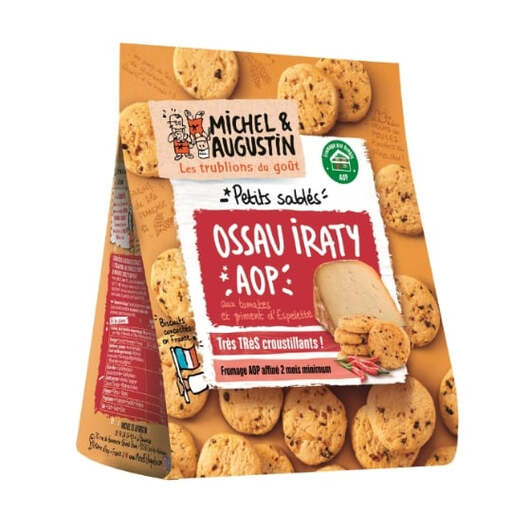 Image unavailable
A savoury shortbread biscuit to consider for the drinks-party part of your buffet if this is the type of biscuit you’re after. The pack contains 100 g; this product isn’t suitable if the regulated ‘sugar-free’ claim is essential. Check the packaging for ingredients, allergens and nutrition information.
Under the EU regulation on nutrition claims, ‘sugar-free’ means no more than 0.5 g of sugars per 100 g of food. ‘No added sugars’ is a separate claim and doesn’t mean that the product contains no sugars.
No. The DGCCRF says the Nutri-Score is voluntary; the nutrition declaration on prepacked foods is a separate requirement, subject to applicable exceptions. If the logo appears, also check the figures per 100 g and the ingredients list.
First decide whether you want a savoury biscuit or a sweet note. Then compare sugars, salt and fat on the same 100 g basis, and check the ingredients and allergens listed on each pack.
No: reducing sugar isn’t the same as making a ‘sugar-free’ claim. Check the exact wording and the ‘of which sugars’ figure per 100 g before choosing the biscuit.
Read the ingredients list and any warnings on the packet. Under the EU regulation, foods containing more than 10% added polyols must carry a warning about a possible laxative effect if consumed in excess; the ‘sugar-free’ claim alone doesn’t tell you whether they’re present.