
Livraison le jour même ou le lendemain

Qualité garantie

Débloquez vos offres de bienvenue: Livraison GRATUITE | Jusqu'à -80 % | 30 jours d'essai gratuits à JoyPlus
Téléchargez l'application
Shoes scattered in the entryway, piling up in the closet, or ending up in a heap at the foot of the bed?? It's a classic problem. More than just an aesthetic issue, good shoe storage protects your favourite pairs from dust and damage, while also saving you precious time every morning.
But with a dizzying array of options available, how do you make the right choice?? Don't worry. We've analysed the most practical solutions to help you find the one that truly fits your space and lifestyle—all without the marketing fluff.
Before you fall for a particular model, a few key questions need answering. A well-thought-out choice ensures a successful and long-lasting purchase.
The first and most crucial step?: take out your measuring tape and measure the intended location. For entryway shoe storage in a narrow hallway, a slim, space-saving shoe cabinet is essential. If you have more room, a wider shelf or a bench can fit perfectly. Be sure to check the height, width, and depth to ensure the furniture integrates seamlessly without obstructing traffic.
Your daily routine will dictate the smartest choice?:
How many pairs do you own?? Does your collection mainly consist of trainers, pumps, or boots?? Some cabinets offer adjustable-height compartments, a real plus for storing shoes of different sizes. Check the advertised capacity and see if it meets your current... and future needs?!
We've selected three products that check all the boxes for different needs and setups.
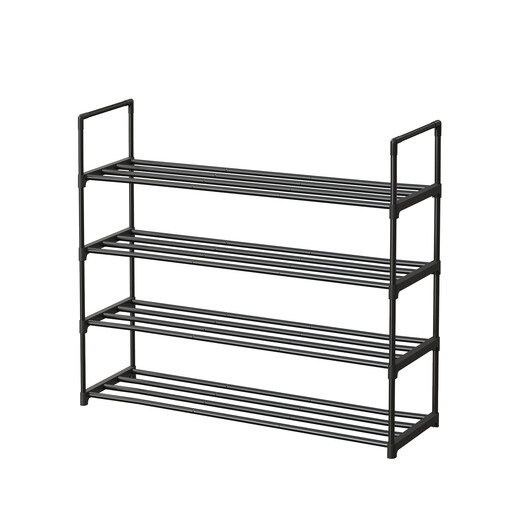
This classic shoe rack gets straight to the point?: simple, functional, and effective. Its black metal frame and plastic connectors create a lightweight yet surprisingly stable unit for daily use.
Its standout feature?: Its modularity. You can stack multiple racks to expand your storage capacity over time without having to replace everything. Assembly is a breeze and requires no tools.
Pros:
Who is it for?? For students, first-time apartment dwellers, or anyone looking for a budget-friendly, scalable, and ultra-simple solution to install in a bedroom, entryway, or closet.
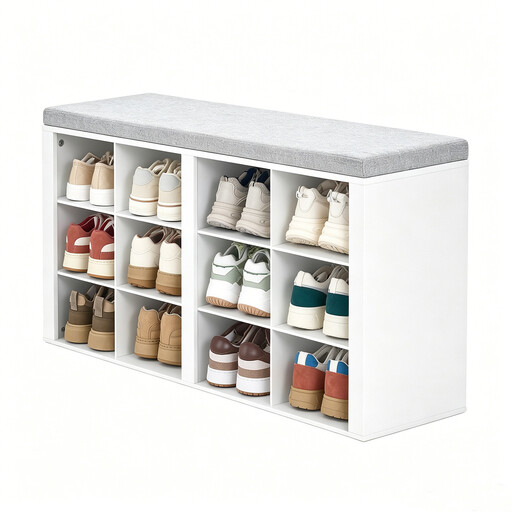
Much more than just storage, this shoe bench is a truly multifunctional piece for your entryway. It combines generous storage space with 12 compartments and a comfortable seat thanks to its padded cushion.
Its standout feature?: Its versatility. The internal shelves are height-adjustable, allowing you to customise the space to fit everything from trainers to high heels or ankle boots.
Pros:
Who is it for?? Perfect for families who need a seat in the entryway, or for those who want a stylish and functional piece in their bedroom or hallway. The ideal option for entryway shoe storage that is as practical as it is decorative.
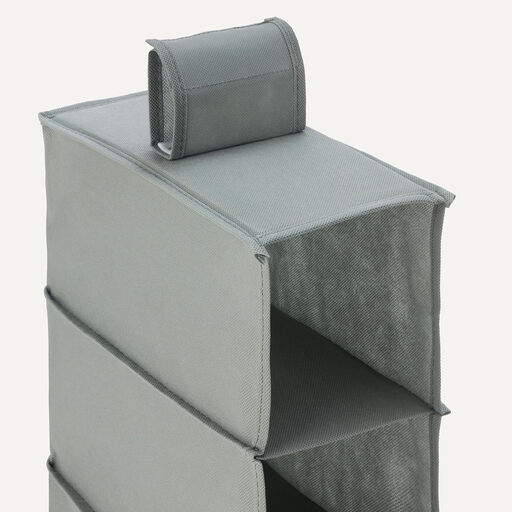
When every square inch counts, the solution is to go vertical. This shoe organiser hangs directly in a closet, completely freeing up floor space.
Its standout feature?: Its clever design. It utilises the often-wasted vertical space in a closet and, the cherry on top, it's foldable. When not in use, it becomes compact and can be stored without taking up space.
Pros:
Who is it for?? The dream solution for studios and small apartments. It's also a great ally for storing off-season shoes out of sight and away from dust.
These three products meet very common needs, but every home is unique. If you haven't found your perfect match yet, know that there are a multitude of other configurations available.
Feel free to explore our full category to discover a wider selection of cabinets, racks, and organisers.
Discover More Shoe Storage Solutions
When space is at a premium, you have to get clever. Go vertical?! Hanging organisers in a closet are perfect. Also, consider slim-profile cabinets (less than 25?cm deep), specially designed for narrow hallways, or over-the-door storage racks.
To prevent bad odours, the golden rule is to always let your shoes air-dry before storing them, especially if they are damp. Opt for open furniture like a shoe rack for better air circulation. In a closed cabinet, place bamboo charcoal bags, lavender sachets, or deodoriser blocks to absorb moisture and odours.
It all depends on your collection. For low-top shoes like trainers or pumps, a shelf height of 15 to 20?cm is sufficient. If you wear ankle boots or high heels, aim for 25 to 30?cm. For boots, you'll need a space of at least 40?cm. The ideal solution is a cabinet with adjustable-height compartments for maximum flexibility.