
Livraison le jour même ou le lendemain

Qualité garantie

Débloquez vos offres de bienvenue: Livraison GRATUITE | Jusqu'à -80 % | 30 jours d'essai gratuits à JoyPlus
Téléchargez l'application
A shoe cabinet can quickly become bulky, wobbly or impractical if its dimensions aren't suited to your home. In a typically compact British hallway, just a few extra centimetres in depth or a poorly designed door can turn a good idea into a daily frustration.
Before buying a shoe cupboard, keep three common pitfalls in mind:
To choose a shoe storage solution that lasts, compare the genuinely useful dimensions, the materials, the stability and how easily you can access your shoes.
In a corridor or small hallway, a narrow shoe cabinet often proves far more practical. Start by measuring the available area, allowing enough room for doors to open and for you to move around.
A depth of 24 to 25 cm generally works well in tight spaces. However, do check the internal dimensions: high-top shoes, bulky trainers and certain sizes need a bit more clearance. If the cabinet is to go under a seat or in a dressing room, its width and height matter just as much.
Adjustable compartments let you tailor the storage to different types of footwear. This is especially handy if you switch between flat shoes, ankle boots, heels and sports shoes.
An open shoe rack offers immediate access and encourages air circulation. A cabinet with doors provides better protection from dust and hides the contents away. For closed models, look for removable dividers or adjustable shelves: the number of compartments stated doesn't always reflect the usable capacity.
Lacquered metal works well for regular use and keeps the structure lightweight. Wood-based panels often blend in more easily in a hallway or living room. Whatever material you choose, examine carefully:
Any mention of a standard or certification should be verifiable in the product sheet, manual or manufacturer's documentation. It does not replace the need for assembly that follows the instructions. For a tall cabinet, wall fixing remains an essential safety measure, especially in a home with children.
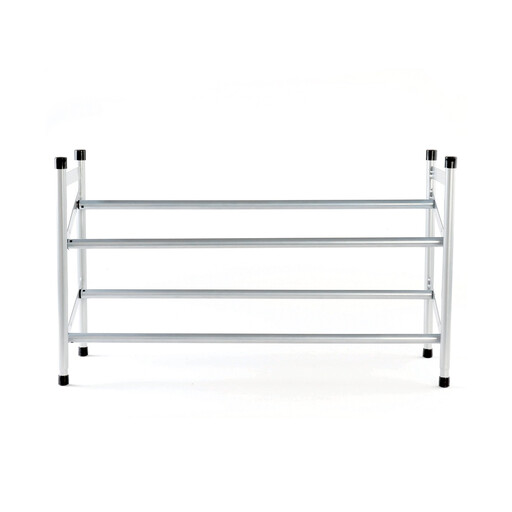
Why it suits this profile: This metal shoe rack offers a simple way to organise a hallway, cupboard or dressing room. Its size of 62 × 23 × 35 cm fits easily, even in a compact space.
Its stackable design lets you gradually increase storage capacity, rather than buying a bulky cabinet from the start.
A metal structure with an epoxy finish, no assembly required and the ability to stack multiple units sold separately.
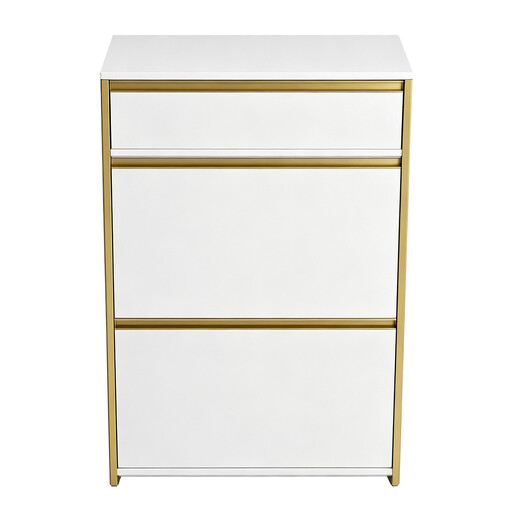
Why it suits this profile: Its combination of white and gold, along with the top surface, allows it to blend into a decorated hallway, corridor or living room.
With a stated depth of 24.5 cm, it minimises the floor footprint. The adjustable shelves also prevent you from ending up with poorly suited compartments.
Dimensions of 60.5 × 24.5 × 105 cm, a drawer, four adjustable shelves and two anti-tip devices included.
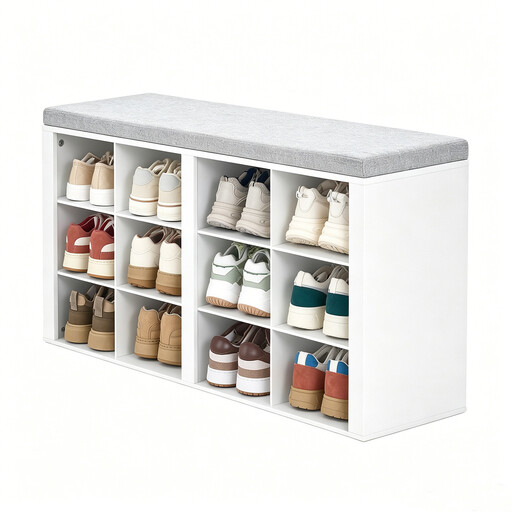
Why it suits this profile: This piece combines a seat with storage space, a practical combination for a family hallway, bedroom or busy corridor.
The adjustable shelves allow you to allocate more height for boots and thick shoes, rather than squeezing every pair into a standard compartment.
A size of 30.5 × 104.5 × 49.5 cm, removable cushion covers and a stated maximum load of 150 kg.
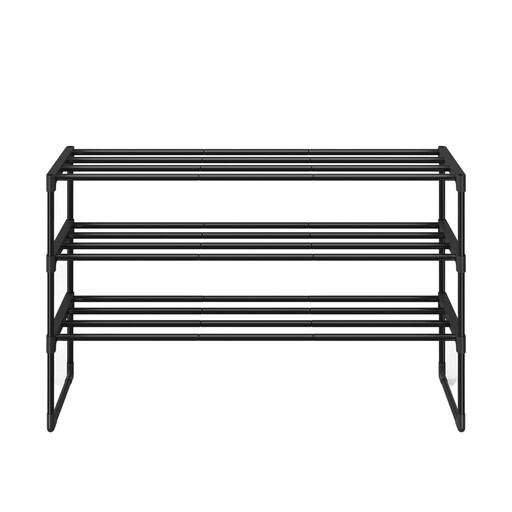
Why it suits this profile: This metal shoe rack, measuring 30 × 92 × 55 cm, can find a home in a cupboard, hallway or living room whose layout changes regularly.
Its structure can be moved, turned or stacked depending on the available space. The stated maximum load is 10 kg per tier and 30 kg in total.
Metal tubes, tool-free assembly and a design suited to several storage configurations.
We've put together a comprehensive, real-time selection of products that meet these demanding criteria, as well as European safety requirements.
Before assembling your cabinet, make sure the floor is level and that each panel matches the instructions. For a tall shoe cupboard, use the anti-tip devices supplied and choose fixings suitable for your wall type.
Avoid placing very damp shoes inside a closed cabinet. Let them dry before storing them, then clean the surfaces with a soft cloth. On a metal shoe rack, abrasive products can damage the lacquered finish. Also remember to check the screws and connectors regularly, especially if the cabinet is moved or stacked.
Measure the space needed for walking, then compare it to the total depth of the cabinet, including handles and doors. A model around 24 to 25 cm can work in a narrow corridor, but check the internal depth based on your shoe sizes and the types of footwear you need to store.
Yes, if you want to keep small accessories like laces, shoehorns or keys in the same place. The drawer complements the main storage, but it can also reduce the space available for shoes. So check the actual capacity of the compartments rather than relying solely on the number of shelves.
An open rack makes access and air circulation easier, while a closed cabinet hides the shoes and protects them better from dust. In a hallway visible from the living room, a closed cupboard will often blend in more discreetly. In a dressing room, the direct access offered by a rack will generally be more practical.