
Livraison le jour même ou le lendemain

Qualité garantie

Débloquez vos offres de bienvenue: Livraison GRATUITE | Jusqu'à -80 % | 30 jours d'essai gratuits à JoyPlus
Téléchargez l'application
A cluttered hallway, pairs you can never find or shoes piled up in a cupboard: shoe storage soon becomes essential, especially in a flat or family home. But not all units are created equal. A model that’s too deep can get in the way, a flimsy shelf may eventually warp, and an ill-fitting box is likely to go unused.
Here are the things to consider before buying a shoe storage unit, cabinet, rack or organiser, along with a selection to suit different needs.
A capacity of 20 pairs doesn’t guarantee there’ll be room for everyone’s shoes. Ankle boots, chunky trainers and high heels take up far more space than flat shoes. Also check exactly what the stated capacity means: pairs stored side by side, separate compartments or several tiers.
In a narrow hallway, a few centimetres can make a real difference day to day. Before choosing a shoe cabinet, measure the available width, the height of the skirting boards and the space needed to open the doors. In a cramped hallway, a shallow design or a space-saving shoe storage unit will often be a better choice than a large, enclosed cabinet.
A cabinet with doors protects shoes from dust and keeps them out of sight. However, avoid storing shoes in it while they’re still damp. Vented boxes and open shelves allow air to circulate, while an enclosed unit needs more day-to-day attention.
Take three measurements before placing your order:
A depth of 24 to 30 cm may suit some hallways, but the space actually available for shoes depends on the shape of the compartments. For shoe storage in the hallway, also check how far the doors and drawers open.
For a household, count the pairs you wear regularly, then allow some extra room for seasonal footwear. An open shoe rack is handy for pairs you wear every day. A clear shoe storage box makes it easy to spot each pair. Adjustable compartments are particularly useful if you switch between trainers, ankle boots and high heels.
Wood-based panels, metal and plastic each have different strengths and limitations. A unit made from particleboard should be placed on a stable floor and kept away from damp. A metal rack is generally easy to move, but check the maximum load for each tier. For a tall unit, follow the safety guidance on stability and whether it needs to be fixed to the wall.
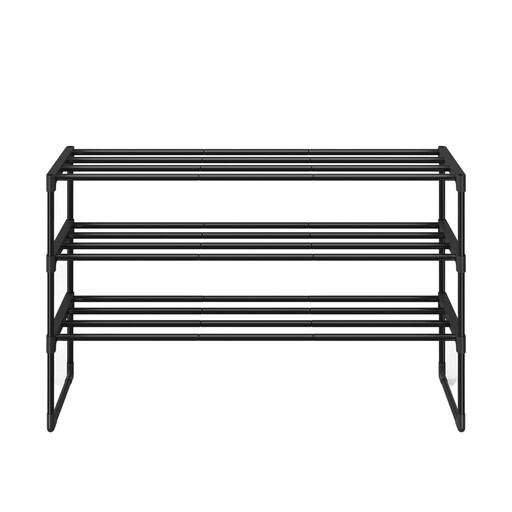
Why it suits this type of shopper : Measuring 30 × 92 × 55 cm, this rack fits easily in a hallway, dressing room or living room where every centimetre counts. Its frame can be set up vertically, turned around or stacked to suit the space available.
The dimensions and stated capacity of 16 to 20 pairs help you compare the space it takes up with your actual needs, rather than relying on a vague promise of space-saving design.
Tool-free assembly, metal tubes, plastic connectors and a stated static load capacity of 10 kg per tier.
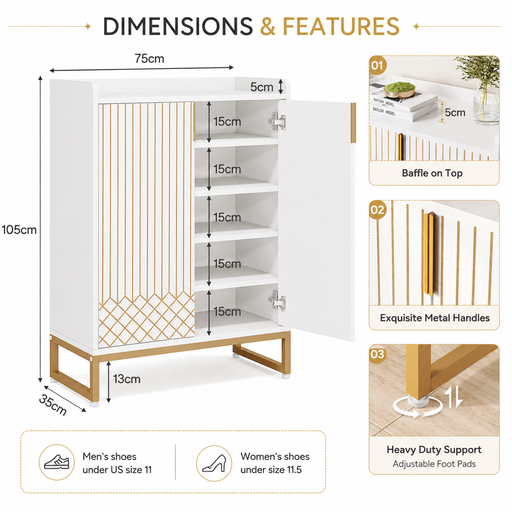
Why it suits this type of shopper : Its clean-lined white design, finished with gold details, and its doors make it a good fit for a hallway or living room where you want to keep storage neatly out of sight.
The five tiers, open space at the bottom and dimensions to check before ordering help you distinguish between enclosed storage and easy access.
Stated capacity of 22 to 25 pairs, metal doors and a top surface for displaying a few decorative items.
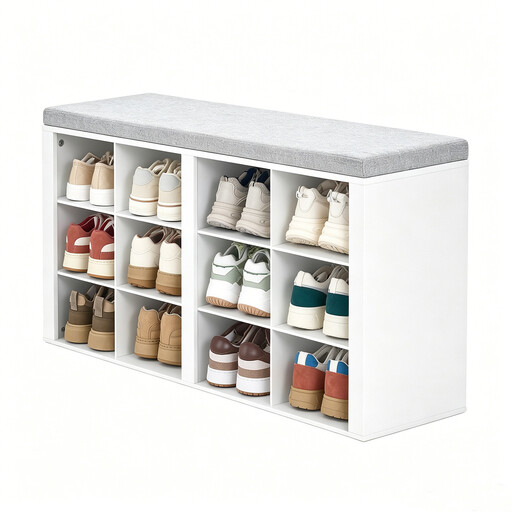
Why it suits this type of shopper : This bench combines a seat with handy hallway storage. Its adjustable shelves can accommodate trainers, high heels or ankle boots.
Adjustable compartments help prevent wasted space from sections that are too small, while the removable seat cover makes cleaning easier.
12 compartments, dimensions of 30,5 × 104,5 × 49,5 cm and a stated capacity of 150 kg.
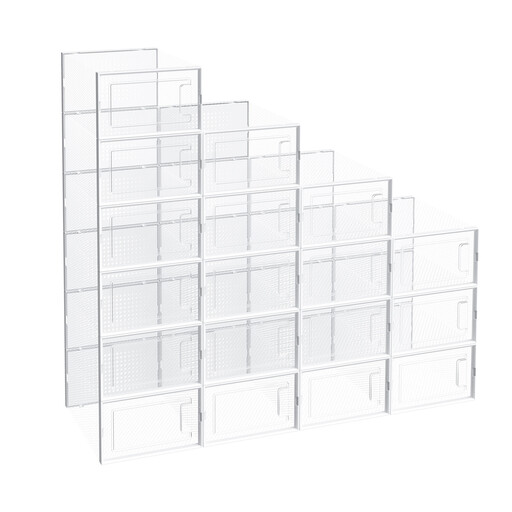
Why it suits this type of shopper : These boxes are ideal for dressing rooms, cupboards and smaller homes that need stackable storage, with a clear view of every pair.
The dimensions of each box, 35 × 25,2 × 19 cm, are clearly stated. Measure your shoes before buying, especially if they’re bulky.
18 boxes with a clear front door, ventilation holes and a PP plastic frame.
We’ve put together a comprehensive, regularly updated selection of products that meet these exacting selection criteria and European safety standards.
Start by measuring the available depth. A narrow metal rack, a tall unit or stackable boxes can free up floor space. To keep the walkway clear, also check how far the doors open and the distance between the unit and the entrance.
Let shoes dry before putting them away, avoid overfilling the compartments and choose an open rack or boxes with ventilation holes. Regularly cleaning the unit also helps keep the space fresh.
Its lifespan depends on the material, the load it bears, how often it’s used and its surroundings. Stick to the stated maximum load, protect the unit from damp and place it on a stable surface. For a tall model, follow the fixing and safety instructions supplied with the product.