
Livraison le jour même ou le lendemain

Qualité garantie

Débloquez vos offres de bienvenue: Livraison GRATUITE | Jusqu'à -80 % | 30 jours d'essai gratuits à JoyPlus
Téléchargez l'application
Shoes piling up in the entryway, an overflowing closet, the endless morning search for the right pair... Sound familiar? A good shoe storage system isn't a luxury—it's a necessity for maintaining a tidy and functional home.
The problem? The market is flooded with solutions that look great on the surface but often disappoint in practice. As the Head of Product Recommendations at Joybuy, my mission is to help you cut through the noise. Let's break down the common pitfalls to avoid and the key criteria for making an informed choice.
Before you fall for an attractive design, it's crucial to know the hidden flaws that too often turn a good purchase into a regret.
To avoid these pitfalls, focus on a few technical details that make all the difference in a product's quality and suitability.
Forget the advertised number of pairs and look at the dimensions. The height between shelves is the most important criterion. A height of less than 15?cm will be too short for ankle boots or high-top sneakers. Similarly, the shelf depth should be at least 30?cm to comfortably accommodate larger shoe sizes without them hanging over the edge. For entryway shoe storage, a model that's compact in width but optimised for height can be an excellent trade-off.
The choice of material has a direct impact on the sturdiness and longevity of your unit.
Your choice will depend on your priorities:
shoe shelf): Offers quick access and good ventilation. It's a practical solution for everyday shoes.shoe cabinet, boxes): Protects from dust and sunlight, offering a cleaner, more organized look. Essential for collectors or for storage in a living space.shoe organizer): An excellent solution for optimising space in small apartments by using the vertical height of a closet, without taking up any floor space.Since everyone's needs are unique, here are a few options that cater to different user profiles, all selected according to the quality criteria we've just discussed.
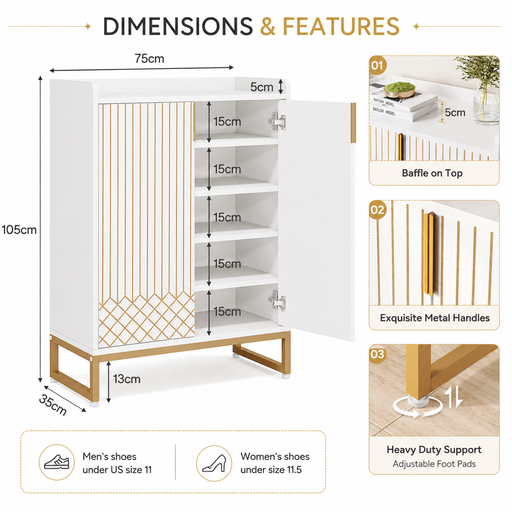
Why we chose it: With its large capacity (up to 25 pairs) and elegant closed design, this cabinet is perfect for a family entryway. It conceals clutter while providing a surface for decorative items.
Its wood frame and metal legs beat the pitfall of flimsy construction. The doors offer protection from dust, a feature often overlooked in open shelves.
Combines high storage capacity with a polished aesthetic that fits into a living space.
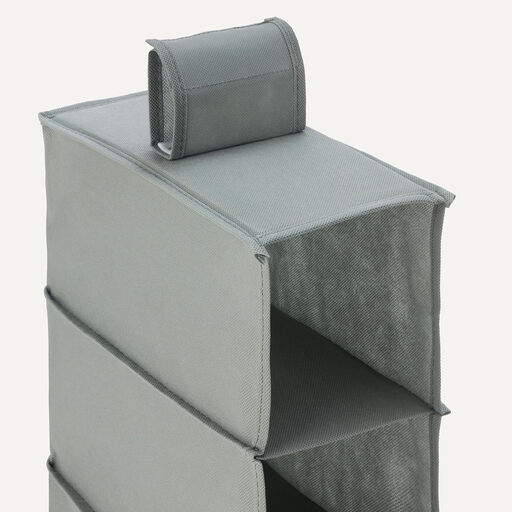
Why we chose it: Ideal for studios or rooms with limited floor space. It utilizes wasted vertical space in a closet to store shoes in a tidy, accessible way without cluttering the room.
It bypasses the floor space problem by taking up none at all. Its foldable design also makes it easy to store when not in use, avoiding the trap of a rigid, bulky unit.
Frees up 100 % of your floor space by leveraging closet height. Instant, tool-free installation.
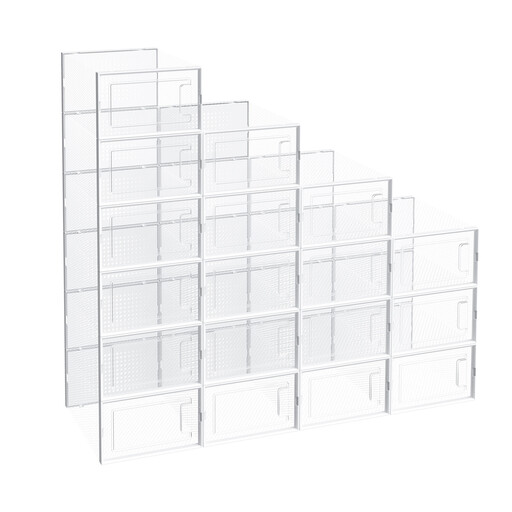
Why we chose it: For those who see their shoes as a collection to be preserved and displayed. Each pair is individually protected, visible through the clear door, and accessible without having to unstack everything.
This system is the perfect answer to the lack of protection and modularity. The boxes protect from dust, and ventilation holes prevent odours. The stackable design allows you to create a custom storage setup.
Individual protection, total modularity, and collection visibility thanks to the clear doors.
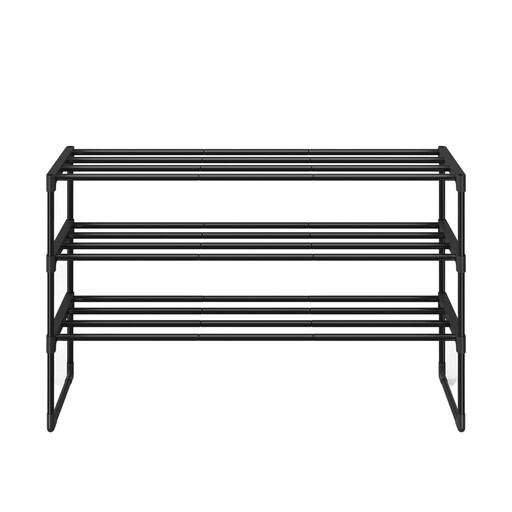
Why we chose it: A simple, effective, and budget-friendly solution. Perfect for a garage, laundry room, or secondary entryway, it offers generous, no-frills storage capacity.
Its metal tube construction is more durable than cheap plastic alternatives, beating the pitfall of flimsy design. Its open, wide layout accommodates different shoe types, bypassing the issue of misleading capacity claims.
An excellent capacity-to-price ratio with a sturdy metal frame and tool-free assembly.
We've compiled a complete, up-to-date list of products that meet our strict selection criteria and quality standards.
Longevity depends mainly on the material and usage. A good-quality metal shelf or a well-maintained wooden cabinet can last for many years. Entry-level plastic or fabric models have a more limited lifespan, often 1 to 3 years. Adhering to the recommended maximum load is essential to preserve the structure.
Prevention is key. Always make sure your shoes are completely dry before storing them. You can place bamboo charcoal bags, baking soda, or dedicated deodorizers inside the cabinet. If possible, choose a shoe cabinet that has small ventilation openings on the back.
Yes, this is a risk with certain models. Shelves made of thin metal bars can leave marks on soft leather shoes or deform stiletto heels. For delicate pairs, opt for solid-surface shelves (made of wood or plastic) or, ideally, individual shoe storage boxes that offer complete protection.