
Livraison le jour même ou le lendemain

Qualité garantie

Débloquez vos offres de bienvenue: Livraison GRATUITE | Jusqu'à -80 % | 30 jours d'essai gratuits à JoyPlus
Téléchargez l'application
A cluttered hallway, pairs piled up in the corridor or shoes that seem to disappear in a wardrobe: shoe storage meets a very practical everyday need. However, not every model is suitable for every home. Before buying a shoe cabinet or shelving unit, it is best to check the available space, actual capacity and ease of use.
Some marketing claims can also give a misleading impression of a product. Here are the main pitfalls to avoid, along with a selection of solutions suited to different needs.
The stated capacity does not always take bulky footwear into account. Ankle boots, chunky trainers and high-heeled shoes take up more height and depth than flat styles. A cabinet advertised as holding several pairs may therefore prove impractical if its compartments cannot be adjusted.
A shoe storage unit may look compact on a product page, but a difference of just a few centimetres can sometimes determine where it can be placed. In a narrow hallway, check in particular:
A shoe cabinet protects pairs from dust and conceals its contents. On the other hand, you may sometimes have to open several doors before finding the right pair. Transparent boxes or an open shoe rack offer better visibility, but leave shoes more exposed to dust.
For a family, an entrance shoe cabinet with several levels may be more practical than a small individual model. Adjustable shelves allow you to adapt the space for trainers, smart shoes or boots. If you have limited floor space, a narrow shoe cabinet or suspended structure can make use of the available height rather than the floor area.
Stackable formats fit easily into a dressing room or cupboard. However, check the stability of the overall arrangement and its compatibility with your shoe size and footwear volume. The external dimensions do not always correspond to the space genuinely available inside.
For a metal or plastic shoe rack, check the maximum load specified for each level. Tall, narrow cabinets should be installed in accordance with the manufacturer’s instructions. In a family home, an anti-tip device is particularly recommended.
Particleboard furniture can be suitable for everyday use, provided you follow the assembly instructions and avoid prolonged exposure to moisture. If the cabinet is placed near the front door, allow wet shoes to dry before storing them.
After a rainy day, shoes may retain moisture. A closed cabinet should therefore be aired regularly. Boxes with ventilation openings and open shelving help to limit odour build-up, although they do not guarantee any particular level of hygiene or preservation.
A finish that can be cleaned with a damp cloth makes maintenance easier. For fabric covers, check the cleaning instructions and whether they can be removed.
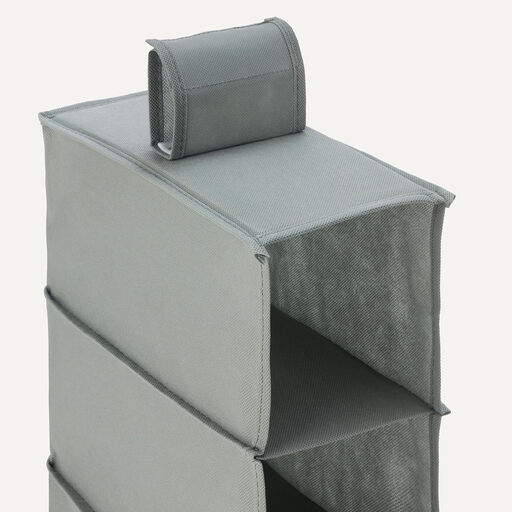
Why this choice suits this profile : This hanging solution is ideal for small cupboards, bedrooms and hallways where every centimetre of floor space matters. Its eight tiers provide storage for several pairs without the need for a bulky cabinet.
Its approximate dimensions of 29.2 × 14 × 104.1 cm and foldable design make it easy to check the available space before buying. The stated maximum load is 10 pounds per shelf, or approximately 4.5 kg.
Eight shelves, a foldable structure and easy cleaning with a damp cloth. Make sure you respect the maximum load for each level.
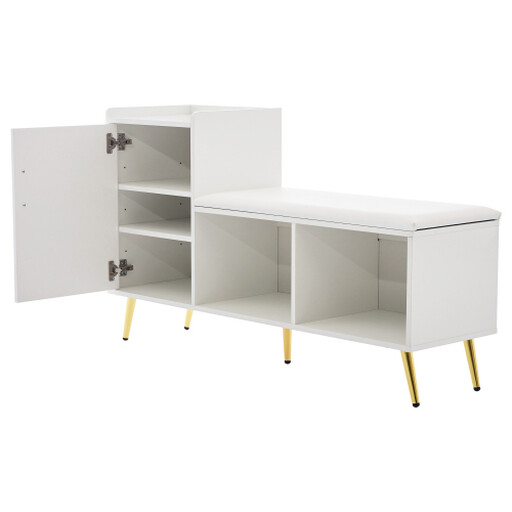
Why this choice suits this profile : This cabinet combines a glossy white finish, a cushioned bench, doors and LED lighting. It can bring structure to a reasonably spacious hallway while providing a practical seat for putting on your shoes.
Its stated dimensions of 120 × 35 × 71.5 cm make it easy to compare its footprint precisely with the space in your hallway. The closed design also helps conceal shoes.
Integrated bench, four stated levels, doors, bottom shelf and LED lighting. Check the exact contents of the delivery before placing your order.
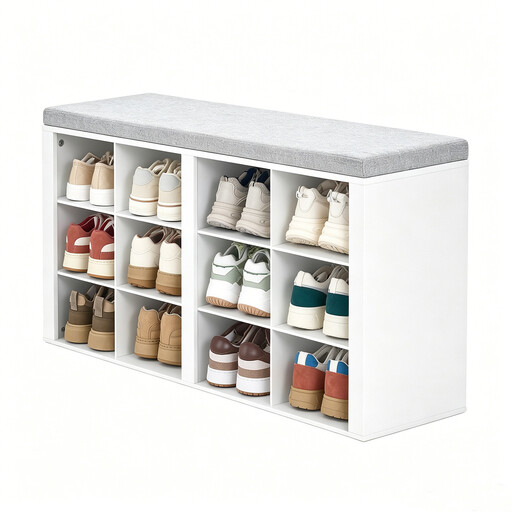
Why this choice suits this profile : This shoe bench is ideal for families who want to store their pairs while also having a seat in the hallway. Its adjustable compartments can accommodate different types of footwear.
The adjustable shelves reduce the risk of ending up with compartments that are too low. The stated maximum load for the cabinet is 150 kg ; however, the instructions and conditions of use must be followed.
Twelve compartments, a removable cushion and dimensions of 30.5 × 104.5 × 49.5 cm. The cushion cover can be removed for cleaning.
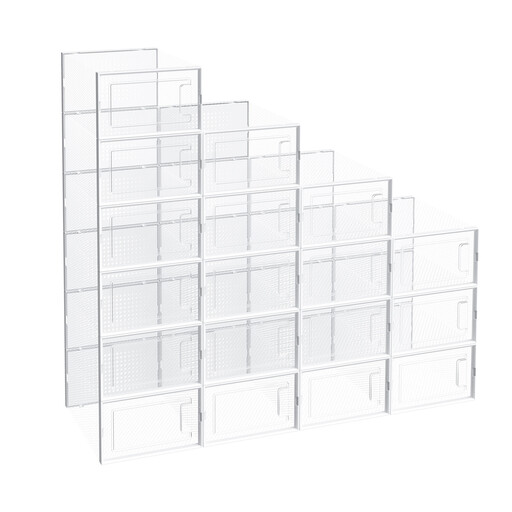
Why this choice suits this profile : These 18 transparent boxes are ideal for a dressing room, cupboard or shoe collection that you want to identify at a glance. Their stackable format allows you to make the most of the available height.
Each box measures 35 × 25.2 × 19 cm. Measure your shoes before buying to avoid choosing a size that is too tight, particularly for chunky trainers.
Front doors, stackable structure, PP plastic and ventilation openings. The transparent design lets you identify each pair quickly.
We have put together a complete, real-time updated list of products that meet these demanding selection criteria as well as European safety regulations.
A hanging model, a shallow cabinet or a narrow metal structure can keep the walkway clear. Measure the available depth, then check the space needed to open the doors. In a corridor, a closed, shallow shoe cabinet is often more discreet than open shelving.
Allow shoes to dry before storing them, air the cabinet regularly and avoid overfilling the compartments. Boxes with openings and ventilated shelves encourage air circulation. However, no cabinet can replace proper shoe care.
No. Each model has limited internal dimensions. Compare the length, width and height of your shoes with those stated on the product page. For boots and chunky trainers, an adjustable shelf or a cabinet with tall compartments will usually be more suitable.