
Livraison le jour même ou le lendemain

Qualité garantie

Débloquez vos offres de bienvenue: Livraison GRATUITE | Jusqu'à -80 % | 30 jours d'essai gratuits à JoyPlus
Téléchargez l'application
Shoes piling up in the entryway, an overflowing closet, mismatched pairs… Does this scenario sound familiar? Finding the right shoe storage is the key to maintaining order and taking care of your favorite pairs. The catch? The market is flooded with solutions that, despite their attractive appearance, prove disappointing in practice.
As a Product Recommendation Manager at Joybuy, my mission is to help you see things more clearly. Let's cut through the marketing jargon and get straight to the point. Before you make a decision, here are the common pitfalls to avoid so a promising purchase doesn't turn into a headache.
To avoid these traps, the secret is to focus on a few objective technical features.
Choosing a shoe organizer isn't just about aesthetics. Three fundamental parameters will determine its daily usefulness and longevity.
The sturdiness of your storage unit is the number one criterion. The most reliable models are often designed with metal tubes, sometimes coated with an epoxy lacquer for better resistance to rust and wear. Pay close attention to the joint pieces: reinforced plastic connectors are a true sign of durability. A stable unit must be able to support the weight of several pairs of heavy shoes (boots, hiking shoes) without ever bending.
In an apartment or studio, every square inch counts. This is where modularity truly shines.
The storage location dictates the type of unit to choose.
The goal isn't to find a one-size-fits-all solution, but the one that perfectly matches your needs. Here is a selection of models that meet very specific requirements.
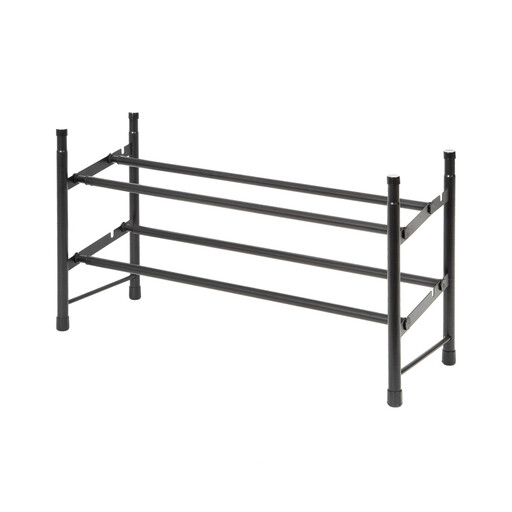
Why this profile? Ideal for city dwellers in studios or apartments with unconventional spaces. Its ability to adjust in width (from 62 to 117 cm) allows it to fit into a narrow hallway, under a window, or in an alcove.
This model beats the "dimension delusion" trap. Instead of imposing a fixed size, it adapts to your actual space for a perfect fit.
Expandable and stackable design for maximum flexibility. Epoxy-lacquered metal structure ensures durability.
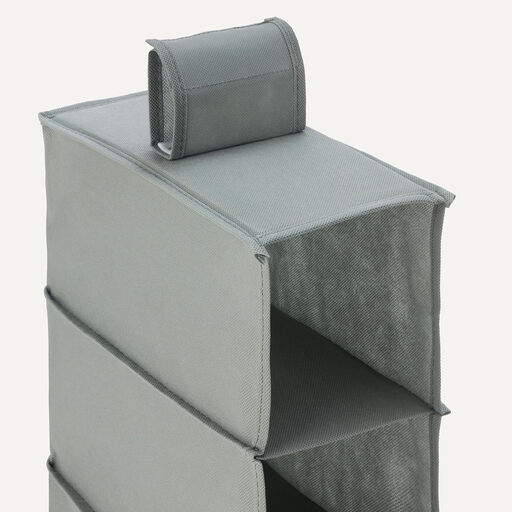
Why this profile? Perfect for renters or anyone looking to optimize their wardrobe without drilling holes. It utilizes often-wasted vertical space and keeps shoes out of sight.
Its strength: it doesn't claim to be universal. Designed specifically for closet shoe storage, it's perfect for lightweight shoes and bypasses the stability issues of floor-standing racks.
Vertical space utilization and instant, tool-free installation. Collapsible design for easy storage when not in use.
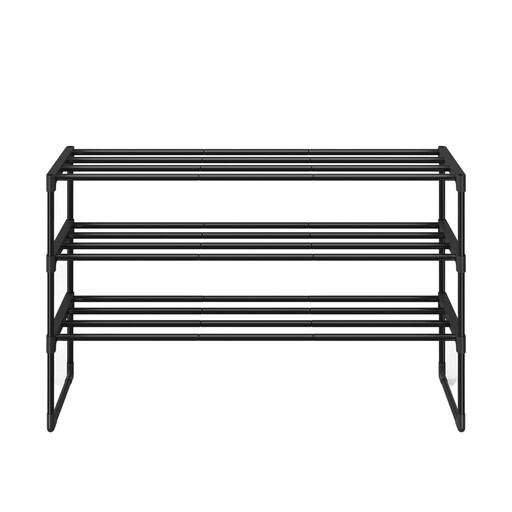
Why this profile? With its capacity for 16 to 20 pairs, this model is built for families or collectors. Its slim 30 cm depth makes it a viable option for an entryway shoe rack or a garage.
It makes stability its strong suit. Thanks to its metal tube structure and high static load capacity (10 kg per tier), it won't buckle under the weight.
High storage capacity and a stackable design for added modularity. Simple, tool-free assembly.
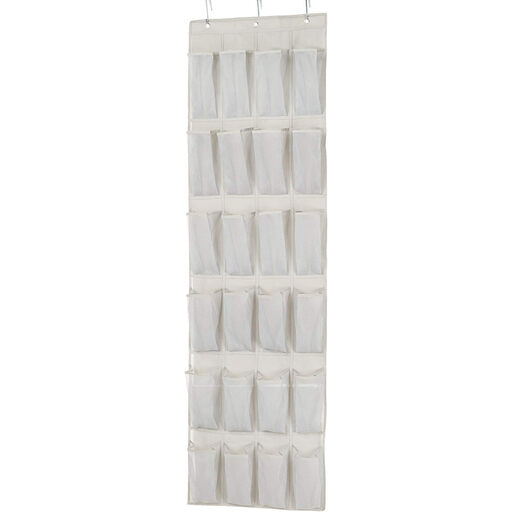
Why this profile? For those who move frequently (students, young professionals). This model is lightweight, easy to assemble and disassemble, and its vertical structure optimizes storage on a minimal footprint.
It embraces its lightweight, nomadic nature. It doesn't pretend to be a permanent, heavy piece of furniture, which prevents any disappointment regarding its sturdiness. The mesh fabric is a real plus for ventilation.
Portable and collapsible design. The breathable mesh fabric helps reduce odors and keep shoes dry.
Explore our full selection of products that meet our demanding selection criteria and current safety standards.
For a small entryway, the absolute priority is a shallow unit, ideally less than 30 cm deep, to avoid obstructing traffic. Vertical solutions, like tall and slim shelves, or expandable models that adjust to the available width, are excellent options for optimizing space.
Yes, provided you check a few key points. A structure made of metal tubes with a protective coating (epoxy, powder paint) will offer good resistance to corrosion and wear. The weak point is often the connectors: opt for models with high-density plastic joints or, even better, all-metal systems.
That's a very bad idea, for obvious safety and stability reasons. To create a tall storage solution, it is imperative to buy models specifically designed to be stackable. Only these have interlocking or clipping systems that ensure the entire structure is cohesive and solid.