
Livraison le jour même ou le lendemain

Qualité garantie

Débloquez vos offres de bienvenue: Livraison GRATUITE | Jusqu'à -80 % | 30 jours d'essai gratuits à JoyPlus
Téléchargez l'application
Shoes piling up in the entryway, a wardrobe bursting at the seams, that morning treasure hunt for the right pair… It's a scenario we all know too well. Investing in good shoe storage seems like the solution, but the market is flooded with models that, behind a flattering design, often hide major design flaws.
As the Head of Product Recommendations at Joybuy, my mission is to help you cut through the noise. Let's forget the marketing jargon and get straight to the point: what separates a reliable storage solution from a purchase you'll regret in a few months? Here are the pitfalls to avoid.
To avoid these traps, there are a few key points to check before you buy. These are the details that transform a simple piece of furniture into a truly effective shoe organiser.
Before you even think about style, measure the space you have, especially for entryway shoe storage. But don't stop there. The most important thing is the internal dimensions of the compartments.
The sturdiness of a shoe cabinet depends directly on its materials and construction.
It all depends on your priorities: dust protection, quick access, or pure aesthetics.
To illustrate these criteria in practice, here are solutions that each meet a specific need.
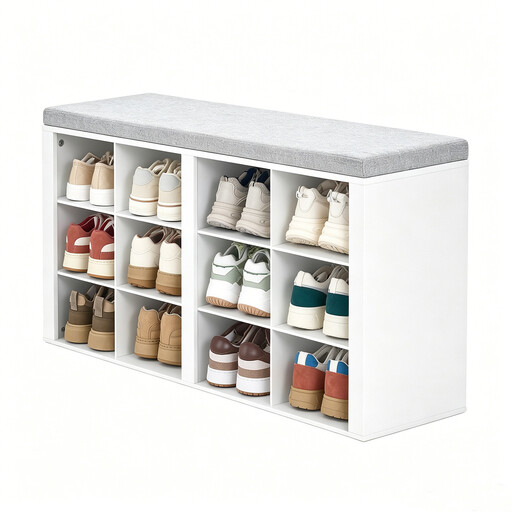
Why we love it: Perfect for a family entryway, it combines a practical seat for putting on shoes with ample storage capacity. It checks all the boxes for organisation and functionality right from the doorstep.
Its height-adjustable shelves bypass the "one-size-fits-all" trap, allowing you to store everything from trainers to ankle boots. Its maximum load of 150 kg ensures excellent stability and puts an end to the "deceptive sturdiness" problem.
Its dual function as both a seat and storage makes it a perfectly optimised 2-in-1 solution for daily use in an entryway or hallway.
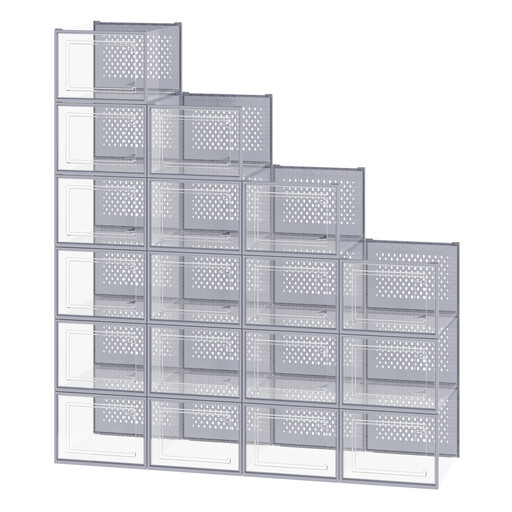
Why we love it: For those who treat their shoes as a true collection, this modular system offers protection, visibility, and organisation. Each pair gets its own showcase, shielded from dust.
The transparent front lets you identify the pair without opening the box. Integrated vents at the back prevent the confinement trap, preserving the shoe's materials.
Its stackable and modular design allows you to expand the storage as your collection grows, creating a truly aesthetic display wall.
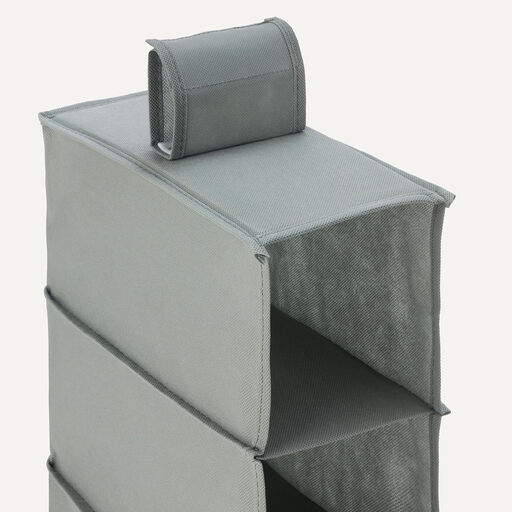
Why we love it: The perfect solution for studios, student rooms, or already-full wardrobes. It utilises the often-wasted vertical space in a closet, freeing up precious floor space.
Since it takes up no floor space, it solves the clutter problem of traditional furniture. Its open structure ensures maximum ventilation, preventing any build-up of moisture or odours.
A "zero-footprint" storage solution that folds up and stores away in a flash. Perfect for temporary or seasonal needs.
Discover our complete selection of products that meet our quality criteria and current standards.
The golden rule: always let your shoes dry completely before storing them. for extra protection, slip bamboo charcoal bags or cedar blocks inside. Ideally, choose a model with built-in grilles or ventilation holes.
There is no universal perfect height. The best approach is to measure your own shoes. As a general rule, 15?cm is sufficient for low-profile shoes (trainers, loafers), while 20-25?cm is needed for ankle boots. The most versatile solution remains a unit with height-adjustable shelves.
Not always, and this is a crucial point. It is imperative to check the maximum static load specified by the manufacturer. A minimum of 100?kg is required, but for comfortable and risk-free daily use by an adult, a capacity of 120 to 150?kg is highly recommended. Never rely on appearance alone.