
Livraison le jour même ou le lendemain

Qualité garantie

Débloquez vos offres de bienvenue: Livraison GRATUITE | Jusqu'à -80 % | 30 jours d'essai gratuits à JoyPlus
Téléchargez l'application
Shoes piling up in the entryway, orphaned pairs at the back of the closet, a chronic lack of space… Finding a truly effective shoe storage system is often a real headache. The market is flooded with solutions, but let's be clear: not all are created equal. A poor choice can quickly turn into a wobbly, undersized piece of furniture, or worse, one that clashes with your decor.
As a product recommendation expert at Joybuy, my mission is to help you see things more clearly. Let's cut through the marketing jargon and get straight to the point, focusing on the criteria that truly make a difference. This guide is designed to help you avoid the most common pitfalls and choose a solution that will meet your needs for years to come.
Before you pull out your credit card, it's essential to know how to spot the design flaws that can render a piece of furniture almost useless in just a few months.
To make an informed choice, focus on these three key points. They will determine the everyday practicality and lifespan of your furniture.
The material is the first indicator of a unit's durability.
A non-negotiable criterion: the maximum static load per tier. A quality shelf should be able to support at least 5 to 10 kg (11 to 22 lbs) to hold several pairs of heavy shoes without issue.
Before any purchase, precisely measure your available space. For entryway shoe storage, every inch counts. A narrow shoe cabinet, with a depth of less than 30 cm (12 inches), is often the ideal solution for hallways or small apartments.
Modularity is a key advantage. Look for models with adjustable or removable shelves. This flexibility allows you to adapt the space to store everything from stilettos to winter boots, thus optimizing every corner of your shoe organizer.
Rather than an endless list, here is a selection of products that meet specific needs, all evaluated against the criteria we've just discussed.
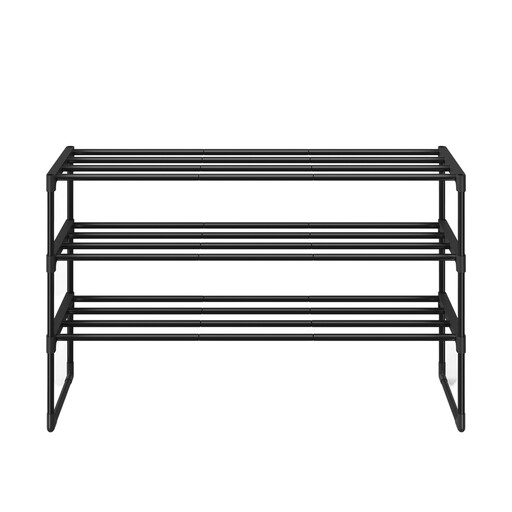
Why we chose it: For those seeking a simple, budget-friendly, and effective solution to declutter an entryway or closet. Its open and modular design is straightforward and gets the job done.
Its structure of metal tubes and quality connectors offers better stability than low-end plastic models. The open design ensures natural ventilation, thus preventing the build-up of bad odours.
Quick, tool-free assembly and the ability to stack multiple racks for storage that grows with your collection.
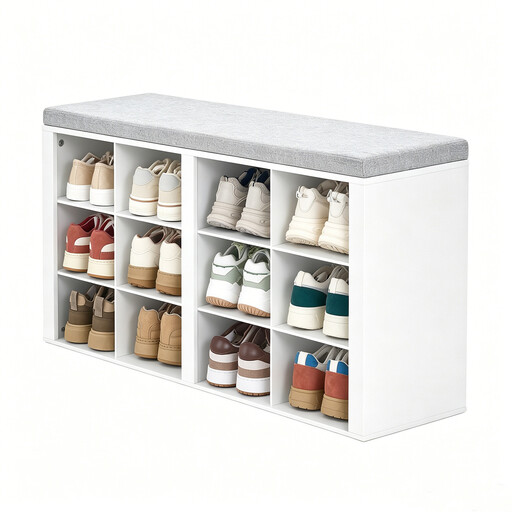
Why we chose it: Perfect for an entryway, this piece combines practical storage with a comfortable seat for putting on shoes. It optimizes space by offering an essential dual function in high-traffic areas.
It avoids the "one-size-fits-all" trap with its height-adjustable shelves, which can accommodate both sneakers and ankle boots. Its 150 kg (330 lbs) load capacity ensures a stable and secure seat.
Dual function: a true shoe bench that also serves as a storage unit. The removable cushion makes cleaning easy.
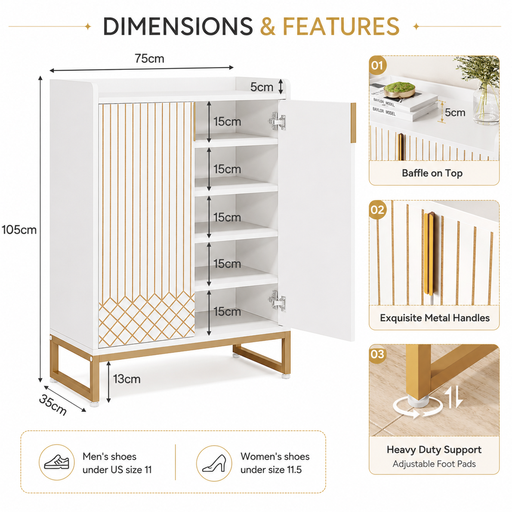
Why we chose it: For those who want a high-capacity solution that integrates seamlessly into their decor like a true piece of furniture. The closed design hides shoes for a clean and tidy appearance.
Its wood-panel structure and metal legs ensure good stability. The doors protect shoes from dust, a common problem with open racks, while guaranteeing an impeccable visual finish.
Large storage capacity (up to 25 pairs) and a modern, minimalist design that blends into the decor of a living room, bedroom, or hallway.
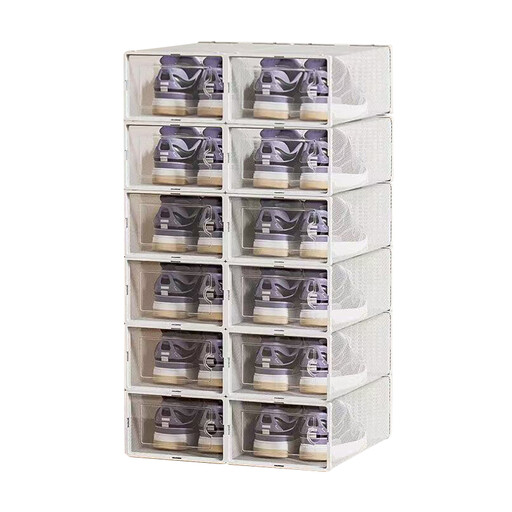
Why we chose it: For enthusiasts who want to not only store but also protect and display their collection. Each pair is treated like a prized possession.
This transparent shoe box protects from dust, moisture, and oxidation, preserving the value of the pairs. The rigid structure allows for stable stacking to create a true "sneaker wall" without any risk of collapse.
The magnetic front door provides instant access to each pair without having to unstack everything. The crystal-clear transparency perfectly showcases the collection.
We have compiled a complete selection of products that meet our quality criteria and current safety standards.
For entryway shoe storage in a tight space, depth is the number one criterion. Measure the available space and opt for a narrow shoe cabinet with a depth of 25 cm (10 inches) or less. Tip-out cabinets or vertical wall-mounted racks are excellent options for optimizing space without obstructing the walkway.
Longevity depends directly on the materials and usage. A simple plastic or fabric rack might last 1-2 years with heavy use. In contrast, a well-maintained unit made of high-density particleboard or a sturdy metal rack can easily last 5-10 years or more. Adhering to the specified maximum load capacity is essential to preserve the structure.
This is a valid concern. First, ensure your shoes are completely dry before storing them. You can place bamboo charcoal or cedar sachets inside the compartments to absorb moisture and neutralize odours. If possible, choose a shoe cabinet that incorporates small ventilation grilles at the back—a design detail that makes all the difference.