
Livraison le jour même ou le lendemain

Qualité garantie

Débloquez vos offres de bienvenue: Livraison GRATUITE | Jusqu'à -80 % | 30 jours d'essai gratuits à JoyPlus
Téléchargez l'application
Shoes piling up in the entryway, an overflowing closet, the morning struggle to find the right pair… It's a scenario we all know too well. A good shoe storage system isn't a luxury, but a necessity for keeping your home clean, organised, and welcoming.
But with the overwhelming number of options available, it's hard to know where to start. This guide is here to help you navigate the choices and select the perfect solution for your space, collection, and lifestyle.
Before you dive in, take a moment to assess your needs. Here are a few key points to consider to make the right choice.
First, and most importantly: measure the space you have available. It's obvious that a narrow entryway won't accommodate the same type of furniture as a large walk-in closet.
The choice between open and closed storage depends primarily on your priorities and your tolerance for (slight) visual clutter.
Think about your collection today, but also for the future. A good shoe organiser should be able to accommodate different types of footwear: trainers, heels, ankle boots, etc. Some models offer adjustable shelves or varied compartment sizes, which provides welcome flexibility for the long term.
To put theory into practice, here is a selection of products that meet a wide range of needs.
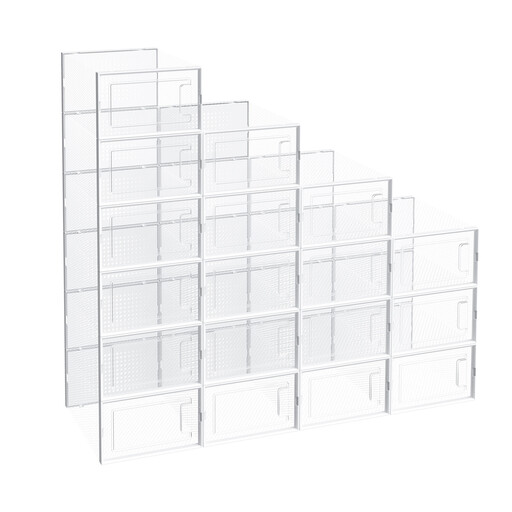
What sets them apart: These individual boxes are the perfect compromise between protection and visibility. Their modular design allows you to create a custom storage wall that can evolve with your collection. The transparent door is a key feature for spotting the pair you want without having to unpack everything.
Advantages:
Who is it for? Ideal for trainer collectors, those who want to protect their most prized pairs, or anyone looking for a flexible solution to integrate into a closet.
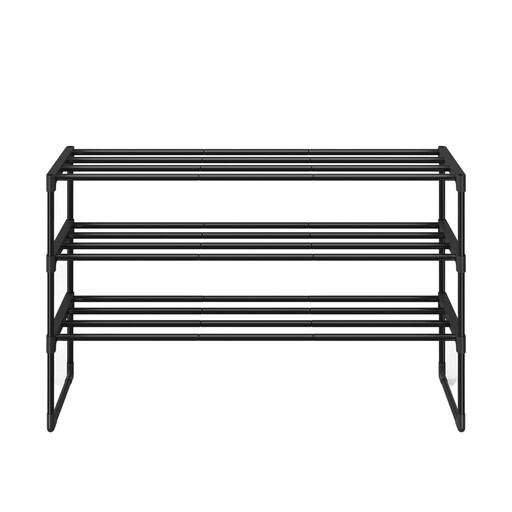
What sets it apart: This shoe rack is all about simplicity and efficiency. Its slim yet sturdy metal frame offers impressive storage capacity (up to 20 pairs) with a minimal footprint. Its versatility is a real plus: it can be used alone, inverted, or even stacked with a second unit to double the capacity.
Advantages:
Who is it for? Perfect for families or anyone who needs immediate access to their everyday shoes. It's a practical and budget-friendly solution for decluttering an entryway or closet in no time.
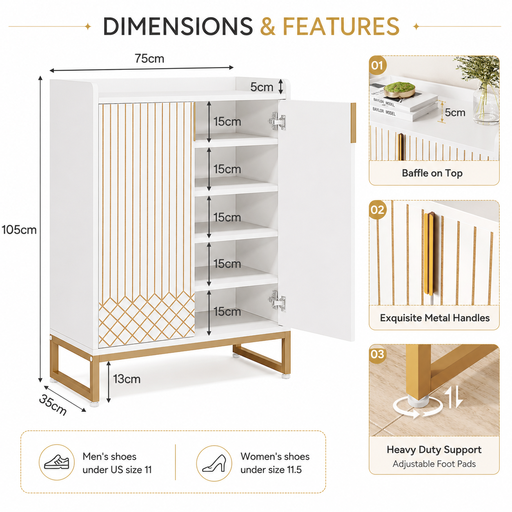
What sets it apart: More than just storage, this shoe cabinet is a true piece of decorative furniture. With its clean white finish, gold handles, and diamond pattern, it elegantly complements a living room, bedroom, or polished entryway. The doors allow you to stylishly conceal all the clutter.
Advantages:
Who is it for? For those who prioritise aesthetics and want a storage solution that blends seamlessly into their decor. Ideal for people who prefer to keep their shoes hidden while organising a large collection.
Explore the Tribesigns Shoe Cabinet
Organising your space is an excellent first step. And if, once your storage is optimised, you feel the urge to welcome a new pair into your collection, feel free to explore our selections.
For example, discover our selection of Shoes for Natural Movement, designed to combine comfort and style for everyday wear.
1. How can I prevent bad odours in a closed shoe cabinet? To maintain good hygiene, make sure your shoes are dry and clean before storing them. You can also place lavender sachets, cedar blocks, or dedicated deodorisers inside your shoe cabinet or boxes. If the cabinet design allows, leave the doors slightly ajar from time to time to air it out.
2. What is the ideal depth for a shoe cabinet? The standard depth for a shoe cabinet is typically between 30 and 35 cm. This is sufficient for most shoe sizes. Before buying, we recommend measuring your largest pair of shoes (often boots or large trainers) to ensure they will fit without being forced.
3. How can I effectively organise shoes for the whole family? The key is to assign a dedicated space for each family member. A multi-tiered shoe rack is perfect for this: one tier per person. For children, colourful or labelled boxes can make tidying up more fun. Combining multiple systems is often the best strategy: an open rack in the entryway for everyday shoes, and storage boxes in closets for seasonal or more delicate pairs.