
Livraison le jour même ou le lendemain

Qualité garantie

Débloquez vos offres de bienvenue: Livraison GRATUITE | Jusqu'à -80 % | 30 jours d'essai gratuits à JoyPlus
Téléchargez l'application
Whether you're a rare sneaker collector or just a fan of fine footwear, the problem is always the same: your entryway or closet quickly turns into a disaster zone. The shoe box seems like a miracle solution, but be warned: not all models are created equal. The wrong choice guarantees damaged pairs, a wobbly stack, and money down the drain. Before you invest, it's crucial to know how to spot the hidden flaws behind slick marketing.
This guide breaks down the essential criteria for choosing a shoe organizer that is both functional and durable, protecting your collection while optimizing your space.
The market is flooded with options, but many have design flaws that only become apparent with use. Here are the three most common traps:
To make the right choice, focus on a few technical details that make all the difference in terms of durability and practicality.
The sturdiness of a plastic shoe box depends on its composition. Quality models combine two types of plastic:
Also, check for reinforcement ribs and a reliable interlocking system. A good stackable shoe box must connect firmly to create a stable tower, even when stacked several units high. This is the key to successful space-saving shoe storage in a closet or entryway.
The purpose of a good shoe organizer is simple: to see and grab any pair effortlessly. Opt for a transparent shoe storage unit with a drop-front door. Unlike boxes with traditional lids, this system allows you to access the bottom pair without having to unstack everything. A significant time-saver in your daily routine.
Before buying, take the time to measure your largest pair of shoes (length, width, and height). Then, compare these measurements to the internal dimensions of the box, not the external ones. For collectors of high-tops or those with large shoe sizes, look for XL models with a length exceeding 34 cm and a height of 18 cm.
Finally, ensure the boxes have ventilation holes, often located at the back. This is a non-negotiable detail for keeping your shoes fresh and avoiding unpleasant surprises.
Here are a few options that meet these criteria, suitable for different types of users.
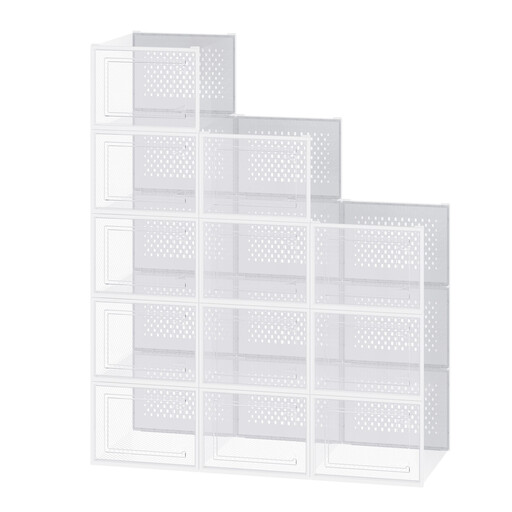
Why this model? Perfect for sneakerheads who want to create a clean, organized "shoe wall." These boxes are designed to showcase a collection while protecting it.
Its generous dimensions (35 x 25 x 18.5 cm) easily accommodate high-top sneakers and large sizes, avoiding the trap of cramped boxes. The integrated ventilation preserves shoe quality.
Large capacity and a transparent PS front door for perfect visibility. The stacking system is designed for stability, ideal for creating a column of **closet storage boxes**.
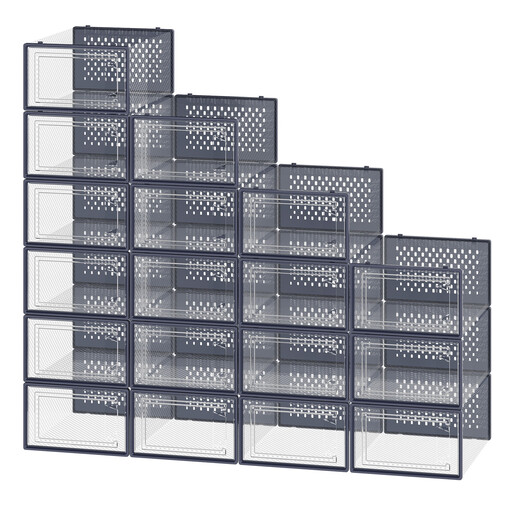
Why this model? For those living in apartments or studios who need to store a sizable collection without sacrificing floor space. The set of 18 is an excellent starting point.
Its PP and PS construction, with a reliable interlocking system, prevents the risk of collapse—the classic pitfall of low-quality stacked boxes.
An excellent price-to-quantity ratio for effective vertical storage. It's perfect for turning an empty wall into a 100% functional storage space.
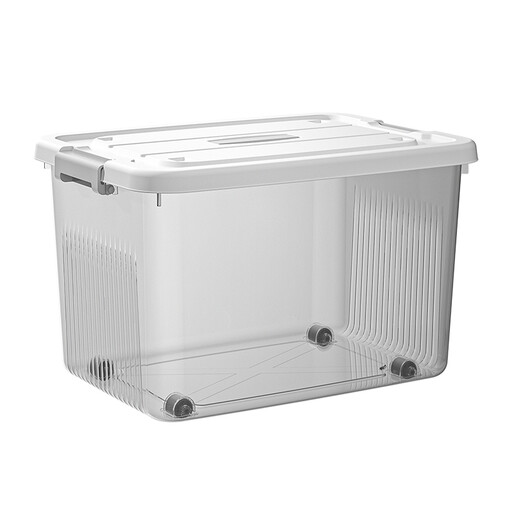
Why this model? For those seeking a robust and versatile storage solution, capable of storing not only shoes but also boots, off-season clothing, or small tools.
Its structure is clearly reinforced (2.5 mm thickness and ribs), which directly counters the trap of thin, brittle plastics. It's designed to support a heavier load.
Robustness and versatility. Its clip-on lid and integrated handles make it easy to transport, which is ideal for storage in the garage, basement, or attic.
We have curated a complete selection of products that meet our selection criteria and quality standards.
The golden rule: measure your shoes. For high-top sneakers (like Air Jordan 1s) or sizes above a UK 10 (EU 44), opt for boxes with an internal length of at least 34 cm and a height of 18 cm. Always check the internal dimensions provided by the manufacturer before buying.
Most models are shipped flat for easy assembly. Generally, you just need to unfold the flexible PP walls and clip them into the more rigid front and back frames. Follow the instructions and snap the pieces together without forcing them to avoid damaging the clips.
Yellowing is often caused by prolonged exposure to the sun's UV rays. Quality plastics like PP and PS are more resistant to this phenomenon than low-end plastics. To preserve their transparency, it's best to place your shoe wall away from direct sunlight.