
Livraison le jour même ou le lendemain

Qualité garantie

Débloquez vos offres de bienvenue: Livraison GRATUITE | Jusqu'à -80 % | 30 jours d'essai gratuits à JoyPlus
Téléchargez l'application
Buying a new high-end smartphone, like an iPhone 17 Pro or a Galaxy S26 Ultra, is a significant investment. Protecting this technological marvel from drops becomes a top priority. Faced with an overwhelming number of protective cases, it's easy to get lost and make the wrong choice, often due to misleading marketing claims.
As a product expert at Joybuy, I'm here to help you see things more clearly. Let's debunk the common pitfalls and identify the objective criteria for choosing a shockproof case that perfectly combines protection, practicality, and design.
The 3 Pitfalls to Avoid When Choosing a Protective Case?:
To make an informed choice, it's better to rely on concrete technical specifications than on advertising slogans.
A case's ability to absorb shock depends on its design and the materials it's made from.
For iPhone owners, strong MagSafe integration is a non-negotiable criterion. The magnetic force, measured in Newtons (N), is an excellent indicator. A force of 8?N is considered standard, but the highest-performing models can reach 19?N or more, ensuring a rock-solid attachment for your accessories. The presence of technologies like Halbach magnet arrays ensures perfect alignment for fast and efficient wireless charging.
A slim case is often sought after to avoid adding bulk to the phone's design. However, you need to find the right balance so as not to sacrifice protection. Models less than 1?mm thick offer effective protection against scratches but will quickly show their limits in a major fall.
The grip is also a key element: a non-slip case is a drop avoided. Materials with a matte finish or textured edges reduce the risk of slipping. Finally, some cases go a step further by integrating practical features, like a case with a kickstand that can revolutionise your daily use, whether for watching videos or making video calls.
Every user has specific needs. Here are a few recommended options to meet different types of expectations.
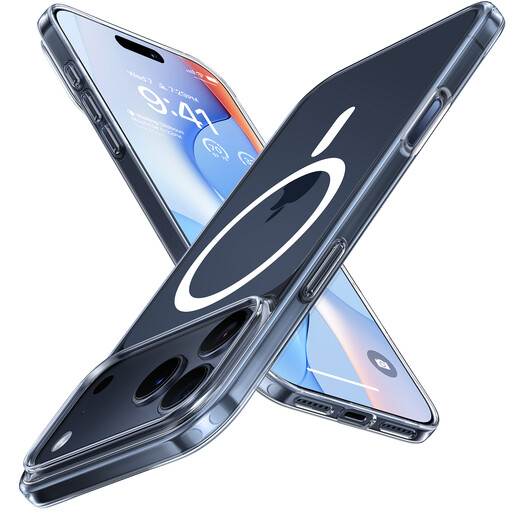
Why we chose it : For those who love the feeling of a 'naked' phone but don't want to skimp on basic protection. This case respects the ultra-slim design of the iPhone 17 Pro while offering one of the most robust MagSafe experiences available.
It counters the weak MagSafe pitfall with a magnetic force of 19 N, more than double the market standard. Its slimness (0.8 mm) is cleverly compensated for by reinforced corners and raised bezels.
Extreme slimness with a feel that's almost identical to a naked phone, without sacrificing magnet strength for your accessories.
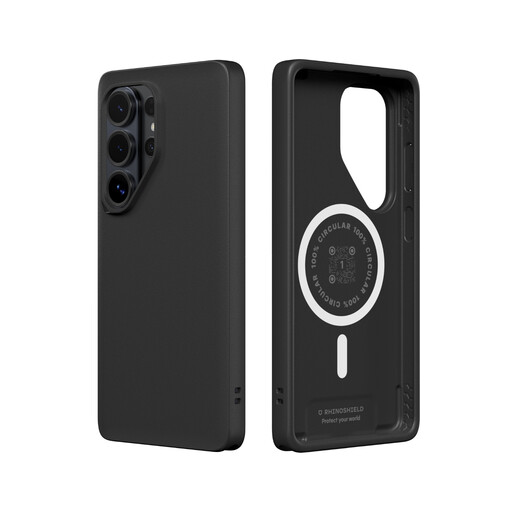
Why we chose it : Ideal for those who make protection their absolute priority. This case is designed for high-level drop protection, an essential asset for a device of the calibre of the Galaxy S26 Ultra.
It doesn't just rely on the 'military-grade' marketing label and provides concrete figures. According to RHINOSHIELD, its reinforced corner structure absorbs up to 71% of impact energy.
A design entirely focused on shock absorption, with a specific internal structure and advanced materials, all in a surprisingly understated package.
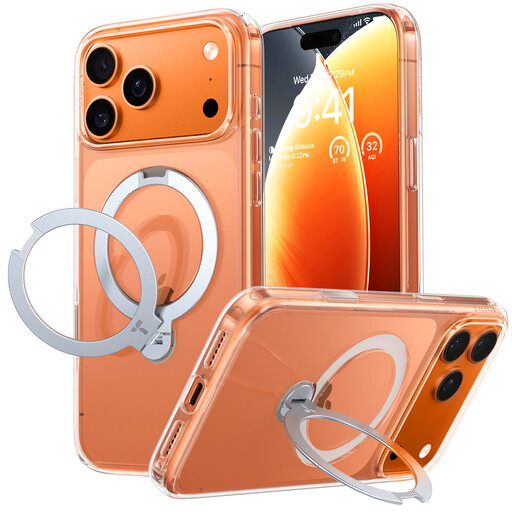
Why we chose it : Perfect for those who use their iPhone 17 Pro or Pro Max as a work and entertainment tool. The integrated kickstand offers formidable versatility, both at the office and on the go.
It integrates an advanced feature (the rotating kickstand) without sacrificing the fundamentals: serious shock protection and flawless MagSafe compatibility.
The 360° rotating kickstand allows for multi-angle positioning (landscape and portrait), turning the case into a true Swiss Army knife for productivity and multimedia.
We have selected a full range of products for you that meet these demanding specifications and current safety standards.
No. This label indicates that it has passed one or more resistance tests according to a military standard (usually MIL-STD-810G). This means it has above-average durability, but it doesn't make it indestructible. The drop height, impact angle, and landing surface are all variables that can change the outcome of an accident.
Resistance to yellowing primarily depends on the quality of the materials. Manufacturers like RHINOSHIELD or TORRAS use next-generation polymers with anti-UV treatments and formulas that slow down the oxidation process. Look for models advertised as "anti-yellowing" or those made from composite materials that include these technologies.
Not necessarily. The efficiency of wireless charging depends less on the case's thickness and more on the quality and alignment of its magnets. A well-designed case, even a rugged one, will have a magnetic ring positioned with millimetre precision to avoid any interference and maintain optimal charging speed. The strength of the magnets also plays a crucial role in keeping the charger perfectly in place.