Households with dishes piling up every day
If several people cook, compare the stated capacity with your plates, glasses, dishes and pans. The basket layout matters just as much as the number of place settings when you’re working out what will fit.


In a shared kitchen, start by choosing a dishwasher that fits the space available, can be connected up and has room for your household’s everyday dishes. A freestanding model gives you more flexibility over the front, while a built-in model requires a compatible kitchen. If space is tight, consider a compact or tabletop model, provided its capacity and connections are suitable. Then compare the noise level, Eco programme duration and consumption figures on the energy label.
If several people cook, compare the stated capacity with your plates, glasses, dishes and pans. The basket layout matters just as much as the number of place settings when you’re working out what will fit.
If a cycle might run while others are sleeping, working or using the living area, compare the noise level and Eco programme duration. These are among the details shown on the energy label, according to ADEME.
Measure the available space and check the connections before choosing a size. If you rent, you’ll also need to check whether any changes to the property or its fittings require permission before work begins.
Start with the available space and connections, then make sure the capacity suits your household’s routine. Freestanding and built-in models meet different installation needs. For a compact or tabletop model, pay particular attention to usable capacity and the connections specified in the manual.
| Feature | What to check | Best suited to |
|---|---|---|
| Loading capacity | The number of place settings shown on the label and how the baskets are arranged for the dishes and pans you use regularly. | If several people cook every day, I want to fit bulky utensils too, without having to run another cycle; around 36% of consumers prioritise capacity. |
| Space and installation | The space available, door clearance, water supply, drainage and socket; for a built-in model, check that the housing and front panel are compatible. | In a small kitchen or rented home, I need to find a practical spot without assuming alterations are possible; around 29% of consumers put space and installation first. |
| Noise and schedules | The noise level in dB, noise class and Eco programme duration on the model’s label. | If the kitchen opens onto the living area or our schedules differ, I’m looking for a cycle that fits around when everyone is at home; around 21% of consumers prioritise noise and cycle scheduling. |
| Water and energy | Water consumption in litres per reference cycle and energy use in kWh per 100 cycles, taking capacity into account. | If the dishwasher is used regularly, I want to compare consumption figures on a like-for-like basis rather than rely on a programme’s name; for around 14% of consumers, water and energy are the top priorities. |
According to ADEME and the European Commission, the label includes details such as capacity, water use per reference cycle, energy use per 100 cycles, Eco programme duration and noise. Compare these figures across models, then check separately whether your larger dishes will fit in the baskets.
Capacity doesn’t tell you on its own how much room there is for the pans and dishes used by a shared household. Que Choisir includes a varied load of dishes in its testing procedure.
Before choosing a model, check the basket layout and adjustable features in the manual or on the appliance itself.
The comparable water, energy and duration figures on the label refer to the reference Eco programme, not necessarily to a quick programme.
Compare the Eco figures first, then check the conditions for other programmes in the manual for the model you’re interested in.
A built-in model must fit the housing and front panel. Even an appliance that sits on a worktop needs its water supply and drainage checked.
Measure the available space and check the manual for connection requirements. For rented homes, ANIL notes that any changes to the property or its fittings require the landlord’s written permission.
In an open-plan kitchen, a marketing claim tells you less than the model’s noise level in dB and its noise class.
Compare these details on the labels and, if available, look for a test of the exact model number.
A brand worth considering if you want to compare different installation types and how they fit into your kitchen.
Worth a look if cycle planning and monitoring would be useful in a kitchen shared by several people.
A brand to explore if basket layout and the stated noise level are important to your choice.
These freestanding and built-in models let you compare two ways to equip a shared kitchen. Before choosing a model, check the space available, connections and usable capacity.
 Image unavailable
Worth considering if your household wants a stated capacity of 14 place settings without an integrated front. The model title lists seven cycles and a grey finish; check that the baskets suit your dishes and that the appliance fits the space available.
 Image unavailable
A model to compare if you’re looking for a freestanding dishwasher with a 14-place-setting capacity. The listing states a width of 60 cm, a grey finish and an E energy rating. Check the full dimensions and the Eco programme figures on the model’s label.
 Image unavailable
Worth considering if you want to handle your household’s washing-up in a freestanding model and have enough space for one. The listing states a width of 60 cm, a capacity of 14 place settings, a stainless steel finish and a C energy rating. Confirm the exact external dimensions and how they’re measured before buying.
 Image unavailable
Worth considering if your kitchen is designed for a built-in dishwasher. The listing states a width of 60 cm, a capacity of 13 place settings and a C energy rating. Check the exact dimensions, housing, front panel and connections before choosing this model.
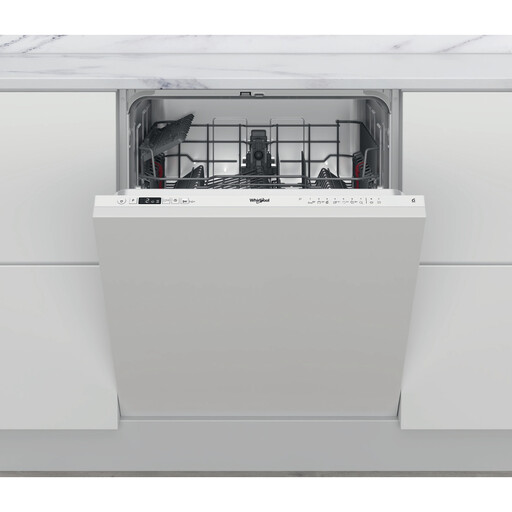 Image unavailable
An option to compare if you want to fit a 14-place-setting model in a compatible kitchen. The listing states a width of 60 cm, a white finish and an E energy rating. Check the housing dimensions and the front panel and connection requirements against the manual.
Compare capacity in place settings, energy use in kWh per 100 cycles, water use per reference cycle, Eco programme duration and noise in dB, along with the noise class. ADEME and the European Commission present these figures as common points of reference. Also check the baskets if you often use large dishes.
Compare its duration with the times when your household can run a cycle. The Eco programme is used as the reference for the energy label’s consumption figures. For a shorter programme, check the conditions of use and stated consumption separately for the model you choose.
If the installation involves changing the rented property or its fittings, you’ll need the landlord’s written permission, as ANIL points out. Check your tenancy agreement, inventory and proposed alterations before work begins. Choosing a freestanding or tabletop appliance alone won’t settle the question.
For a freestanding or built-in model, check the space needed for the water supply, drainage, electrical socket and connections, as well as the stability of the location. Whirlpool France recommends these checks for installation. For a tabletop model, follow the manual for the exact model rather than assuming it uses the same connections.