Start by measuring the space available, then choose the appliance that addresses your biggest day-to-day need: storing groceries, washing up after shared meals or keeping more frozen food. A fridge-freezer should offer an interior layout that works for everyone. A 60 cm dishwasher needs a suitable space, while a separate freezer means another appliance to install and maintain.
Who are these options for?
Housemates sharing fridge space
When personal groceries and shared food sit side by side, the split between fridge and freezer space matters just as much as the total capacity. Check the shelves and drawers too, to see how everyone can find their food.
Housemates who often cook together
Plates, pans and cookware can quickly pile up after a shared meal. If there’s a suitable space and the necessary connections, compare the capacity of a 60 cm dishwasher with the room its racks actually offer.
Housemates with different schedules
In an open-plan kitchen or one close to living areas, noise can be a deciding factor. Compare the decibel ratings and noise classes of the models you’re considering, rather than relying on a ‘quiet’ label alone.
Which criteria should you prioritise?
Fridge-freezer
Worth considering: if you want to store fresh and frozen food in one appliance, with spaces that housemates can divide between them.
The trade-off: the freezer compartment may be too small for bulk shopping; a built-in model also needs a compatible housing space.
60 cm dishwasher
Worth considering: if shared meals regularly leave you with a lot of washing up and your kitchen has enough width.
The trade-off: the place setting capacity doesn’t guarantee room for large dishes; a built-in model also comes with housing and door-panel requirements.
Separate freezer
Worth considering: if the freezer compartment in your fridge-freezer no longer holds enough food for everyone and you have space for another appliance.
The trade-off: this second appliance takes up space, needs the clearances specified in its manual and adds to the fridge-freezer’s energy consumption.
When kitting out a shared kitchen, start with the biggest constraint on meals and shopping, then check what you can install.
| Criteria | What to check | Who it matters to |
|---|
| Storage and organisation |
Compare the fridge and freezer capacities separately, then check the layout of the shelves and drawers. Measure the space and check how the doors open. |
If several people need to find their groceries without crowding the same compartments, the interior layout matters more than the total capacity alone. Around 42% of consumers prioritise this need for organised storage. |
| Washing up after shared meals |
Check the available width and whether the racks leave enough room for pans and dishes, as well as the stated place setting capacity. |
After sharing a meal, you want to avoid having washing up left on the worktop for long. Managing the washing up is the top priority for around 33% of consumers. |
| Noise and energy use |
Compare the decibel ratings and noise classes. For dishwashers, ADEME also lists water per cycle and energy per 100 reference cycles on the label. |
In an open-plan kitchen or a home where people keep different hours, you’ll want an appliance whose noise and energy use suit everyone. This is the top priority for around 25% of consumers. |
Mistakes to avoid
-
Choosing a built-in appliance without checking the housing space
A built-in dishwasher must fit the space provided and be compatible with its door panel; it isn’t installed like a freestanding model.
Measure the width, height and depth, then compare them with the model’s installation diagram. Before ordering, also check the installation requirements and how the door panel is fitted.
-
Assuming the stated place setting capacity means there’s room for dishes
A place setting capacity doesn’t tell you on its own whether the dishwasher can fit the frying pans, salad bowls and dishes you use for shared meals.
Check whether the racks are height-adjustable and whether there’s room for the bulky items you actually use.
-
Relying on a ‘quiet’ label alone
Noise deserves particular attention if the kitchen opens onto the living room or housemates keep different hours.
Compare the decibel rating and noise class given for the models you’re considering, rather than relying on their marketing descriptions alone.
-
Adding a freezer without planning where it will go
A separate freezer needs its own space, with enough room to open the door and meet the clearances specified by the manufacturer.
Measure the available width, height and depth, then check the chosen model’s manual for ventilation and door-opening requirements.
Brands to consider by appliance
Bosch
A brand to consider for freestanding and built-in dishwashers, especially if dimensions and rack layout are key to your choice.
- Bosch Électroménager France’s product details for the SMS6ECI36E list an adjustable upper rack and dimensions of 845 × 600 × 600 mm.
- These specifications apply to the SMS6ECI36E. Check the dimensions and racks separately for any other model.
Electrolux
A brand to compare when you need a built-in fridge-freezer to fit a kitchen housing space and want to consider how fridge and freezer capacity is divided.
- Electrolux France lists a fridge-freezer with 248 L net capacity, split between 186 L of fridge space and 62 L of freezer space.
- The housing space listed for this appliance is 1 780 mm. Neither this measurement nor this capacity split automatically applies to other Electrolux fridge-freezers.
Whirlpool
A brand to consider if you need a separate upright freezer because you need more space for frozen food.
- Whirlpool France lists an upright freezer with a capacity of 286 L and five drawers, a layout worth considering for organising your groceries.
- Before choosing a model, check its dimensions, door opening and the ventilation clearances required by its manual.
Appliances for a shared kitchen
These Joybuy appliances showcase three different options for a shared kitchen: organising chilled and frozen food in a fridge-freezer, washing up after shared meals or adding more freezer space. Compare each appliance’s size with the space available and how you plan to use it before choosing.
 Image unavailable
Candy CFQQ5T817EPS, 4-door fridge-freezer, 467 L
Worth considering if several housemates want to divide their groceries between the compartments of one appliance.
The title lists a capacity of 467 L, four doors, Total No Frost technology and an E energy rating. Check how the interior capacity is divided and allow enough room to open the doors.
View on Joybuy
 Image unavailable
Samsung DW60M6050FS, freestanding dishwasher, 14 place settings
Worth considering if shared meals regularly leave you with a pile of washing up.
The title lists 14 place settings and seven programmes. Check the space, connections and whether the racks can fit larger dishes.
View on Joybuy
 Image unavailable
AEG FSB34707Z, integrated dishwasher, 14 place settings
Worth considering for shared washing up if your kitchen is designed for a fully integrated appliance.
The title lists 14 place settings and a C energy rating. It also describes the appliance as 60 cm wide, but the dimensions shown for this product don’t match. Check the measurements on the installation plan, and confirm that the housing space and door panel are compatible.
View on Joybuy
 Image unavailable
AUCMA, 291 L convertible chest freezer
Worth considering if the freezer compartment in your fridge-freezer is no longer big enough and you have space for a separate chest freezer.
The title lists a capacity of 291 L, a switchable freezer and fridge function, an E energy rating and a removable basket. Check whether this layout works for sharing groceries, and allow room to open the lid and for ventilation clearances.
View on Joybuy
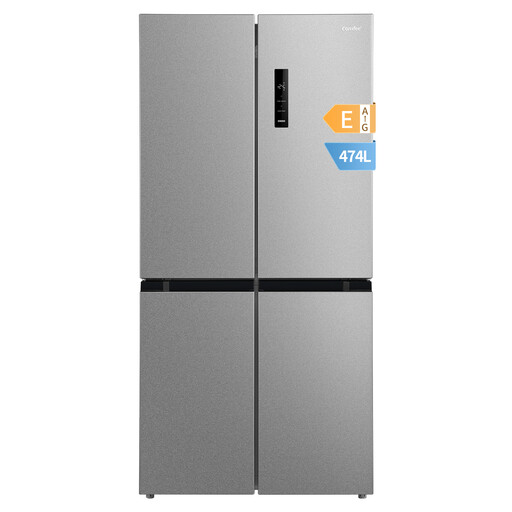 Image unavailable
COMFEE’ RCF470LS2EU(E), 4-door fridge-freezer, 474 L
Worth considering if several housemates want to organise their food in a four-door appliance.
The title lists a total capacity of 474 L, a vegetable drawer with three temperature settings and an E energy rating. Compare the fridge and freezer capacities separately, then check the noise level and dimensions against your kitchen’s requirements.
View on Joybuy
Frequently asked questions
Is a 60 cm dishwasher always the better choice for a shared house?
No. It’s best suited to regular washing up and needs a compatible space. UFC-Que Choisir says 60 cm built-in models are listed for 12 to 17 place settings, compared with 9 to 10 for 45 cm models. Check the racks too if you often wash large dishes.
What should you measure before ordering a dishwasher?
Measure the width, height and depth of the space, then compare them with the installation diagram for your chosen model. For a built-in appliance, also check the housing space, door panel and clearances needed to open it.
How do you compare the energy and water use of two dishwashers?
Compare figures based on the same reference. ADEME explains that the label includes energy use in kWh per 100 cycles and water use in litres per cycle. These figures won’t necessarily reflect every programme you use.
What should you do with an old household appliance in France?
Ask whether it can be taken back when you buy an appliance of the same type. The French Ministry for Ecological Transition’s FAQ explains this ‘one-for-one’ take-back scheme for household appliances. Check the arrangements for handing over your old appliance with the retailer.


