Flatmates with an open-plan kitchen
The fridge will be running close to your living area. Compare the stated noise levels, but bear in mind that vibrations and the type of noise can also affect how disruptive it feels, as UFC-Que Choisir points out.


In a shared house, start by comparing fridge-freezers if your kitchen needs to accommodate a single appliance of standard width. Check the space for fresh food and frozen food separately, then compare the dimensions and stated noise level. A multi-door model or a separate freezer may be worth considering if your shopping habits call for it and you have the space. Compare the kWh/year figures on the energy labels too: total capacity and energy rating alone aren’t enough to make your decision.
The fridge will be running close to your living area. Compare the stated noise levels, but bear in mind that vibrations and the type of noise can also affect how disruptive it feels, as UFC-Que Choisir points out.
If several people stock the appliance after a food shop, look at the capacity of each compartment and how the shelves and drawers are arranged. Total capacity alone won’t tell you where you’ll be able to store your food.
To increase capacity without immediately opting for a very wide appliance, compare the width, height and depth of fridge-freezers, and check the route to their final position.
Start with a typical week’s shopping, then check that your preferred storage arrangement will fit in the kitchen and along the delivery route.
| Priority | What to check | What I need |
|---|---|---|
| Shared storage | Compare the usable capacity in litres of the fridge and freezer separately. Check the drawers, shelves and space for the containers you usually use. | We do a shared food shop, so I want to be able to find my food without one person’s shopping filling up the fridge or freezer. |
| Noise | Compare the stated noise levels of appliances of a similar size. In an open-plan kitchen, an independent test that also looks at vibrations can provide useful extra information: UFC-Que Choisir points out that how we perceive noise is subjective. | The kitchen opens onto the living area, so running noise matters to me. However, a dB figure doesn’t guarantee good acoustic comfort. |
| Energy use | According to the European Commission, the EU energy label shows information including kWh/year, storage volumes and airborne acoustical noise emissions. Compare the kWh/year figures for appliances with a similar capacity to meet your needs. | As the appliance will be running all the time, I want to compare its annual energy use rather than relying on its energy rating alone. |
| Size | Measure the width, height and depth, as well as the doors, corridors and lifts along the route. Check the manual for the clearance needed to open the doors and allow ventilation. | The model needs to fit through the building, fit in the kitchen and have enough room for its doors to open. |
The capacity guideline published by UFC-Que Choisir is a general average, not a rule specifically for shared houses. It doesn’t account for how much space you actually need for fresh food, frozen food and larger containers.
Make a list of a typical week’s shopping, then compare the usable capacity and layout of both compartments.
According to UFC-Que Choisir, two fridges with the same stated noise level may sound different, depending on the type of noise and the vibrations.
For an open-plan kitchen, compare the stated figures for similar-sized models and, if possible, look for an independent test that also assesses perceived noise.
A wide appliance may offer the storage you want, but it still needs to fit through a doorway and corridor and into the space available in your kitchen.
Check the appliance and packaging dimensions with the retailer, measure the delivery route and allow enough space for the doors to open.
The rating doesn’t replace the annual energy use in kWh, particularly when comparing appliances with different capacities. Positioning and air circulation also matter in everyday use.
Compare the kWh/year figures on the labels for capacities that suit your shared house, then follow the clearance guidance in the manual. As general advice, UFC-Que Choisir recommends leaving at least 10 cm above and behind the appliance.
These models show a range of layouts and sizes; their features shouldn’t be taken as representative of each brand’s entire range.
The freestanding KGN362LBF fridge-freezer is a useful point of comparison for a kitchen where width and stated noise level are important.
The RB38C600ESA is an example of a fridge-freezer whose capacity is worth considering when kitchen width is limited.
The GML945NS9E multi-door fridge-freezer is an example of a high-capacity option for kitchens with room for a larger appliance.
The S+ 7 HSPR79F18DWMB shows another way to organise storage when your requirements for fresh and frozen food vary.
This selection includes fridge-freezers for narrower kitchens and wider appliances for larger shared shops. Check each product listing against the space you actually have and the amount of room you need for fresh and frozen food.
 Image unavailable
Its four doors may suit a household where everyone needs easy access to fresh and frozen food. The product listing gives a total capacity of 467 L, Total No Frost technology and an E energy rating. Check the capacity of each compartment, the dimensions and the door clearance to make sure it will work in your kitchen.
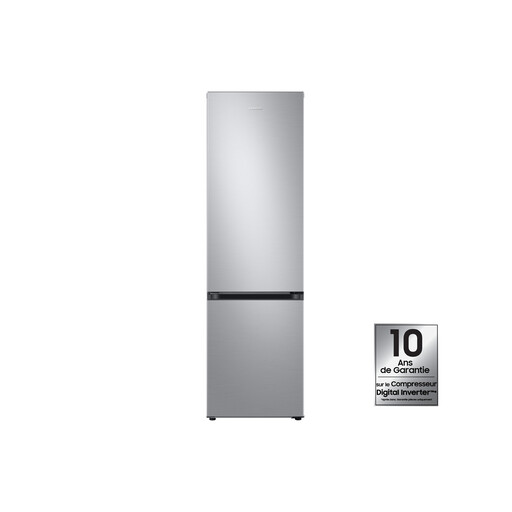 Image unavailable
This 390 L fridge-freezer is worth considering if several flatmates want to store their shopping in one appliance. The product listing gives it a C energy rating. Compare the capacity of each compartment, the dimensions and the kWh/year figure before choosing.
 Image unavailable
Its stated total capacity of 344 L makes it easy to compare with other fridge-freezers you’re considering for a shared house. The product listing gives it an E energy rating. In particular, check the space for fresh and frozen food and the interior layout.
 Image unavailable
If your shared shops include lots of frozen food, the product listing gives separate capacities of 333 L for the fridge and 192 L for the freezer. It also lists No Frost, an E energy rating and a stated noise level of 37 dB. Check the dimensions and kWh/year figure, and don’t treat the dB level as a guarantee of quiet operation.
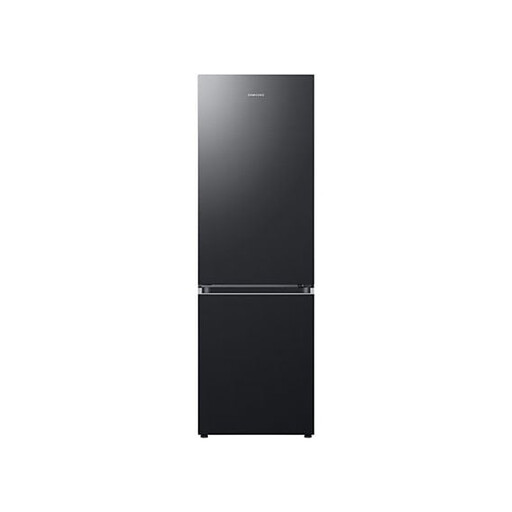 Image unavailable
This 344 L fridge-freezer has a D rating on its product listing. It’s worth comparing with other models if one appliance needs to hold the household’s shopping. Check the balance of fresh and frozen storage, the dimensions, stated noise level and kWh/year figure to see how well it will suit your home.
There’s no one-size-fits-all capacity for shared houses. UFC-Que Choisir gives an average guideline of 100 to 150 L for one person, plus 50 L for each additional person. Use this as a starting point, then compare it with your usual shopping and check the fridge and freezer capacities separately.
No. The stated figure lets you compare models, but it can’t tell you on its own how disruptive the appliance will be in your kitchen. UFC-Que Choisir points out that perception also depends on the type of noise and vibrations. If your kitchen is open-plan, look for an independent acoustic test of the model you’re considering.
Compare their annual energy use in kWh, making sure both models offer the capacity and format you need. According to the European Commission, the energy label also shows the energy rating, storage volumes and airborne acoustical noise emissions. The rating alone therefore doesn’t tell you everything about the difference between two appliances.
Measure the final space, as well as the doors, corridors and lifts the appliance will need to pass through. Check the package dimensions with the retailer too. Allow room for the doors to open and for the ventilation clearances given in the manual. As general advice, UFC-Que Choisir recommends leaving at least 10 cm above and behind the appliance.