What should you compare before choosing?
Front-loader
Consider it: if there’s room to open the door and your usual loads justify its capacity. UFC-Que Choisir reports that front-loaders offer greater capacity, while top-loaders do not exceed 8 kg.
Bear in mind: you’ll need enough depth and clearance. The loading style alone doesn’t tell you how noisy the spin cycle will be.
Top-loader
Consider it: if the available width limits your options. The AEG LTR8C7331A is one example, with a stated width of 397 mm.
Bear in mind: you’ll need space above the machine to open the lid, and a capacity that suits how often you do laundry.
Washer-dryer
Consider it: if you need an integrated drying function and don’t have space for two appliances.
Bear in mind: the drying capacity is lower than the washing capacity. UFC-Que Choisir also notes that drying takes longer than with a separate tumble dryer and uses water.
Once you’ve chosen a format, compare models using measurements that reflect how you’ll use them at home.
| What to compare |
What to check |
What I need |
| Spin noise |
Compare the stated noise level in dB and the noise class on the label. Make sure the machine is installed according to the instructions, on a suitable, level floor. |
I want to minimise disruption during laundry, including vibrations that could disturb other people in the home. |
| Space and capacity |
Measure the height, width and depth, check delivery access and allow space to open the door. Match the capacity in kg to your usual loads rather than simply counting the number of housemates. |
A larger drum is only useful if our household’s laundry needs justify it and the machine fits in the room. |
| Programme duration and consumption |
Compare the kWh per 100 cycles, litres per cycle and Eco 40-60 programme duration shown on the energy label, using the information outlined by the European Commission. |
When several people are booking laundry slots, I need to know how long the reference programme takes as well as how much energy and water it uses. |
| Integrated drying |
Check the wash and drying capacities separately, along with the duration and consumption of cycles that include drying. |
If we can’t easily hang out our washing, I need to know how much can actually be dried in one go. |
| Installation |
Check the space and access routes, then consult the instructions for your chosen model for connection and installation requirements. |
Before ordering, I want to be sure the appliance can be delivered and installed in the space we’ve planned for it. |
A guide to brands and their models
These examples show different formats; their features shouldn’t be taken as representative of every appliance from the same brand.
Bosch
The Bosch WGE03207FR is an example of a front-loader for a space that can accommodate its stated dimensions of 848 × 598 × 588 mm.
- Bosch lists an 8 kg capacity and a maximum spin speed of 1,200 rpm for this model.
- Compare its spin noise and programme durations with those of the other models you’re considering.
AEG
The AEG LTR8C7331A top-loader is an example of a narrower appliance: AEG lists its width as 397 mm and its depth as 599 mm.
- It has a stated capacity of 7 kg, uses 45 kWh per 100 cycles and 44 litres per cycle.
- Check that its capacity and spin noise suit your home, and that there’s room to open the lid.
Samsung
The Samsung WD90T634DBH is an example of a washer-dryer to consider if an integrated drying function would help you make the most of limited space.
- Samsung lists a 9 kg wash capacity, a 6 kg drying capacity and dimensions of 600 × 850 × 650 mm for this model.
- You can’t dry a full maximum wash load in one go. Compare the drying cycles and their consumption too.
Joybuy options for shared homes
These options include two top-loading washing machines for narrower spaces and a washer-dryer for homes that need an integrated drying function. Compare their capacities and check how each model will fit your space before choosing.
 Image unavailable
Haier T Series 7 THASN276TM6-S, 7 kg top-loader
Its top-loading design makes it worth considering if you’re looking for a top-loader for shared laundry. The model name indicates a 7 kg capacity, 1,200 rpm spin speed and an A energy rating. Check there’s enough room to open the lid, and compare spin noise and installation requirements.
View on Joybuy
 Image unavailable
Candy TCA464TM4-S ProWash 500, 6 kg top-loader
This top-loader is worth considering if a 6 kg capacity suits your household’s usual loads. Its name indicates a 1,400 rpm spin speed and a B energy rating. Check there’s enough clearance to open the lid, and compare spin noise and the duration of the programmes that fit your routine.
View on Joybuy
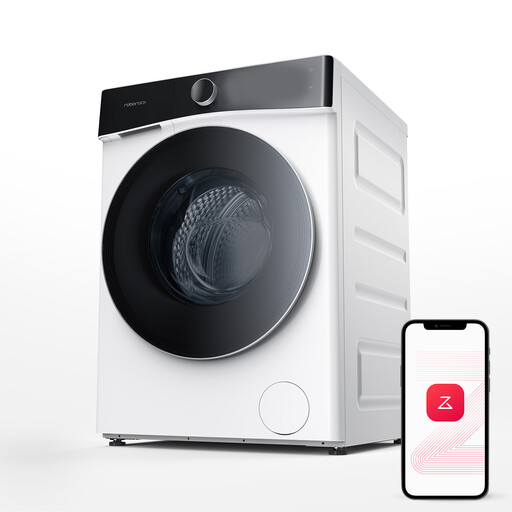 Image unavailable
Roborock Zeo Lite, 10 kg/6 kg washer-dryer
An integrated drying function could help if you don’t have room for two appliances. The stated capacities are 10 kg for washing and 6 kg for drying, so you’ll need to reduce or split a full wash load before drying it. Check the dimensions, noise and cycle specifications to make sure they suit your home.
View on Joybuy
Frequently asked questions
What should I compare to keep spin noise down?
Compare the spin noise in dB and the noise class shown on the energy label. ADEME describes noise classes A and B as particularly quiet. AEG France also points out that a machine may vibrate during the spin cycle if it’s unstable, overloaded or has an unevenly distributed load.
Is a top-loader always suitable for a small room?
No. It’s mainly a solution when width is limited. The AEG LTR8C7331A, for example, is 397 mm wide according to AEG, but you’ll still need to check its depth, allow room to open the lid and make sure the capacity suits your needs. UFC-Que Choisir says top-loaders do not exceed 8 kg.
Can a washer-dryer dry a whole wash load?
Not if the wash load exceeds its drying capacity. UFC-Que Choisir notes that drying capacity is lower than washing capacity. So, with a model rated for a 9 kg wash load and a 6 kg drying load, you’ll need to reduce or split a full wash load before drying it.
What should I check before delivery and installation?
Measure the space, access routes and clearance needed to open the appliance, then check the instructions for your chosen model for its connection requirements. Electrolux says its installation service does not include plumbing, electrical or carpentry work. If you’re unsure about the existing installation, ask someone to check it.
Does the energy label tell me how durable an appliance is?
No. It’s mainly used to compare consumption, the duration of the reference cycle and noise. For washing machines in France, the Ministry for Ecological Transition says the durability index has been gradually replacing the repairability index since 8 April 2025. Check it separately when comparing appliances.


