House shares and households where several adults cook
When plates, utensils and serving dishes pile up between meals, check what will actually fit in the racks and how many cycles you’ll need, rather than focusing only on the number of programmes.


If several people combine their washing-up after meals, a 60 cm dishwasher is a good place to start: compare its capacity with the dishes you actually use, then check the noise level and energy and water consumption on the label. A freestanding model avoids the door-front requirements of an integrated appliance. A larger capacity is only useful if you regularly fill the machine, while a compact model is better suited to a more modest volume of washing-up.
When plates, utensils and serving dishes pile up between meals, check what will actually fit in the racks and how many cycles you’ll need, rather than focusing only on the number of programmes.
If the dishwasher will be running while others are using the living area, compare the decibel rating and noise class. ADEME says that a 3 dB increase represents an almost doubling of noise.
When choosing between a freestanding and an integrated model, check the dimensions of the space, the door type and the door front. An integrated installation may require specific adjustments, regardless of the capacity you need.
Start by considering how much washing-up builds up between cycles and how much space you have. Then compare the label information and installation requirements.
| Criteria | What to check | What I need |
|---|---|---|
| Capacity and racks | Compare the number of place settings, rack heights and space for large dishes. Darty Concepteur Cuisine lists its 60 cm models as holding between 13 and 16 place settings, but the number alone doesn’t tell you how much usable space there is. | I need to fit dishes and pans used by several people without having to run a second cycle. |
| Size and installation | Measure the space and check the connections. For an integrated model, also check the housing, door front, plinth and door system; you may need a professional installation. | I want to keep my fitted kitchen as it is, without finding out after ordering that the door or housing isn’t suitable. |
| Noise | Check the dB rating and noise class on the label. For an open-plan kitchen, Darty Concepteur Cuisine suggests under 45 dB as a guide for comfort, not as a mandatory threshold. | A cycle running in the evening shouldn’t disturb anyone using the living area. |
| Water, energy and cycle time | ADEME and the European Commission recommend comparing kWh per 100 cycles, litres per cycle and the Eco programme duration, alongside capacity. Eco programme figures don’t automatically apply to a quick programme. | I want to assess consumption without assuming that the least energy-intensive cycle will also be the shortest. |
| Running costs and maintenance | Allow for delivery, any installation costs, water, electricity, detergent and maintenance. If you’ll use the dishwasher frequently, also check the repairability index for the specific model. The French Ministry for the Ecological Transition says dishwashers are among the product categories covered by the index in France. | As well as the appliance itself, I need to plan for what installation and regular cycles will involve. |
A high stated capacity doesn’t guarantee that your household’s pans and large dishes will fit in the racks. On the other hand, a compact model could mean running more cycles.
Measure your bulkiest items and check the rack layout, cutlery drawer and user manual for the model you’re considering.
The rating alone won’t tell you how long a cycle takes, how noisy the dishwasher is or how much it holds. According to ADEME and the European Commission, the consumption figures on the label relate to the Eco programme.
Compare kWh per 100 cycles, litres per cycle, Eco programme duration, capacity and noise level together.
Include detergent, water, electricity and maintenance costs based on how often you’ll use it.
An incompatible door front, plinth or hinge could prevent the dishwasher from fitting as planned. The right installation method depends on both your kitchen and the model.
Measure the housing and plinth height, check the door type and connections, and ask about installation requirements if any adjustments are needed.
A bespoke installation could involve an additional call-out.
If your household uses the appliance frequently, being able to maintain it or replace a part is worth considering when choosing for the long term.
In France, compare the repairability index for the exact model and find out about its spare parts and after-sales service.
These examples can help you compare sizes and capacities, but their features don’t apply to every model in each brand’s range.
A model worth considering if you’re looking for a 60 cm freestanding dishwasher.
A model to consider if you need a large capacity and your kitchen is suitable for a fully integrated appliance.
An integrated model to compare if your kitchen has a suitable space for one.
A brand whose French catalogue lets you compare freestanding and integrated models.
This selection includes freestanding dishwashers for a standard space and integrated models for a fitted kitchen. Compare their capacity with your daily loads. For an integrated model, check that it will fit your space first.
 Image unavailable
Its stated capacity of 14 place settings could suit the combined loads of a shared household. The title says 60 cm, but the listing gives a width of 67.5 cm, so confirm the measurement before planning where to put it. Energy rating C.
 Image unavailable
Compare its stated capacity of 14 place settings with the amount of washing-up your household produces between cycles. The title lists seven programmes; check whether they suit your needs, along with their duration and the figures on the energy label.
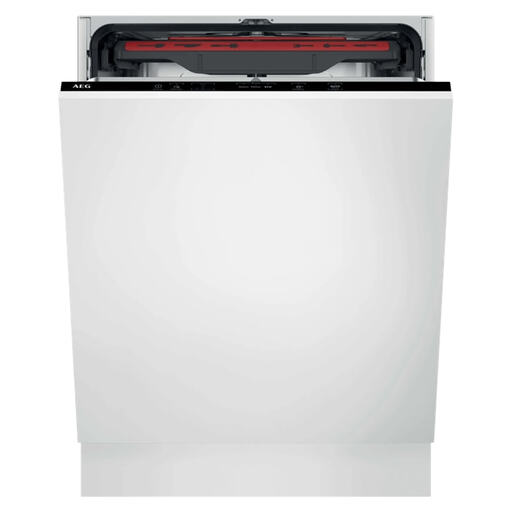 Image unavailable
This model combines a stated capacity of 14 place settings with a fully integrated design, so it’s only suitable if your kitchen can accommodate it. The title says 60 cm, while the listing gives dimensions of 68 × 63.5 × 86.4 cm. Ask the retailer to confirm the fitting measurements and door-front compatibility. Energy rating C.
 Image unavailable
Its stated capacity of 13 place settings could suit regular loads if the internal layout accommodates your dishes. This integrated model is listed as 60 cm with a B energy rating. Check the housing, fixed-hinge door and installation requirements before ordering.
 Image unavailable
Compare its stated capacity of 14 place settings with the loads your household produces each day. The title lists a 60 cm width, a noise level of 41 dB and a C energy rating. If you plan to install it under a worktop, check the dimensions and connections at the intended location.
It’s worth considering when several people combine their washing-up after meals and can build loads that suit the appliance. If everyone washes a few items straight after eating, compare that routine with the space, maintenance and cycles a dishwasher would involve.
Compare capacity, energy rating, kWh per 100 cycles, litres per cycle, Eco programme duration, dB rating and noise class. ADEME and the European Commission explain how these figures are measured: Eco programme consumption shouldn’t automatically be assumed to apply to other programmes.
Darty Concepteur Cuisine suggests under 45 dB as a practical guide for an open-plan kitchen, not as a mandatory threshold. Also compare the noise class and check whether the stated figure applies to general operation or a particular programme.
Factor in delivery, connections and any installation costs, followed by water, electricity, detergent, maintenance and repairs. For an integrated model, check whether the door front or housing will need adjustments. Que Choisir recommends taking installation, use and maintenance into account when choosing.
Check the repairability index for the exact model and find out about spare parts and after-sales service. The French Ministry for the Ecological Transition says dishwashers are among the product categories covered by the index in France. A brand-wide rating isn’t a substitute for the rating of the model you choose.