
Livraison le jour même ou le lendemain

Qualité garantie

Débloquez vos offres de bienvenue: Livraison GRATUITE | Jusqu'à -80 % | 30 jours d'essai gratuits à JoyPlus
Téléchargez l'application
Hair colour can lose its vibrancy after just a few washes, while blonde highlights can sometimes turn yellow or brassy. However, choosing a shampoo for coloured hair is not simply a matter of relying on the words “colour protection” displayed on the bottle. The type of pigments, how often the product is used and its ingredients also deserve close attention.
Article written by the Joybuy Product Recommendation Officer, based on the information available on product pages and the ingredient lists provided by manufacturers.
A colour-protecting shampoo cleanses coloured hair while helping to preserve the intensity of its shade. A purple shampoo, also known as an anti-yellowing shampoo, contains purple pigments designed to visually correct yellow tones. These two products therefore meet different needs.
Using purple shampoo every time you wash brown, copper or red-coloured hair can produce a result far removed from the desired effect. Conversely, a standard shampoo for coloured hair will not necessarily neutralise yellow tones in bleached blonde hair.
The sulphate-free shampoo label often appeals to people with sensitised hair, but it is not enough to assess a formula. Check the INCI list to see whether it contains sulphated surfactants such as Sodium Laureth Sulfate or Sodium Lauryl Sulfate.
Sulphate-free formulas may also lather less and require a slightly more thorough scalp massage. This is not a fault in itself: you simply need to adjust your routine and avoid washing your hair repeatedly to compensate.
Leaving a toning shampoo on for too long can create a purple or greyish tone on some porous sections of hair. Bleached or highlighted hair does not always absorb pigments evenly.
Therefore, follow the usage instructions: depending on the product, the development time may range from one to three minutes or from three to five minutes, generally once or twice a week. Also wear gloves when recommended by the manufacturer.
Start by defining your objective:
Examine the first ingredients in the INCI list: these generally correspond to the cleansing base. A formula may contain sulphated foaming agents, gentler surfactants, silicones, proteins or conditioning agents.
For coloured and sensitised hair, a sulphate-free and silicone-free formula may be worth considering, such as the Cattier shampoo featured below. If you are sensitive to fragrances, also look out for declared fragrance allergens, particularly limonene, linalool or benzyl alcohol.
A 1,000 or 1,500 ml bottle can reduce the price per use, but takes up more space and needs to be stored properly. By contrast, a 250 or 300 ml size is convenient for trying a formula or alternating between several products.
For purple shampoo, the cost per wash also depends on the recommended frequency of use. A concentrated formula applied once or twice a week may last much longer than a product used daily.
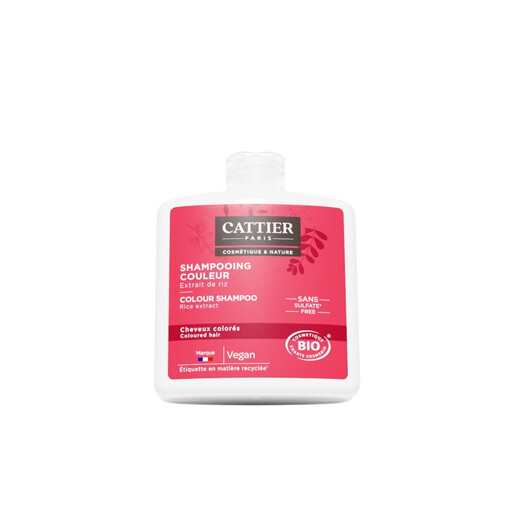
Why this choice suits this profile : Its 250 ml size lets you try a new routine without investing in a large bottle. The product page states that it is sulphate-free, silicone-free and certified organic by Ecocert Greenlife.
The published ingredients let you verify the absence of sulphates and silicones for yourself, rather than relying on a simple marketing promise.
The INCI list mentions a cleansing base containing sodium cocoamphoacetate and decyl glucoside, along with glycerine, jojoba oil and rice proteins.
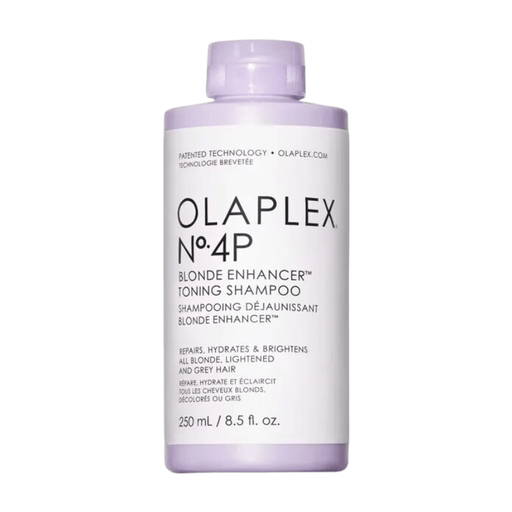
Why this choice suits this profile : This concentrated formula is designed for blonde, grey or coloured hair where the routine includes occasional neutralisation of yellow tones.
The product page recommends leaving it on for one to three minutes, or up to five minutes for a more pronounced result. This gives you better control over the intensity of the tone.
The formula is described as sulphate-free, vegan and suitable for both coloured and natural hair. It contains the purple pigment Acid Violet 43, listed in the INCI ingredients.
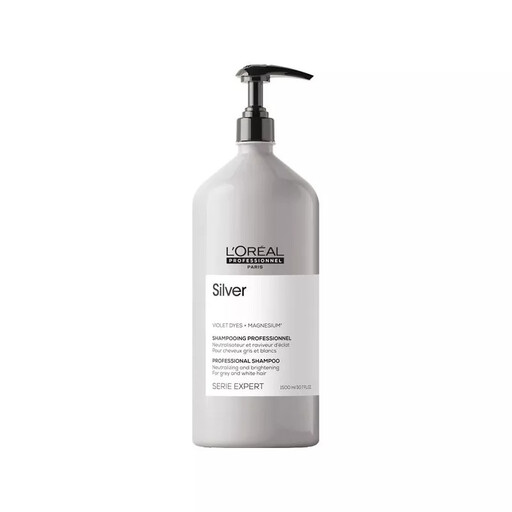
Why this choice suits this profile : Its 1 500 ml size is suitable for regular use in a salon, by a family or on blonde, white, grey and silver hair that needs warm tones corrected.
The product page recommends using it once or twice a week, with a development time of three to five minutes. It is therefore best not to use it every time you wash your hair.
The product page mentions a purple pigment, hydrolysed wheat proteins, amino acids and a professional-size bottle.
We have put together a complete, real-time updated list of products that meet these demanding selection criteria and European safety regulations.
Purple shampoo is suitable when the main issue is the appearance of yellow tones. To neutralise orange or brassy tones, check that the product page clearly mentions this action. Then alternate it with a colour-protecting shampoo to avoid overloading the hair with pigments.
This is not generally recommended. The ideal frequency depends on the formula, the hair’s porosity and the desired result. Follow the stated development time and alternate with a gentle shampoo for coloured hair once the yellow tones are under control.
The minimum durability date and batch number appear on the packaging. Keep the bottle closed and protect it from heat and direct sunlight. If the smell or texture changes, or if irritation occurs, stop using the product and refer to the manufacturer’s instructions.