
Same-day & Next-day Delivery

Quality Guaranteed

Unlock Your Welcome Offers: FREE Delivery | Up to 80% OFF | Free 30-day JoyPlus trial
Download the APP
Dry, brittle, bleached or heat-styled hair? Choosing a shampoo for damaged hair isn’t about grabbing the first bottle that promises “repair”. Shampoo’s main job is to cleanse the scalp and prepare the lengths for treatment. To get softer, more manageable hair, it’s far better to look at the formula, how often you wash, and how it works with a conditioner or mask.
Hydrolysed proteins, silicones, oils and conditioning agents can make hair feel softer, shinier and easier to detangle. That doesn’t mean the hair fibre has been “rebuilt” deep down. Hair fibre repair is a marketing promise you should take with a pinch of salt: once formed, hair doesn’t regenerate like skin does.
To reduce breakage, focus on a consistent routine: gentle cleansing, a detangling conditioner, a regular mask, and moderate use of heat styling tools.
A sulphate-free shampoo can be suitable for sensitive scalps, coloured hair or very dry lengths. But “sulphate-free” doesn’t mean “free from cleansing agents”. The formula will still contain surfactants, which can be just as effective, though they may feel different on the hair.
On the flip side, the presence of Sodium Laureth Sulfate or another foaming surfactant doesn’t automatically make a shampoo unsuitable. It all depends on the concentration, how often you wash, and your own tolerance.
A 1,000 ml bottle can lower the cost per use. But if the formula doesn’t suit you, you’re left with a huge amount of product you can’t use. Before choosing a large size, check that it’s compatible with your hair type, look out for any fragrance or declared allergens, and think about how long you plan to use it.
The first few ingredients give you an idea of the formula’s overall structure, but they can’t on their own predict the result on your hair. If you have sensitive skin, also look out for declared fragrance allergens such as limonene, linalool or benzyl salicylate.
A repairing shampoo for dry hair can work perfectly well alongside a mask. Just be careful not to overload fine hair with too many rich products. On the other hand, very porous, curly or bleached hair may need more nourishment and conditioning.
Shampoo is a rinse-off product that’s only on your hair for a short time: it can’t, on its own, transform the condition of your lengths long-term. For a complete routine for damaged hair, apply a conditioner after every wash and a repairing hair mask once or twice a week. A protein treatment for hair can be used occasionally on weakened lengths, following the instructions and watching how your hair responds.
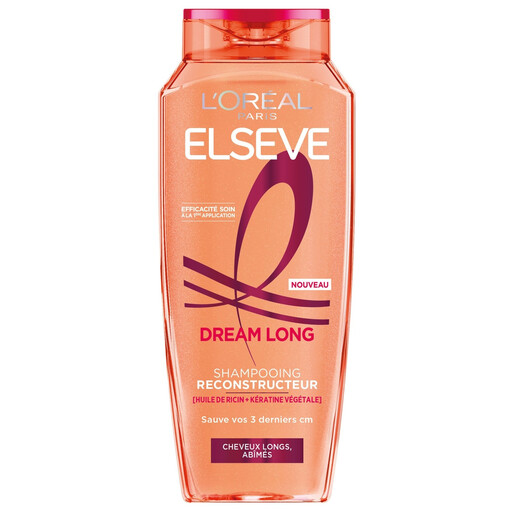
Why this choice suits this profile: Its standard size and formula enriched with vegetable keratin, castor oil and hydrolysed proteins make it a good fit for anyone wanting to start a routine for long, weakened hair.
You can check the ingredients before buying, and the product fits easily into a routine with a conditioner or mask from the same range.
250 ml size, made in France, wheat, maize and soya proteins, plus castor oil.
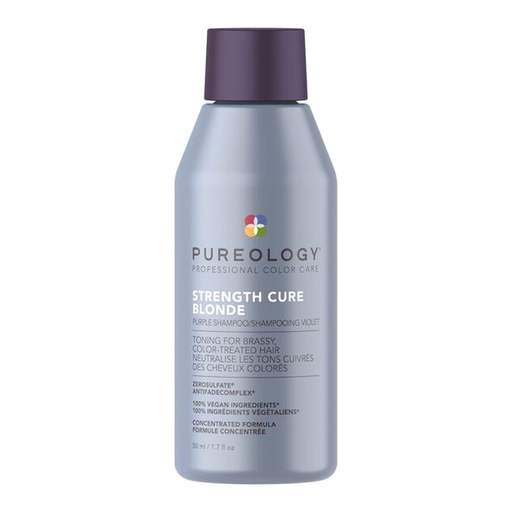
Why this choice suits this profile: This small size is handy for trying it out for the first time or for travel, especially if you have lightened or coloured blonde hair and want to neutralise yellow or orange tones.
The violet pigments target unwanted tones. However, use it in moderation to avoid making the hair look too cool-toned.
Formula said to be free from sulphates, parabens and mineral oil, with violet pigments, vitamin E and sunflower extract.
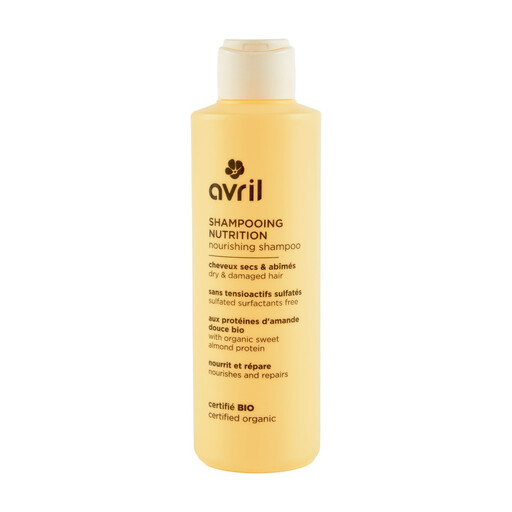
Why this choice suits this profile: People looking for a certified organic, naturally derived formula may want to consider this shampoo for dry hair, designed for regular use.
The Cosmos Organic certification and the stated percentages of naturally derived ingredients give you clearer benchmarks than a simple “natural” claim.
98 % naturally derived ingredients stated, sweet almond proteins, vegan formula and a pH between 4.5 and 5.
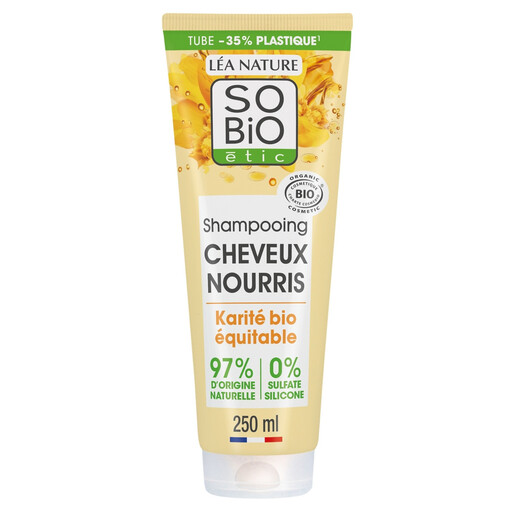
Why this choice suits this profile: Its sulphate-free, silicone-free base is aimed at those looking for a nourishing formula for very dry hair who also want to keep an eye on the ingredients.
The formula clearly states it’s free from sulphates and silicones. If your ends are very porous, you’ll still need to pair it with a suitable treatment.
Fairtrade shea butter, jojoba wax, Cosmos Organic certification and 97 % naturally derived ingredients stated.
For coloured, bleached or particularly brittle hair, adjust how often you wash and always rinse thoroughly. A leave-in treatment can also help reduce friction during drying. If you experience persistent itching or irritation, stop using the product and seek advice from a healthcare professional.
We’ve put together a full selection, updated in real time, of products that meet these strict criteria and European safety standards.
Not necessarily. How often you wash depends on your scalp, your activity levels and your sebum production. If your lengths are dry, spacing out washes can help limit dryness, as long as you keep your scalp clean.
A conditioner makes detangling easier after every wash. If your hair is very dry, add a repairing mask once or twice a week. Protein treatments are best saved for occasional use: a routine that’s too rich in protein can make some hair feel rough.
Change your shampoo if your scalp reacts, if your hair feels heavy, or if your lengths stay rough despite using a suitable treatment. Also remember to check the ingredients list on the packaging: the manufacturer may have updated it.