
Livraison le jour même ou le lendemain

Qualité garantie

Débloquez vos offres de bienvenue: Livraison GRATUITE | Jusqu'à -80 % | 30 jours d'essai gratuits à JoyPlus
Téléchargez l'application
A serving tray should make carrying food and drinks easier while enhancing presentation, without becoming bulky or difficult to maintain. Yet some product descriptions focus mainly on appearance and overlook essential details for everyday use, entertaining or professional service.
Before buying, check stability, genuinely useful dimensions and care instructions in particular. An attractive appetiser tray can become very heavy once loaded, while an unsuitable presentation model may not be deep enough for holding verrines or sauces.
A large table tray does not necessarily offer a fully usable surface. Raised edges, handles and any compartments can sometimes reduce the available space. For a meal, measure the plates or bowls you need to carry. For appetisers, also allow room for small bowls and utensils.
Slate and porcelain offer an elegant presentation, but they can be considerably heavier than wood or bamboo. A 30 × 30 cm stone serving dish weighing 1.45 kg will be even harder to handle once filled. This is particularly important when serving at the table, navigating stairs or moving around a venue over long distances.
Resistance to water or stains does not mean that every component is suitable for the dishwasher, oven or microwave. Check the manufacturer’s instructions for each component. Sudden changes in temperature can also crack certain porcelain or slate products.
A 30 × 30 cm square format is suitable for presenting appetisers or individual desserts. For a main dish to share, a diameter of 33 cm or a length of more than 40 cm gives you greater flexibility.
A tray with handles makes carrying easier, provided the handles are wide enough and securely attached. In a professional setting, choose a stackable shape and dimensions that work with your storage space.
Before first use, wash each component with a mild detergent, then dry it thoroughly. Avoid abrasive products, prolonged soaking of wood and sudden changes in temperature. Inspect the tray before every service: a crack, chip or splinter could cause a cut and make it harder to comply with hygiene requirements.
For servingware intended for entertaining, also check whether bowls, dishes or small bowls are included with the tray. When you need several sizes, a serving tray set may prove more practical than a model sold individually.
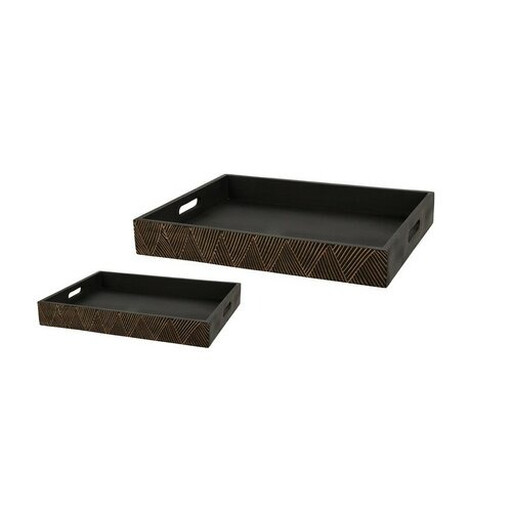
Why this choice suits this profile: With two sizes, you have a versatile setup from the outset for breakfast, drinks or appetisers at home.
The two sizes reduce the risk of buying a tray that is too small or too large for everyday uses.
A set of two mango wood trays with integrated handles, measuring 40.5 × 30.5 cm and 46 × 36 cm.
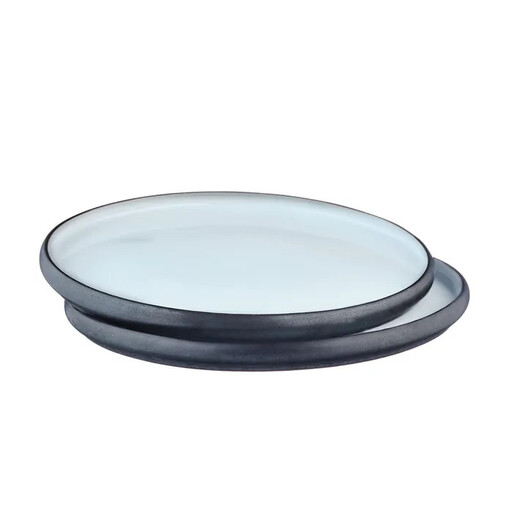
Why this choice suits this profile: The black finish and generous diameter complement elegant tables, family meals and dessert presentations.
The two-piece set avoids having to create a table setting with mismatched styles when entertaining or serving several courses.
Two 33 cm-diameter porcelain serving dishes with a smooth surface and Onyx colour.
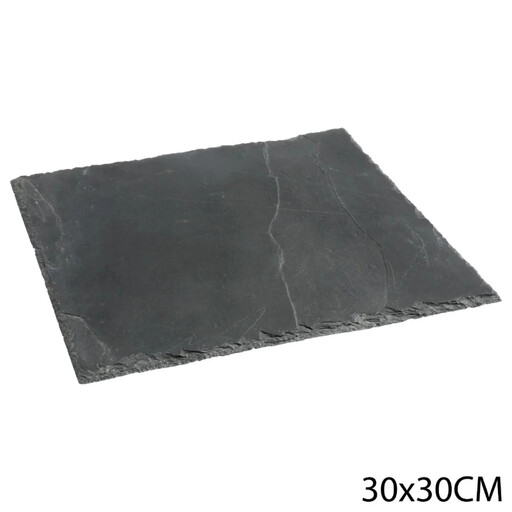
Why this choice suits this profile: Slate is ideal for restaurants, guest houses and gatherings looking for an original backdrop for appetisers or charcuterie.
Its dimensions are clearly stated, and its weight of 1.45 kg is a reminder to limit the load and provide stable storage.
A 30 × 30 cm square slate format with a dark texture particularly suited to presenting food.
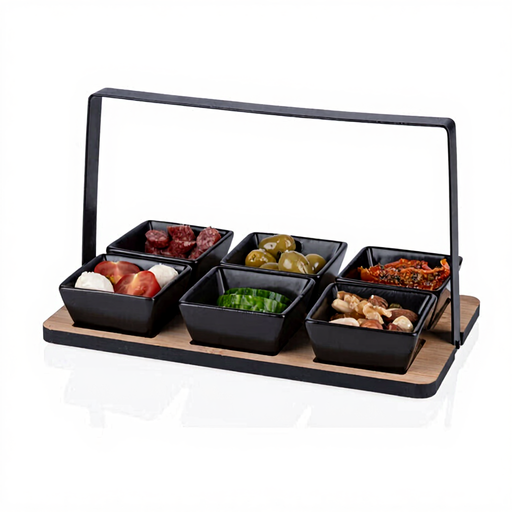
Why this choice suits this profile: The separate bowls make it easy to serve sauces, nuts, dips and bite-sized snacks when enjoying appetisers with friends and family.
The set contents are clearly detailed: a bamboo and metal tray, a handle and six ceramic bowls, rather than a simple decorative stand.
A seven-piece set with a carrying handle and square ceramic bowls for organising several prepared foods.
We have selected a complete, real-time updated list of products that meet these demanding criteria and European safety standards.
To keep your serving tray in good condition, distribute the weight towards the centre and avoid putting too much strain on the handles. Wooden models should generally not be immersed in water. Wipe them promptly after washing and keep them away from direct heat sources.
Porcelain and slate models should be stored with enough space between them to prevent the pieces from knocking against one another. If you work in catering or events, provide a non-slip shelf and a storage system that limits unstable stacking.
For a few guests, a square format of around 30 cm is generally sufficient for verrines, dips and bite-sized snacks. For a larger group, a model over 40 cm or a set of several trays makes it easier to distribute the food and weight.
Wash it by hand with warm water and a mild detergent, without leaving it to soak. Dry all sides immediately. Avoid abrasive sponges, the dishwasher and direct heat, unless otherwise stated by the manufacturer.
It can be suitable for presenting certain foods, but its weight and vulnerability to knocks mean that it must be handled with care. Always check the instructions specific to the model regarding the dishwasher, oven, microwave and temperature changes.