Households that prepare meals in advance
If you regularly freeze portions, drawers or compartments can help you organise them and find what you need. Compare how easy they are to use and the defrosting method too, not just the stated capacity.


A separate freezer makes sense if prepared meals and food shopping regularly exceed the space your fridge freezer can comfortably provide. An upright freezer makes it easier to organise food in drawers, while a chest freezer suits bulky items if you have enough floor space. If you also need to replace your fridge, first compare the freezer capacity of a large fridge freezer with what you actually need.
If you regularly freeze portions, drawers or compartments can help you organise them and find what you need. Compare how easy they are to use and the defrosting method too, not just the stated capacity.
A chest freezer can hold bulky items, provided you have enough floor space and can organise the space beneath the lid. If you plan to keep it in a cellar or garage, the room temperature must be within the range specified for the exact model.
If your kitchen is small, or you’re unsure about adding another appliance that runs continuously, compare the freezer capacity you need with that of a large fridge freezer. Then check the dimensions, kWh/year and noise levels of the appliances you’re considering.
UFC-Que Choisir distinguishes between chest freezers, designed for storing larger quantities, and upright freezers, which are easier to organise into compartments. An under-counter model is better suited to limited height, while a large fridge freezer is worth considering if you also need to replace your main fridge.
Consider one if: you often need to find meals or shopping organised in drawers.
Bear in mind: the drawers take up some of the internal space and need room to open where you plan to place the appliance.
Consider one if: you buy in bulk or store bulky items and have enough floor space.
Bear in mind: you’ll need to organise items to reach those at the bottom, and allow space for the lid to open.
Consider one if: the available height means you need a secondary appliance that fits beneath a worktop.
Bear in mind: its freezer capacity is generally more limited than that of a large upright or chest freezer.
Consider one if: you’re also replacing your fridge and an integrated freezer compartment will hold enough frozen food for you.
Bear in mind: its total capacity includes the fridge; only the freezer compartment will meet your need for extra frozen storage.
| Consideration | What to check | Who it matters to |
|---|---|---|
| Access to meals | How easy drawers or baskets are to use; whether the exact model has the defrosting mode you want. | When I freeze separate portions and take them out often, I want to find them without rummaging through everything. Around 27% of consumers put easy access and organisation at the top of their list. |
| Capacity for food shopping | Usable freezer capacity and external dimensions; the layout of baskets in a chest freezer. | For bulk shopping or bulky items, my main priority is having enough room to store everything. Around 27% of consumers make capacity their top priority. |
| Space and installation | Delivery access, opening space and clearances; the ambient temperature range permitted in the instruction manual. | If my kitchen, utility room or garage limits my options, I mainly need to be sure I can install and open the appliance in the space available. Around 20% of consumers say that making sure an appliance suits the room is their main concern. |
| Everyday running | kWh/year for appliances of a similar type and capacity, stated noise levels and the stated storage time in the event of a power cut. | Before adding an appliance that runs continuously, I want to know how much energy it uses and which operating conditions matter in my home. This is the top concern for around 26% of consumers. |
ADEME points out that a freezer runs continuously. When comparing two models, the energy label and product information provide more useful guidance than a general judgement about their format.
A large interior won’t make up for a space that’s too narrow or a lid that’s difficult to open. If you access items at the bottom often, ease of access matters too.
Measure the width and depth, the delivery route and the clearance above the freezer. If you open it every day, compare access with that of an upright freezer with drawers too.
Whether an appliance can operate in a cold room depends on the model and the ambient temperatures it’s designed for. A feature advertised on some Beko or Liebherr models won’t necessarily be available across the entire range.
Check the possible temperatures in the room and compare them with the instruction manual or product specifications for the model you’re considering.
The rating alone doesn’t tell you how many kWh/year the appliance uses or how much freezer space it provides. Both matter for an appliance that runs continuously.
Compare the kWh/year figures for appliances of a similar type and capacity, then choose the features that suit the way you’ll use it.
Two models with similar capacities can differ in their stated storage time during a power cut and in the layout of their drawers or baskets.
Look for the stated storage time in the product information, then check that the compartments suit the way you store meals and food shopping.
These ranges illustrate features to consider based on where you plan to put your freezer and how you want to organise it. Always check the features of the specific model you choose.
Beko offers upright and chest freezers, with different features across its range.
Liebherr’s freestanding freezer range includes a choice of capacities and models with features designed to manage frost build-up.
Whirlpool’s range includes chest freezers, some of which have convertible settings and baskets.
These appliances illustrate three ways to increase or reorganise your frozen food storage: add an upright freezer, add a chest freezer, or choose a large fridge freezer when replacing your main appliance.
 Image unavailable
For organising meals and food shopping in a separate appliance, this model offers three drawers, two trays and a capacity of 161 L. Its product information lists No Frost and a C energy efficiency class.
Before deciding where to put it, check its dimensions and the permitted ambient temperature range. Also compare its annual energy consumption in kWh and its stated storage time in the event of a power cut.
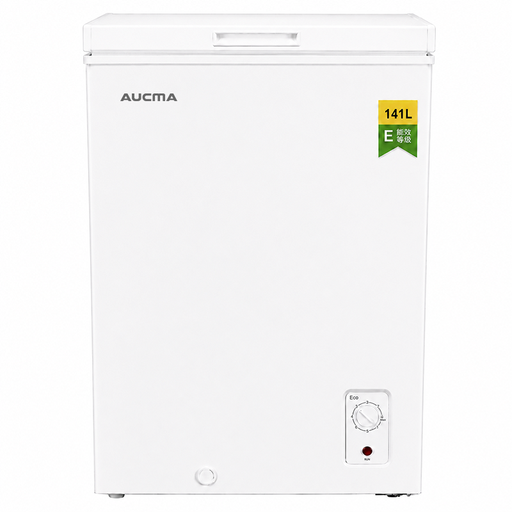 Image unavailable
This 141 L chest freezer provides extra freezer space and a removable basket for keeping a few items separate. It can also be set to fridge mode, so check that the selected mode suits your storage needs.
The product information lists an E energy efficiency class and 179 kWh/year. Measure the floor space it will occupy and allow room for the lid to open. If you plan to put it in a cold room, check the ambient temperature range specified for this model.
 Image unavailable
If you’re replacing your fridge rather than adding a second appliance, this fridge freezer offers 125 L of freezer space within a total capacity of 360 L, with three drawers and No Frost.
The product information lists an E energy efficiency class, 271 kWh/year and a stated storage time of 11 hours in the event of a power cut. Make sure the 125 L of freezer space is enough, then check the installation space and delivery access.
 Image unavailable
If you want fresh and frozen food in one four-door appliance, this model offers a total capacity of 467 L, including 156 L of freezer space, with two drawers and No Frost.
The product information lists an E energy efficiency class, 290 kWh/year and a stated storage time of 10 hours in the event of a power cut. Don’t confuse the total capacity with the freezer capacity, and check how much clearance the doors need to open.
 Image unavailable
This 99 L chest freezer is suited to extra storage needs. Its product information lists a footprint of 0.26 m² and a removable basket, but it doesn’t offer the drawer organisation of an upright freezer.
Manual defrosting is required when the frost exceeds 5 mm. Check the clearance needed for the lid, the kWh/year, the stated storage time in the event of a power cut and the permitted ambient temperature if you plan to put the appliance in a cold room.
Yes, if the ambient temperature range specified for your chosen model covers the temperatures the room may reach. Check the temperature range and consult the instruction manual: cold-weather features advertised by Beko or Liebherr apply to some models, not every freezer.
Compare annual energy consumption in kWh for appliances of a similar type and capacity, then check the freezer capacity and noise level. The European Commission says that the energy label for the domestic refrigeration appliances concerned uses a scale from A to G. The letter alone doesn’t tell you how much space is available for frozen food or whether the appliance will suit your installation.
It’s worth comparing if you store a lot of food or are concerned about power cuts. UFC-Que Choisir measures this as the time it takes for the temperature to rise from -17 °C to -9 °C without power. Look for the stated figure for each model rather than trying to estimate it from its format.
As ADEME points out, a freezer uses electricity continuously. To compare similar appliances, check their stated kWh/year and choose a capacity that suits the amount of food you actually want to store.