Which type of household suits each format?
The amount you need to store isn’t the only factor when choosing a format. How often you access your food and how much space you have matter too.
Households that use their frozen food every day
An upright freezer with drawers makes it easy to organise food by category and quickly find bags and portions. Check that the internal layout suits your containers and that the door can open fully in the room.
Households storing bulky items
A chest freezer is worth considering if you have a large amount to store and enough floor space for it. If you’re planning to keep it in a garage or cellar, check that the permitted room temperature is suitable for the specific model.
Households with limited kitchen space
A small upright freezer can provide extra capacity. If your current appliance is also short on space for fresh food, compare the freezer capacity of a larger fridge freezer with that of a separate appliance.
What should you prioritise when choosing?
First decide whether you need extra space for frozen food or want to replace your fridge freezer. Then choose a format based on how you use your frozen food and where you plan to put the appliance.
Upright freezer
Choose this if: you often reach for food organised by category and have enough height for the appliance.
Bear in mind: the depth and door clearance, and don’t assume that the model has No Frost or an alarm.
Chest freezer
Choose this if: you store large quantities or bulky items that are difficult to arrange in drawers.
Bear in mind: you’ll need floor space and room to lift the lid, and food at the bottom can be harder to reach.
Under-counter freezer
Choose this if: a small amount of extra storage is enough and you have a suitable space under your worktop.
Bear in mind: whether the extra capacity is enough for your food, as well as the clearance required for installation.
Large fridge freezer
Choose this if: you want to replace your fridge freezer and make more room for both fresh and frozen food.
Bear in mind: only the freezer compartment capacity counts towards your frozen food storage, not the total capacity shown.
| Priority |
What to check |
Who is this for? |
| Access and organisation |
Drawer or compartment layout; space needed to open the door. |
I often take small portions from the freezer and want to find them without moving everything else. Easy everyday access would be the priority for around 42% of consumers. |
| Large storage capacity |
Usable capacity, floor dimensions and clearance above the lid; permitted room temperature if the room is unheated. |
My bulk shopping or large containers need a freezer that opens from the top. Around 33% of consumers would prioritise this kind of storage capacity. |
| Available space |
Extra net freezer capacity; the dimensions and ventilation requirements for the intended location. |
I need to increase my freezer storage without installing a large upright or chest freezer. Around 25% of consumers would put extra capacity in a limited space first. |
Brands to consider, model by model
These examples of product ranges can help you identify features to compare. Always check the functions and installation requirements for the specific model you’re considering.
Beko
A brand to consider when comparing upright freezers with chest models designed for larger amounts of frozen food.
- Beko states that the HSM14540 chest freezer has a capacity of 205 L and can operate at an ambient temperature as low as −15 °C.
- This temperature range applies to the HSM14540. Check the range for any other model before installing it in a cold room.
Bosch
Worth considering if an upright freezer’s storage layout suits the way you access frozen food each day.
- Bosch lists a freezer capacity of 200 L, No Frost, BigBox and Vario Zone features for the GSN29EWEV.
- These features apply to this specific model; check its dimensions against the space you have available too.
Liebherr
A range to consider if you’re looking for a chest freezer for an unheated room.
- Liebherr describes its FrostProtect chest freezers as suitable for places such as unheated garages and cellars.
- Check the stated ambient temperature range for the model you’re considering and make sure it suits your room.
Whirlpool
Offers examples of a separate upright freezer and a large fridge freezer for two different appliance needs.
- Whirlpool lists a capacity of 404 L for the WHFF6403W4E upright freezer and a total capacity of 462 L for the WB70E973W fridge freezer.
- The fridge freezer’s total capacity isn’t the same as its freezer capacity. Compare the latter before choosing between the two formats.
Haier
A range that includes upright and chest freezers, making it useful for comparing capacities across both formats.
- Haier’s French range includes chest freezers such as the 196 L HCE200E and the 300 L HCE301D.
- Compare the energy rating and internal layout for each specific model.
Joybuy products to suit your needs
These products illustrate four options: adding an upright freezer, installing a chest freezer, choosing a small upright model for extra capacity or replacing a fridge freezer. Compare freezer capacity and overall dimensions based on your storage needs and the space available.
 Image unavailable
Heinrich´s 161 L stainless steel upright freezer
If you often check what’s in your separate freezer, this upright model has three drawers and No Frost.
The title lists an energy rating of C, an alarm and a temperature range of −14 °C to −22 °C. Check the dimensions, door clearance and permitted ambient temperature for the room you have in mind.
View on Joybuy
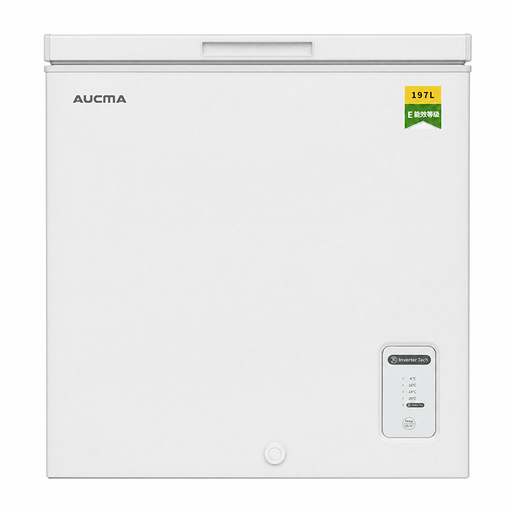 Image unavailable
AUCMA 197 L convertible chest freezer
This chest freezer is designed for households that prefer a dedicated compartment to drawer storage; the title mentions a removable basket.
It’s described as switchable between fridge and freezer modes, with an energy rating of E. Allow enough floor space and clearance for the lid. Before installing it in a cold room, check the model’s ambient temperature range.
View on Joybuy
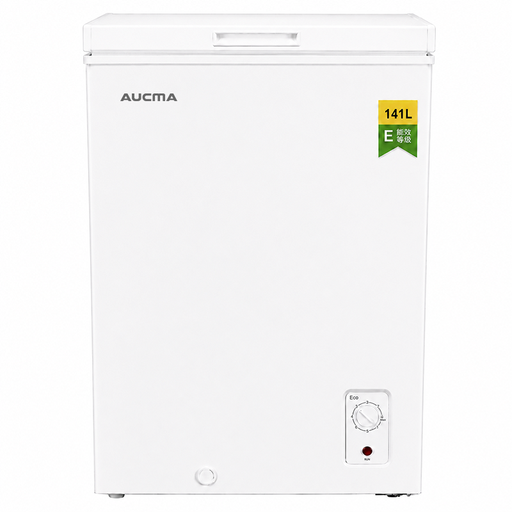 Image unavailable
AUCMA 141 L convertible chest freezer
This chest freezer offers a different storage capacity for households that prefer top access and have a suitable space for it.
The title lists a removable basket, a seven-setting thermostat, convertible mode and an energy rating of E. Allow enough room for the lid to open, and check the permitted ambient temperature if you plan to keep it in a garage or cellar.
View on Joybuy
 Image unavailable
Candy CFQQ5T817EPS 467 L four-door fridge freezer
Consider this if you’re replacing an appliance and need more room for fresh and frozen food, rather than adding a separate freezer.
The title lists a total capacity of 467 L, four doors, Total No Frost and an energy rating of E. Compare the freezer compartment’s capacity with your current storage, then check the dimensions and installation clearances.
View on Joybuy
 Image unavailable
COMFEE’ RCU60WH2(E) 60 L upright freezer
This 60 L model is suited to extra storage if you only need a small amount of freezer space.
The title lists a reversible door and an energy rating of E. Before relying on a particular storage layout or planning to fit it under a worktop, check the internal layout, dimensions and ventilation clearances.
View on Joybuy
Frequently asked questions
What temperature should you set a home freezer to?
The French Ministry of Agriculture recommends setting a home freezer to −18 °C. You should also follow the storage instructions on food packaging.
Can you keep a chest freezer in an unheated garage?
Yes, if the model’s stated ambient temperature range covers the temperature in your garage. For example, Beko says the HSM14540 can operate at temperatures as low as −15 °C. This feature doesn’t apply to all chest freezers.
What should you measure before ordering a freezer?
Measure the width, height and depth of the space, then check the manual for the clearance needed for ventilation and to open the door or lid fully. Remember to check the route the appliance will need to take to reach the room too.
Does a No Frost model need maintenance?
Yes. No Frost reduces the need for manual defrosting, but you’ll still need to clean the appliance and check its seals. The French Ministry of Agriculture recommends cleaning your freezer at least once a year.
What warranty applies if the freezer you receive doesn’t match its description?
In France, the statutory guarantee of conformity applies to new, second-hand and refurbished goods sold by a business to a consumer, according to the French Ministry of the Economy. If the appliance you receive differs from its description, tell the seller and keep a copy of the product description and your proof of purchase.


