Organisers mindful of allergens
You’re making cakes for a school event and want to make it clear which recipes contain milk, so families don’t have to guess what’s in them.


For a cake sale where the cakes are prepared in advance, choose semi-skimmed milk in a quantity and with storage instructions that suit your schedule. Unopened UHT milk can be easier to store, while fresh milk requires you to plan for refrigeration. Check the milk’s nutritional information, but don’t describe the cakes as “low fat” on that basis alone. Keep the ingredients for each recipe to hand so you can clearly state whether it contains milk.
You’re making cakes for a school event and want to make it clear which recipes contain milk, so families don’t have to guess what’s in them.
You’re considering semi-skimmed milk for a recipe and want to check the fat content shown on the product, without automatically attributing a nutritional claim to the finished cake.
You need to plan for several litres, divide the ingredients between the people doing the baking and arrange storage until they’re needed.
First, work out how much milk you’ll need and how long there’ll be between buying it and baking. These two factors will help you choose the right pack size and storage method. An organic label or stated origin may also influence your choice, but neither replaces checking the label or keeping track of the ingredients used in each cake.
| What to consider | What to check | Who this matters to |
|---|---|---|
| Milk in the recipes | Keep the label from the milk you use and a record of each recipe, noting the allergens it actually contains. | I want to give families an accurate answer when they ask what’s in a cake, especially if it’s sold without packaging; around 45% of consumers put this information first. |
| Nutritional information | Compare the fat content and other nutritional information for different milks on the same basis, for example per 100 ml. | If the milk’s fat content influences my choice, I want to compare the labels without drawing conclusions about the whole cake; this is the top priority for around 33% of consumers. |
| Pack size and storage | Calculate how many litres your recipes call for, then check the storage instructions for the product you choose, both before and after opening. | When several people are baking on different dates, I need to divide up the quantities and organise storage; this is the main concern for around 22% of consumers. |
Milk is just one ingredient in the recipe. The DGCCRF reminds consumers that nutrition claims are regulated: the type of milk used isn’t enough to describe the finished cake.
Simply say that the recipe is made with semi-skimmed milk. To compare two milks, check their nutritional information on the same basis.
Without the milk packaging or an up-to-date recipe record, it can be difficult to answer questions about whether a cake contains milk or other allergens.
Keep the labels for the ingredients you actually use and note the allergens in each recipe, including those in other ingredients.
The storage instructions for unopened UHT milk may no longer apply once it’s opened. Fresh milk also needs to be kept chilled.
Check the instructions on the carton or bottle you buy, and plan suitable storage until you use the milk.
For school events, the Ministry of National Education highlights preparations made with crème pâtissière or whipped cream as needing particular care.
If you can’t keep the cakes chilled during preparation and the sale, choose baked cakes without perishable fillings instead.
Lactel offers an organic semi-skimmed milk.
Candia’s GrandLait semi-skimmed range includes 50 cl, 1 L and 1.5 L bottles.
Carrefour offers organic UHT semi-skimmed milk in a pack of six 1 L bottles.
Auchan offers UHT semi-skimmed milk in a 1 L carton and in a pack of 12 × 1 L cartons.
These two multi-packs of semi-skimmed milk come in different sizes, helping you plan the quantity you’ll need for your recipes. Check the packaging for the nutritional information, ingredients and storage instructions that matter for your plans.
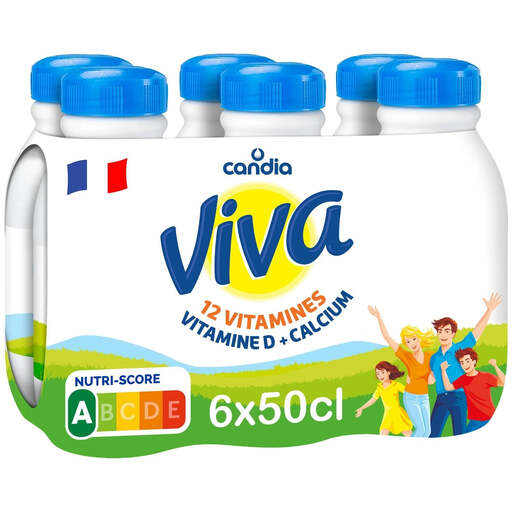 Image unavailable
The 50 cl bottles may be a good choice if you need to divide the milk between several batches. The pack contains 6 × 50 cl; keep the packaging so you can check the ingredients and instructions for use after opening.
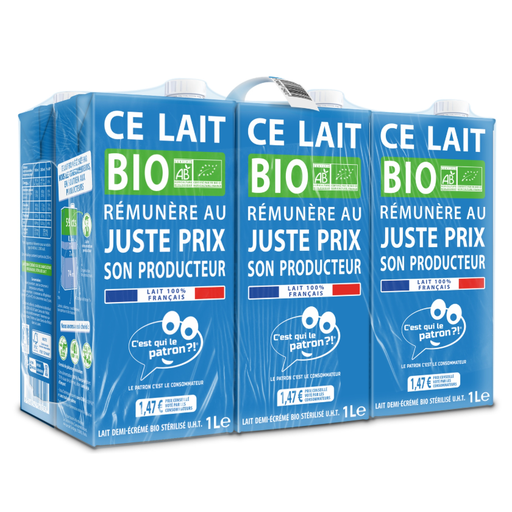 Image unavailable
The pack of 6 × 1 L may suit a recipe that needs several litres of milk. Check the instructions for use after opening on the bottles, and refer to the nutritional table if you’re comparing products.
Yes, if the recipe calls for milk and you follow the storage instructions for the product you choose. If you’re buying it in advance, check how it should be stored before opening. If it needs to be kept chilled, plan how you’ll keep it cold until you use it.
No. Choosing semi-skimmed milk alone isn’t enough to describe the finished cake in this way. The DGCCRF reminds consumers that nutrition claims are regulated, so consider the full recipe rather than the name of just one ingredient.
Keep a record for each recipe, clearly noting milk and any other allergens it actually contains. The DGCCRF includes unpackaged cakes among its examples of non-prepacked foods. To give buyers accurate information, always refer to the ingredients you’ve actually used.
Choose baked cakes without perishable fillings. In its guidance for school events, the Ministry of National Education advises particular care with preparations made with crème pâtissière or whipped cream.