Families who make breakfast every morning
A 1-litre carton or a multipack can suit regular consumption. The right quantity also depends on how much you use once a carton has been opened.


For weekday breakfasts, start by choosing a quantity your household can use within the recommended time after opening. A multipack of 1-litre cartons suits regular consumption, while a small plain carton is handy for a single serving. If you’re looking for a lactose-free version or one enriched with vitamin D, check that the specific product states this clearly. The word ‘mild’ alone doesn’t tell you whether the taste or suitability is any different.
A 1-litre carton or a multipack can suit regular consumption. The right quantity also depends on how much you use once a carton has been opened.
A small carton can make it easier to serve an individual portion, as long as you distinguish plain milk from flavoured milk drinks. Candia describes its 20 cl GrandLait des P’tits Nature carton as suitable for children aged 3 and over.
A product labelled lactose-free may suit this need, but it is still made from milk. A milk protein allergy is not the same as lactose intolerance.
For weekday mornings, start with the quantity you’ll actually use, then check whether you need plain, lactose-free or enriched milk. The word ‘mild’ isn’t a substitute for checking these specific details.
| What to consider | What to check | Who is it for? |
|---|---|---|
| Quantity and storage | Compare the size of each carton with how much you use, and read the storage instructions for after opening. The Candia GrandLait and Auchan UHT milks reviewed recommend keeping them chilled at no more than +6 °C and using within 4 days. | If we use milk for cereal or coffee every morning, I want to be able to keep spare cartons without opening more than I need; around 40% of consumers would make this a priority. |
| Plain milk in a child-sized portion | Check the product description, ingredients, pack size and age guidance from the manufacturer. The Candia GrandLait des P’tits Nature carton is 20 cl and is described as suitable from age 3. | When serving my child an individual portion, I prefer to be able to identify plain milk without confusing it with a flavoured variety; around 30% of consumers would make this a priority. |
| Lactose or added nutrients | Check separately for the ‘lactose-free’ claim, milk in the ingredients and any added nutrients. These features meet different needs. | When I’m looking for a specific feature in milk, I want to distinguish lactose-free options from milk enriched with vitamin D; around 30% of consumers would prioritise one of these needs. |
On its own, this word doesn’t let you compare the taste of different products or tell whether they meet a lactose-related need.
Instead, check the product description, ingredients, pack size and storage instructions.
Storage times vary by product: the Candia GrandLait and Auchan UHT milks reviewed recommend using within 4 days of opening and keeping chilled, compared with 3 days for the Lactel Vitamine D product reviewed.
Before choosing a 1-litre carton or a smaller size, estimate how much your household will use within the time stated on the packaging.
An opened carton that your household can’t finish in time could go to waste.
Candia’s GrandLait des P’tits range includes a Nature carton as well as flavoured varieties, so the range name alone doesn’t tell you which is which.
If you’re looking for plain milk, check the product description and ingredients on the carton you choose, as well as the age guidance.
The Carrefour lactose-free product reviewed still contains milk. So the ‘lactose-free’ claim alone does not make it suitable for someone with a milk protein allergy.
If you have a diagnosed allergy or are unsure about a child’s needs, ask a healthcare professional rather than relying on this claim.
Lactel offers semi-skimmed milk enriched with vitamin D, as well as its Matin Léger lactose-free range. Check the specific product to make sure it has the feature you’re looking for.
The GrandLait range includes semi-skimmed milk in a family size, as well as a 20 cl Nature carton that Candia describes as suitable for children aged 3 and over.
Carrefour offers separate products for standard UHT semi-skimmed milk and lactose-free semi-skimmed milk.
Auchan offers its UHT semi-skimmed milk in a 1-litre bottle and in a multipack of six 1-litre bottles.
The Delisse and Bio Village ranges include semi-skimmed milk in various pack sizes, including 1-litre cartons and multipacks.
These two multipacks suit different breakfast routines: six 1-litre cartons for regular use, or six 50 cl cartons if you prefer to open a smaller quantity at a time. The second product is also described as enriched with vitamins. Neither is presented here as a product specifically for children or as lactose-free milk.
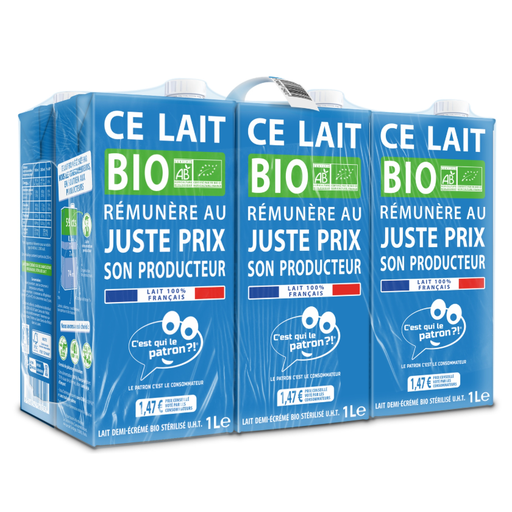 Image unavailable
This multipack may suit a household that regularly drinks milk at breakfast and uses 1-litre cartons.
The product description lists milk as the only ingredient and 1,6 g of fat per 100 ml. Before choosing this pack size, check the packaging for storage instructions and how long the milk keeps after opening.
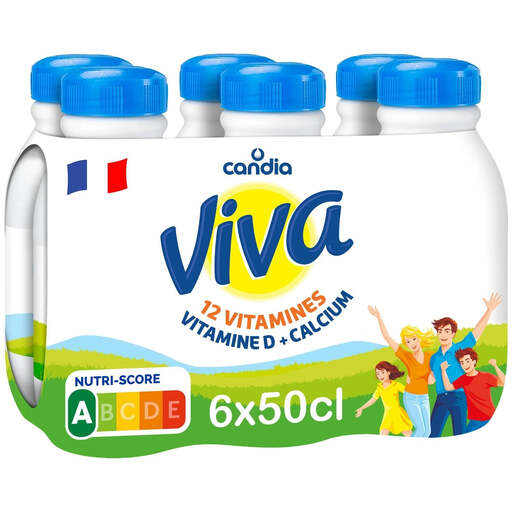 Image unavailable
The 50 cl cartons may suit a household that prefers to open a smaller quantity at a time.
The product description lists UHT milk, 1,0% fat, 1,5 µg of vitamin D and 120 mg of calcium per 100 ml. It also mentions lactase. If you’re specifically looking for lactose-free milk, check the claim on the packaging rather than inferring this from the ingredient.
This claim alone doesn’t establish that a milk is better suited to a child. When choosing a specific product, check whether it’s plain or flavoured, its ingredients and pack size, and any age guidance from the manufacturer.
Follow the storage instructions on the packaging of the product you buy. The Candia GrandLait and Auchan UHT milks reviewed recommend keeping them chilled at no more than +6 °C and using them within 4 days of opening, while the Lactel Vitamine D product reviewed recommends 3 days.
Don’t assume that ‘lactose-free’ means the product contains no milk: the Carrefour lactose-free product reviewed contains milk. A milk protein allergy and lactose intolerance are different conditions. If you have a diagnosed allergy or are unsure about a child’s needs, seek medical advice.
First check the product description and ingredients to see whether it contains milk, then look at the nutritional information, including the fat content, and the storage instructions. These details help you distinguish plain milk from a flavoured drink, and a standard product from one with specific features.