
Livraison le jour même ou le lendemain

Qualité garantie

Débloquez vos offres de bienvenue: Livraison GRATUITE | Jusqu'à -80 % | 30 jours d'essai gratuits à JoyPlus
Téléchargez l'application
Whether you're an aspiring content creator, a passionate traveller, or simply trying to get that perfect group photo, the quality of your smartphone shots has become more important than ever. Say goodbye to shaky, nausea-inducing videos, selfies where your arm takes over the screen, or the traditional family photo where someone's always missing. The solution? An accessory as simple as it is versatile: the selfie stick tripod. It combines the reach of a selfie stick with the stability of a tripod to put an end to these minor daily hassles.
This guide details the key points to check before you buy and presents our selection of the best models currently available. It's perfect for your vlogs, social media live streams, or simply for capturing your most beautiful memories.
Before you dive in, it's essential to know the features that set a good model apart from the rest. Here are the points to scrutinise to ensure you make the right choice.
The number one mission of a phone tripod is to guarantee rock-solid stability. Pay close attention to the leg design and materials. An aluminium alloy is often the best balance between sturdiness and low weight. Length is the other decisive criterion. A long selfie stick offers wider viewing angles, perfect for including everyone in the frame or capturing creative high-angle shots. It all depends on your use case: a compact stick will suffice for classic selfies, but aim for over 1.50m for wide group shots or comfortable live streaming sessions.
Today, almost all models include a Bluetooth remote control. This has become an essential feature: it allows you to trigger the shot remotely, without touching your smartphone and risking the dreaded camera shake. Double-check that the Bluetooth selfie stick is compatible with both iOS (iPhone) and Android. The other compatibility point is the mounting clamp: remember to measure the width of your smartphone, including its case, and compare it with the clamp's opening range, which is usually expressed in centimetres.
To stand out, some models add handy features. A built-in LED light, for example, can make all the difference in your indoor or low-light videos. Others focus on versatility, with a standard 1/4-inch screw mount that allows you to attach a compact camera, an action cam, or even a ring light. Be aware that a tripod stick will never replace a motorised phone stabiliser (gimbal) for filming while walking. Its role is to ensure perfect stability when stationary, guaranteeing consistently sharp photos and videos.
To put theory into practice, we've reviewed several popular models on the market. Here are three that caught our eye, each catering to a specific need.
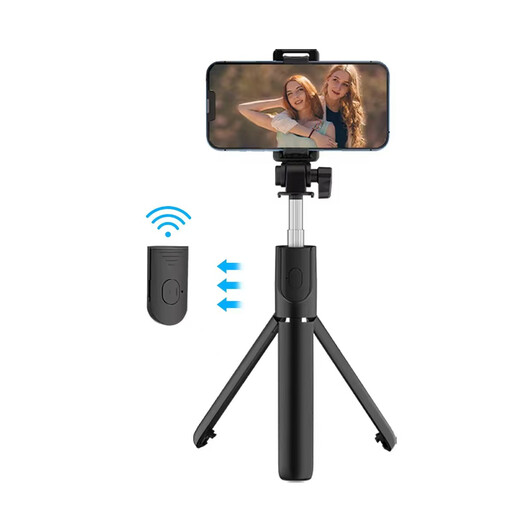
Why does this model stand out? The Verbex K50 distinguishes itself with two major strengths: its impressive height and its integrated dual LED lighting. It's the ultimate all-in-one tool for content creators seeking flexibility and a polished look, even when light is scarce.
Key Strengths:
Who is it for? Especially recommended for vloggers, TikTok creators, and anyone who regularly live streams from home. Its tall stature and built-in lighting make it a true mobile mini-studio.
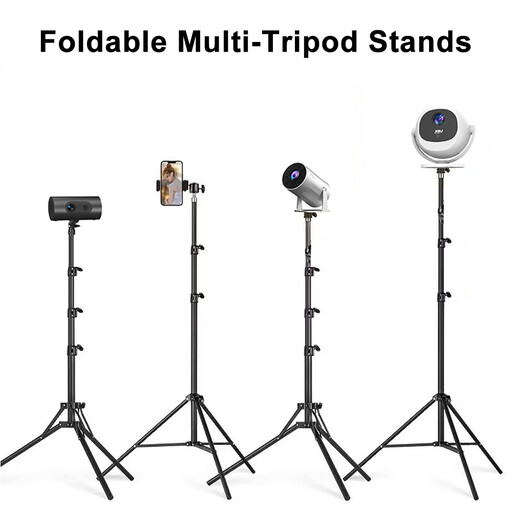
Why does this model stand out? Although marketed as a projector stand, this tripod proves to be a true Swiss Army knife. Its strong points: a robust aluminium alloy construction and universal compatibility thanks to its standard 1/4-inch screw mount. It's not just limited to use with a smartphone.
Key Strengths:
Who is it for? For the multi-device user looking for a single, versatile, and durable stand. Amateur photographers, videographers, or even those needing a stable stand for a pico projector will find it to be a perfect fit.
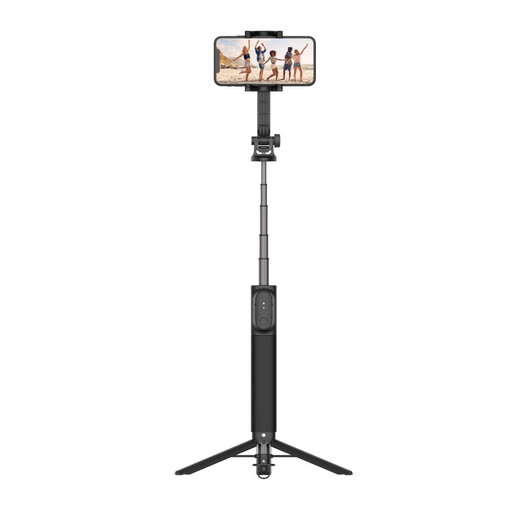
Why does this model stand out? The FIXED Snap XL offers the perfect balance between a long extension and remarkable compactness. It's the ultimate portable accessory, designed for those who need reliable and easy-to-carry equipment. The icing on the cake is its USB-C rechargeable remote.
Key Strengths:
Who is it for? The obvious choice for travellers, hikers, and anyone for whom portability is the number one criterion. It lets you capture your memories without being weighed down by heavy, bulky gear.
If lighting is your absolute priority, especially for streaming or vlogs, investing in a dedicated solution can be a wise move. Good lighting is often what separates an amateur video from a professional-looking production.
? Discover our selection of LED lighting stands to complete your setup.
1. How do I connect a Bluetooth selfie stick to my phone? It couldn't be simpler. Start by enabling Bluetooth on your smartphone. Then, turn on the stick's remote (usually by holding its main button for a few seconds). Go to your phone's Bluetooth settings: the stick should appear in the list of available devices (under a name like "Verbex" or "FIXED"). Select it to pair. That's it! You can now trigger your photos and videos remotely.
2. Is a selfie stick tripod compatible with all phones (iPhone and Android)? Yes, almost all models are universal. Compatibility works on two levels: the Bluetooth connection, which is a standard common to all smartphones, and the physical dimensions. The clamp that holds the phone is adjustable and accepts most models on the market (typically between 5 and 9cm wide). A quick tip: still, double-check this compatibility range before you check out, especially if you have a very large smartphone or a thick case.
3. What's the difference between a selfie stick tripod and a phone stabiliser? A selfie stick tripod provides static stability. Once placed on the ground or a table, it guarantees perfect stillness. This is ideal for group photos, timelapses, fixed-shot vlogs, or live streams. A phone stabiliser (or gimbal), on the other hand, offers dynamic stability. Using motors and sensors, it compensates in real-time for the user's movements (walking, running, etc.) to produce perfectly smooth, shake-free videos worthy of a cinematic tracking shot. They are therefore two complementary accessories that serve entirely different needs.