
Livraison le jour même ou le lendemain

Qualité garantie

Débloquez vos offres de bienvenue: Livraison GRATUITE | Jusqu'à -80 % | 30 jours d'essai gratuits à JoyPlus
Téléchargez l'application
Renovating a kitchen, bathroom or living room wall without taking on major building work is tempting. Self-adhesive 3D wall panels, adhesive wall tiles and decorative panels can indeed transform a room with very few tools. However, not every solution is installed in the same way, and some commercial claims are worth checking.
A PVC wall panel can be lightweight and easy to cut without having an adhesive layer. Some models require a suitable adhesive or silicone sealant. By contrast, self-adhesive wall tiles can be installed directly after removing the protective film.
This difference affects your budget, installation time and ability to remove the covering, particularly in rented accommodation. Before ordering, carefully check the installation method stated on the product page.
A photograph may make a product look like thick tiles or natural stone, even though it is actually made from vinyl or PVC. This is not necessarily a problem, but it is better to know the material, thickness and actual texture to avoid unpleasant surprises.
Stone-effect tiles or a panel with a geometric pattern can work very well on a feature wall. However, an area exposed to water splashes and heat requires a surface that is easy to clean, as well as suitable fixing.
Adhesive does not adhere well to powdery paint, a damp wall, a highly textured surface or old wallpaper that is beginning to peel away. Imperfections in the surface can also show through between the tiles.
Before installation, the wall must be clean, dry, degreased and as smooth as possible. In a kitchen, remove grease marks around the splashback. In a bathroom, deal with any moisture problems first and allow the surface to dry completely.
PVC wall panels are popular thanks to their light weight, relatively easy cutting and simple cleaning with a damp cloth. Vinyl tiles with a thick gel layer generally have a non-porous surface, advertised as stain- and moisture-resistant according to the specifications provided by the manufacturer.
For a self-adhesive kitchen splashback, also check the distance from the hob. A heat-resistance claim does not mean that the covering can be placed in direct contact with a flame or very hot source. Follow the installation recommendations and use additional protection if necessary.
30 × 30 cm formats are very common. To calculate the quantity required, multiply the wall’s width by its height, then add a margin for cutting, corners and any installation errors.
In practice:
Always compare the price per square metre rather than the number of pieces. Two packages of the same size may cover different areas.
A reinforced adhesive can improve hold on a smooth surface, but wall preparation remains crucial. If you are renting, test compatibility on a small, inconspicuous area and keep the packaging and instructions.
Imported products must provide identification and safety information suitable for the European market. The CE marking, where it applies to the relevant category, does not by itself guarantee the product’s decorative performance or adhesion. Check the manufacturer’s information, usage precautions and return terms before placing your order.
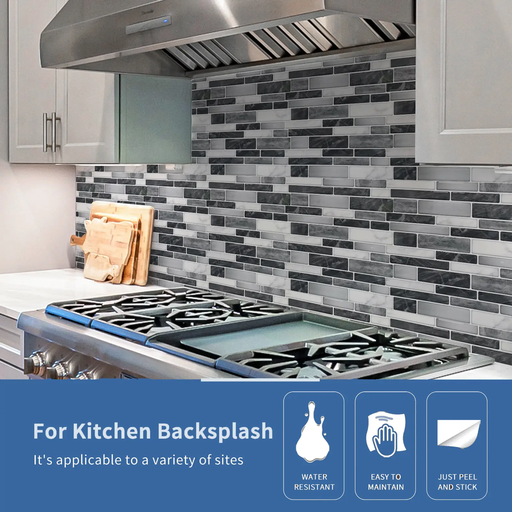
Why this choice suits this profile: This pack of 10 tiles is ideal for a small splashback, a wall touch-up or a first DIY wall decorating project, without having to buy a large quantity from the outset.
The self-adhesive installation means there is no need to buy specialist tools or separate adhesive. However, the product page specifies that the tiles must be applied to a smooth, non-textured surface — a condition that must be met to prevent premature peeling.
30 × 30 cm tiles, advertised coverage of approximately 0.9 m², vinyl surface with a thick top layer and easy care.
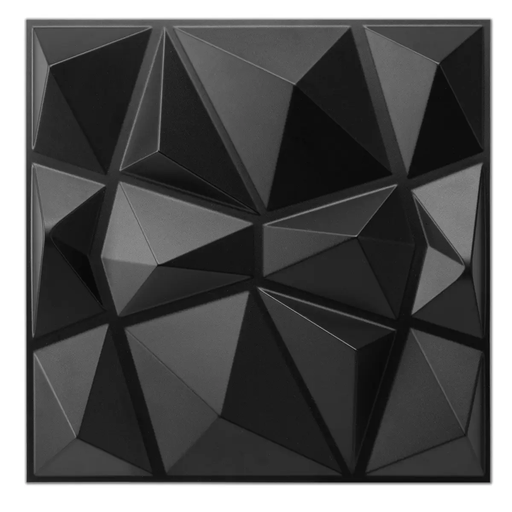
Why this choice suits this profile: With its black diamond pattern, this model is ideal for anyone wanting to create a striking feature wall in a contemporary living room, bedroom or home office.
The raised pattern is clearly identified and the pack contents are specified. However, you will need adhesive or silicone: these are not ready-to-install self-adhesive tiles.
Rigid PVC advertised as water- and heat-resistant, diamond pattern, 33 panels measuring 30 × 30 cm and covering approximately 2.97 m².
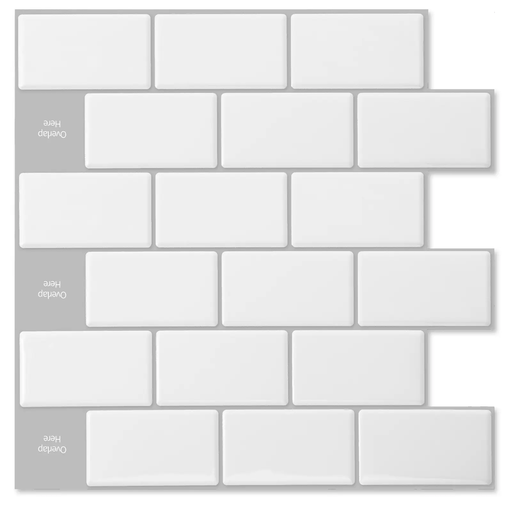
Why this choice suits this profile: Its metro-tile style fits easily into a family kitchen, shower room or rented flat where you want to refresh the décor quickly.
The self-adhesive format eliminates the need for mortar, and the product page states that the tiles can be cut with a craft knife. However, installation must be carried out on a clean, smooth surface.
Pack of 10 tiles, advertised coverage of approximately 0.9 m², 3D relief and a surface described as resistant to heat and yellowing.

Why this choice suits this profile: This pack is ideal for creating a feature wall in a residential or professional interior, with its contemporary geometric pattern.
The product page distinguishes high-density PVC from foam models and specifies that installation requires adhesive or a few basic tools. This helps you plan the materials you will need.
High-density PVC advertised as recyclable and odourless, raised geometric pattern, 20 panels measuring 30 × 30 cm and covering approximately 1.8 m².
We have put together a complete, real-time-updated list of products that meet these exacting selection criteria, as well as European safety requirements.
In a bathroom, adhesive tiles may be suitable for an area with limited exposure to splashes, provided that the perimeter joints and joins are treated in accordance with the manufacturer’s instructions. They do not automatically replace complete waterproofing behind a traditional covering.
They can be used as a self-adhesive kitchen splashback if the surface is smooth and clean, and if the covering is sufficiently far from flames and direct heat sources. Check the stated resistance and usage limitations before starting installation.
This is sometimes possible on stable, degreased tiles with little texture. However, deep grout lines can create hollows and reduce adhesion. A smoothing compound or specific surface preparation may therefore be necessary.
It depends entirely on the product’s quality, its exposure to moisture and heat, how often it is cleaned and, above all, how well the wall was prepared. No universal lifespan can be guaranteed. Check the edges and joins regularly, particularly in damp rooms.