
Livraison le jour même ou le lendemain

Qualité garantie

Débloquez vos offres de bienvenue: Livraison GRATUITE | Jusqu'à -80 % | 30 jours d'essai gratuits à JoyPlus
Téléchargez l'application
A balcony in full bloom or a lush green patio without the daily watering chore? The promise is tempting. Self-watering planters seem like the perfect solution. Yet, disappointment is common with products that fail to deliver. To prevent your purchase from ending in disaster, here are the key pitfalls to be aware of before you buy.
The two most common pitfalls are:
This guide will help you decode technical specs to identify the features that truly matter and choose a reliable, durable model that's perfectly suited to your needs.
To make the right choice, rely on objective technical criteria rather than marketing hype.
The longevity of a designer outdoor planter depends entirely on its material. Entry-level models are often made from basic plastic, which becomes brittle in the frost and fades under UV exposure.
For a long-term investment, look for planters made from high-quality polypropylene or polymers. These materials are specially treated to offer true frost resistance (often indicated by a temperature range, e.g., -20°C) and UV protection. A quality frost-proof flower pot will retain its flexibility and colour, just as an anthracite planter will remain a deep grey year after year. A growing number of manufacturers, like Deroma, now offer ranges made from recycled and recyclable materials—a plus for more sustainable gardening.
A good self-watering flower pot does more than just store water. Its effectiveness relies on two key elements:
Your planter should adapt to your space and your vision. For a large patio, a planter on wheels offers welcome flexibility for rearranging your layout or following the sun. If you want to create a green partition or dress up a wall, living wall or partition planter solutions are ideal. These modular systems allow you to combine multiple containers to form a cohesive and attractive structure.
Instead of an endless list, here is a selection of products that meet specific needs while checking all the boxes for the durability criteria we've just covered.
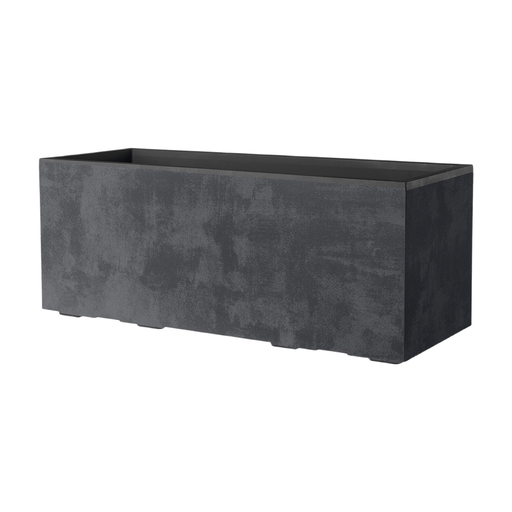
Why this choice? Perfect for structuring a patio or a large balcony. Its living wall format creates a natural partition, and its large volume easily accommodates sizable plants or a small vegetable garden. The integrated wheels are a real bonus for moving it to suit your mood or the sun.
Made from recycled polymer, it is certified frost- and UV-resistant. Its water reservoir system includes an essential overflow plug for outdoor use.
It combines a large planting volume, full mobility thanks to its wheels, and a design that is both durable and eco-friendly.
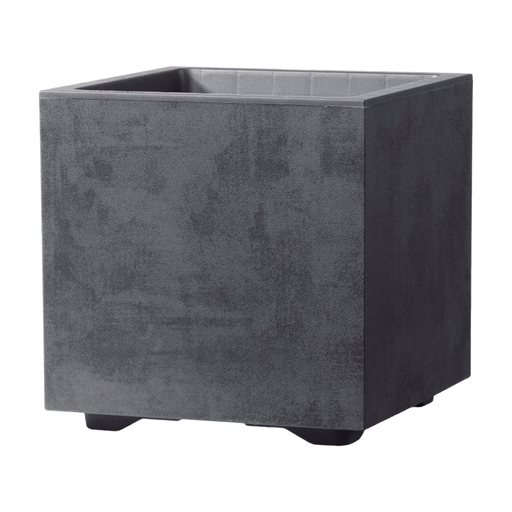
Why this choice? Its cubic shape and compact size are perfect for balconies or small patios. You can grow herbs or flowers without cluttering the space, all with a modern, clean design.
It boasts the same qualities as the larger models in the range: robust frost/UV-resistant material and a drainage system with an overflow. No compromises on durability.
An excellent performance-to-footprint ratio. It packs all the benefits of a high-performance self-watering system into a format designed for urban living.
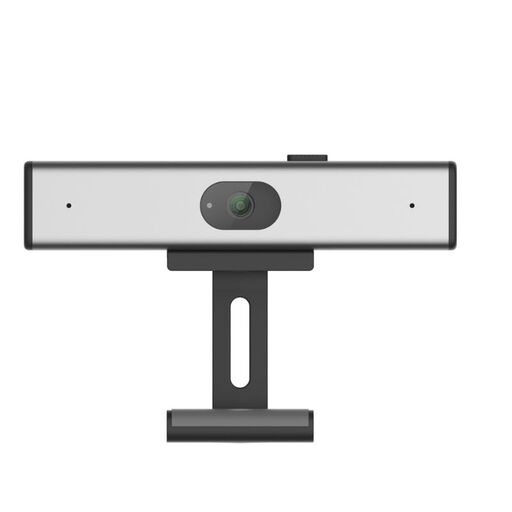
Why this choice? For those who want an aesthetic that stands out from the crowd. Its silver finish gives it a modern, almost metallic look that pairs perfectly with contemporary outdoor decor, aluminium furniture, or an industrial style.
Designed for outdoor use, its material is selected for its weather resistance. The integrated water reservoir system ensures consistent, autonomous watering.
Its unique design and metal-like finish bring a rare touch of originality and elegance to a balcony or patio.
We have compiled a complete, up-to-date list of products that meet these strict selection criteria and current regulations.
In winter, plants' water needs decrease significantly. It's advisable to empty the reservoir to prevent frost damage, even if the pot is certified frost-proof. Remember to open the overflow plug to allow rainwater to drain freely and prevent the soil from becoming waterlogged.
Choose a high-quality, light, and well-draining potting mix. To further improve drainage and capillary action, you can mix in clay pebbles, pozzolana, or perlite. Avoid heavy, compact soils that can retain too much moisture and suffocate the roots.
The autonomy depends on many factors: the size of the reservoir, the type of plant, its water needs, its sun exposure, and the temperature. In the height of summer, it can range from a few days to over two weeks. The best advice is to check the water level regularly during the first few weeks to get familiar with your plants' consumption rate.