
Livraison le jour même ou le lendemain

Qualité garantie

Débloquez vos offres de bienvenue: Livraison GRATUITE | Jusqu'à -80 % | 30 jours d'essai gratuits à JoyPlus
Téléchargez l'application
Adding greenery to your balcony, terrace, or garden is an exciting project. The self-watering planter has become the go-to solution for keeping your plants thriving without hours of work. But be warned: not all models are created equal. Behind appealing marketing, some hide design flaws that can harm both your plants and your wallet. To make the right choice, learn to avoid the most common pitfalls and invest in a truly durable and effective product.
The market is flooded with planters with attractive designs, but aesthetics should never be the sole criterion. Here are the two most common issues that turn a promising purchase into a real disappointment.
To make an informed choice, rely on objective technical specifications rather than marketing claims. Here are three non-negotiable criteria.
A water retention system worthy of the name is more than just a simple basin. It must include a grid or supports separating the soil from the water, so that the roots can hydrate through capillary action without ever suffocating. For an outdoor flower box, the presence of a drilling area (often pre-marked) is essential to drain excess rainwater and prevent root rot.
The longevity of your planter depends directly on the plastic used. Injected polypropylene is an excellent choice, as it is both robust and lightweight. Check that the product specifications mention:
Don't just rely on the external dimensions. An 80 cm rectangular planter can hide very thick walls or an oversized water reservoir, reducing the available volume for soil. The only truly reliable criterion is the volume in litres. For a large flower pot intended for shrubs or dense arrangements, aim for a volume of at least 50 litres.
Rather than an endless list, here are models we've selected to meet specific needs.
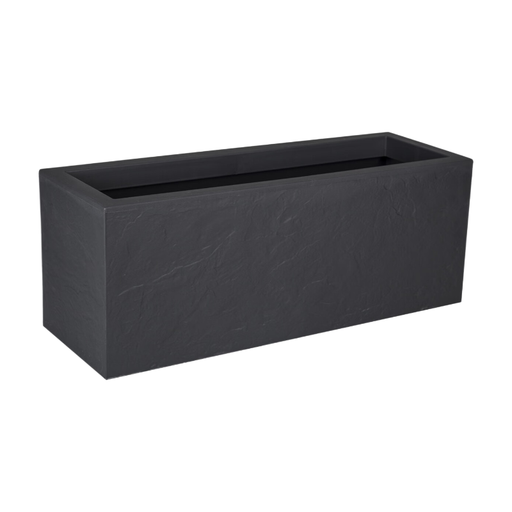
Our take: Perfect for defining a space with large plants. Its large capacity and robustness allow for planting shrubs, perennials, or dense floral arrangements, creating a very elegant visual divider.
This model includes a true water retention system with a pre-marked drainage area to be drilled. Its polypropylene construction is certified frost and UV-resistant, and its French manufacturing (certified Origine France Garantie) is a real bonus.
Its generous 57-litre volume and modern stone-effect design make it much more than a simple planter: it's a true decorative element.
Our take: The 80 cm rectangular format (79.5 cm to be exact) is perfect for optimising space along a railing. As the Volcania range is modular, you can easily combine several sizes for a harmonious look, even in a small space.
Its clever double-walled design gives it a robust appearance while remaining lightweight and easy to handle—a major advantage for a balcony installation. The water reservoir allows for less frequent watering, a real convenience for city dwellers with busy schedules.
Its refined aesthetic and the modularity of the range allow you to create a truly chic and cohesive little urban garden.
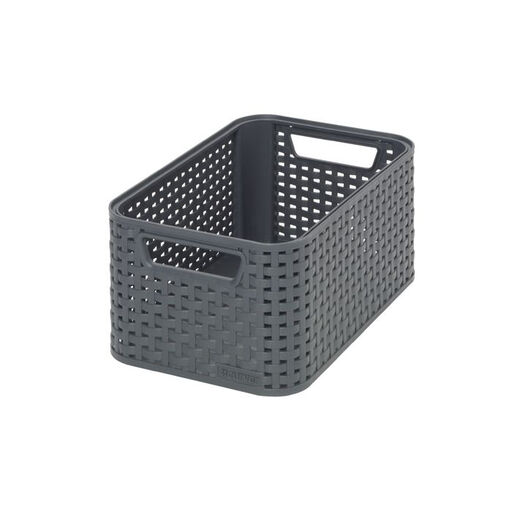
Our take: An alternative and budget-friendly solution to use as a decorative pot cover. Its size is perfect for small indoor plants (succulents, herbs) and its woven rattan look fits in with any decor style.
This is not a technical planter, and it doesn't pretend to be. It's a purely decorative container, with no UV treatment, frost resistance, or water reservoir. Use it as a pot cover, or drill your own holes to ensure minimal drainage.
Its light weight and faux-rattan look make it an aesthetic and very affordable choice for updating your plant decor with the seasons.
Discover our full selection of products that meet our quality criteria.
Yes, it's absolutely essential. Outdoors, rainwater adds to your watering. Without a drainage hole, the reservoir would overflow into the soil, leading to root suffocation and rot. Most quality models offer pre-marked areas that are very easy to drill yourself.
The principle is ingenious. A reservoir at the bottom of the pot stores water. A grid or supports separate this reservoir from the soil. This way, the roots don't sit in water but absorb it through capillary action when the plant needs it. Hydration is constant and autonomous, which allows you to significantly reduce watering frequency.
A quality polypropylene model, treated for UV and frost resistance, can easily last between 5 and 10 years, sometimes even longer. Its colour will remain stable and its structure will not weaken over the seasons and with temperature changes. The initial investment is slightly higher, but it easily pays for itself in the long run.