
Same-day & Next-day Delivery

Quality Guaranteed

Unlock Your Welcome Offers: FREE Delivery | Up to 80% OFF | Free 30-day JoyPlus trial
Download the APP
Adding greenery to your balcony, terrace, or garden without the daily chore of watering is an appealing promise. The self-watering planter has emerged as the perfect solution for keeping plants thriving without constant attention. However, the market is flooded with models of wildly varying quality, and it's easy for a good idea to turn into a major disappointment after an ill-advised purchase.
Before you make a decision, let's review the three critical flaws that can render a planter useless after just one or two seasons:
To avoid falling into this trap, it's better to rely on objective technical criteria than on marketing hype.
Choosing the right outdoor flower pot is more than just a matter of aesthetics. Its durability and functionality depend on very specific technical features.
The longevity of your planter depends primarily on its composition. High-quality polypropylene models, often made from recycled plastic, are an excellent starting point. But this label alone is not enough. A frost- and UV-resistant pot must have been treated during its manufacturing. This process involves integrating additives that protect the plastic from UV rays and maintain its flexibility at low temperatures. A good indicator of quality? The Origine France Garantie certification, which is often associated with strict specifications on material quality.
An effective self-watering system aims to mimic the soil's natural hydration. It consists of a grid or a perforated base that separates the potting soil from the reservoir. The roots then draw up moisture through capillary action, only as needed.
Two points to check:
The size of the planter has a direct impact on your plants' health. A large flower pot offers more room for roots, but its greater thermal and moisture stability also protects the plant more effectively from temperature shocks and drought.
In terms of design, shapes and finishes are paramount. A rectangular balcony planter optimises space, while a large square container can be used to define a terrace. Finishes like a stone effect or trendy colours like anthracite grey can turn these functional objects into true decorative assets.
Rather than an exhaustive list, here is a selection of products that tick all the boxes on our checklist and cater to distinct user profiles.
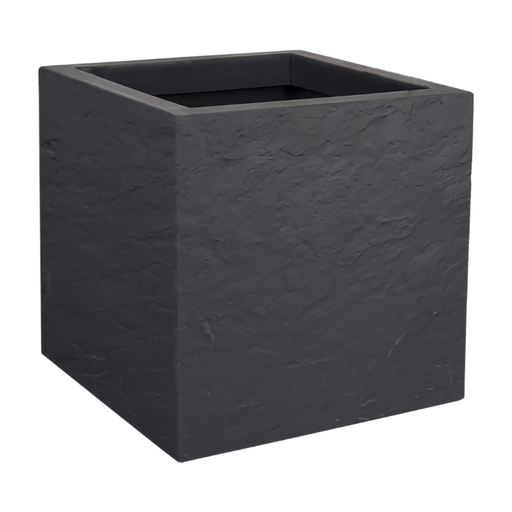
Why we chose it : Its compact square design (approx. 30 cm) is perfect for balconies and small terraces. The stone-effect design and anthracite colour integrate beautifully into modern decor, and its self-watering system simplifies daily maintenance.
The overflow area, which should be drilled for outdoor use, ensures effective drainage of excess water. Goodbye to the risk of root rot, a classic flaw of poorly designed systems.
Its Origine France Garantie certification and modular design allow for creating harmonious arrangements with other pots from the same range.
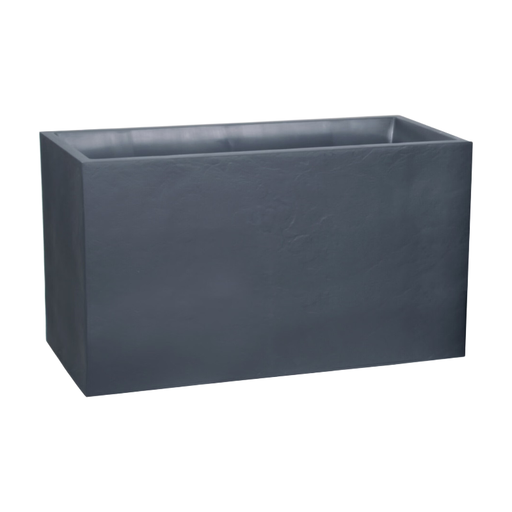
Why we chose it : With its large volume and "low wall" design, this planter is perfect for structuring a space, creating green dividers, or dressing up a wall. Its double wall is a guarantee of sturdiness and performance.
Its double wall acts as a true thermal shield, protecting the roots from both intense heat and frost. This is a real technical advantage over single-walled models, which only protect the container and not its precious contents.
The generous 116-litre volume can accommodate shrubs or large-scale floral arrangements, offering much greater water autonomy.
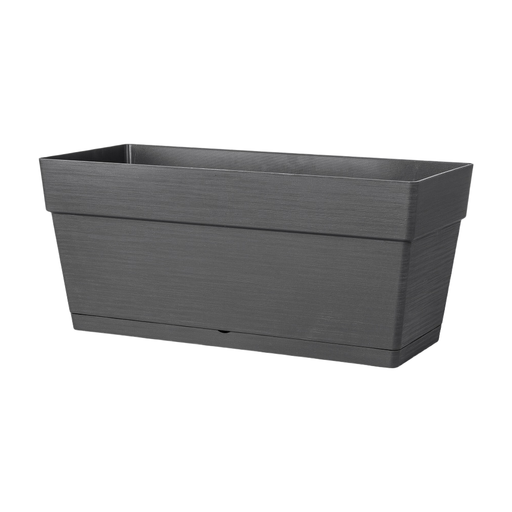
Why we chose it : This product is the solution for those who want to reconcile gardening with responsible consumption. Made from recycled materials and being fully recyclable, it is a coherent choice for a more sustainable approach.
Its robust design ensures excellent resistance to UV rays and frost, which protects it against discolouration and plastic embrittlement—two major flaws of entry-level products.
Its eco-conscious DNA, with 100% recycled and recyclable materials, without compromising on quality or sturdiness.
As autumn approaches, we've put together a complete selection of products that meet our demanding specifications for quality and durability.
The system relies on a double bottom: a water reservoir at the base and a container for the soil above, separated by a grid. The roots absorb water via capillary action. For outdoor use, it is imperative to drill the overflow hole (usually indicated underneath the pot) to allow excess rainwater to drain and prevent the roots from drowning. For indoor use, this hole should not be drilled.
Longevity depends on the quality of the polypropylene and the UV and frost-resistant treatments. An entry-level model can show signs of weakness in the first or second year. In contrast, a quality planter, made with the right additives, can retain its colour and strength for 5, 10 years, or even longer. Warranties offered by manufacturers, such as the 7-year warranty offered by EDA on certain models, are an excellent indicator of their durability.
Yes, provided it is clearly certified as frost-resistant. The key is to ensure the overflow hole is drilled and clear. This prevents water from stagnating in the reservoir, freezing, and causing the pot to crack under pressure. Double-walled models offer additional protection for the roots against the cold.