Joybuy Insights

Cordless Stick Vacuum with Self-Emptying Station: Buying Guide

The cordless stick vacuum has revolutionized home cleaning, making it faster and far less of a chore. The only downside is a persistent task?: emptying its small dustbin, an operation that's often messy and needs to be repeated constantly. The solution?? The cordless stick vacuum with a self-emptying station, an innovation that promises near-zero maintenance.

But be warned: the market is flooded with marketing claims that can be misleading. To avoid buyer's remorse, it's crucial to know how to spot the most common pitfalls.

  • The illusion of maximum power?: Don't be swayed by the power figures (in Pascals or Airwatts) on spec sheets. They are often measured in a lab under perfect conditions. True effectiveness depends on the brush head design, filtration quality, and, most importantly, the device's ability to maintain consistent suction.
  • Theoretical vs. real-world battery life?: The advertised runtime almost always refers to "eco" mode, which is far too weak for carpets or pet hair. The only number that matters is the runtime in standard or turbo mode—the one you'll use daily. And it's often much lower.
  • The self-emptying station that doesn't do it all?: A station that automatically empties the dustbin is fantastic. But it won't free you from all maintenance. Hair getting tangled in the brush roll or the need for regular filter cleaning are still hassles you shouldn't underestimate.

The Essential Criteria for an Informed Choice

To choose a model that will satisfy you in the long run, ignore the marketing jargon and focus on these key technical specifications.

1. Effective Power and Filtration System

A vacuum's performance isn't just one number. True performance is judged on a winning combination?:

  • Suction power (in Airwatts or AW)?: This measures the combination of airflow and suction. A powerful cordless stick vacuum worthy of the name should exceed 150?AW to be effective on all floor types.
  • Cyclonic technology?: A multi-cyclonic system (9 cones or more) efficiently separates air from dust. Its role is crucial?: it prevents filters from clogging and ensures consistent suction from the beginning to the end of your cleaning session.
  • HEPA filtration?: Essential for allergy sufferers and pet owners. A multi-level HEPA filter captures over 99% of fine particles like pollen, dust mites, and pet dander, purifying the air exhausted back into the room.

2. Real-World Runtime and Battery

A long-runtime vacuum is a prerequisite for medium to large homes.

  • Battery capacity (in mAh)?: A battery of at least 2500?mAh is a good baseline.
  • Standard mode runtime?: This is the most important metric. Aim for at least 40 to 60 minutes on standard power, the mode you'll use 90% of the time. The turbo mode runtime, while very short, is still a good indicator of the battery's ability to deliver high power when needed.

3. Brush and Station Design

These two elements are at the core of the daily user experience.

  • The anti-tangle brush roll?: If you have pets or long hair in your home, a brush specifically designed to prevent hair from wrapping around it is a game-changer. It will save you the chore of cleaning it by hand. This is a non-negotiable feature for a good vacuum for pet hair.
  • The auto-empty station?: Check the station's dust bag capacity (in litres or days of runtime) to estimate how often you'll need to replace it. The most advanced stations do more than just empty the dustbin?: they also recharge the device and can even provide storage for accessories.

Our Top Picks for Different Needs

Here are a few models that stand out for their technical specs and suitability for specific user profiles.
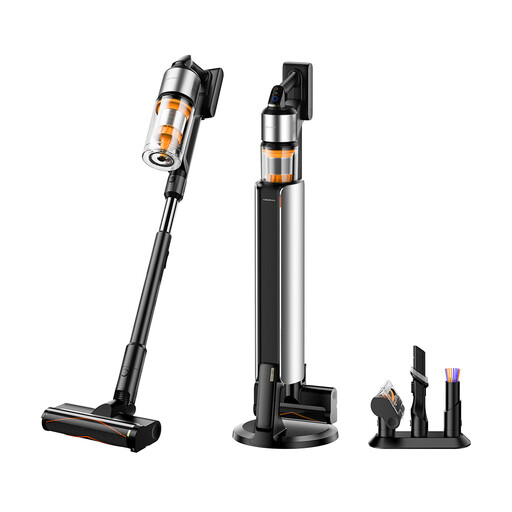
IDEAL FOR : Demanding Households with Pets
Deerma Z50 Combo, Cordless Vacuum Cleaner with Smart 6-in-1 Maintenance-Free Base Station

Deerma Z50 Combo, Cordless Vacuum Cleaner with 6-in-1 Maintenance-Free Station

Why it's the right choice : Perfect for large homes with pets, where an all-in-one, powerful, and low-maintenance cleaning solution is needed. The self-emptying station and anti-tangle brush perfectly meet these needs.

How It Avoids the Pitfalls

It bypasses the maintenance trap with its 6-in-1 station (emptying, storage) and its certified anti-tangle SurfMaster brush. Its 70-minute runtime is calibrated for realistic use, not just in eco mode.

Key Advantage and Highlights

All-in-one station offering up to 100 days of peace of mind. 27,000 Pa suction power and 9-stage filtration. Green light to reveal invisible dust.
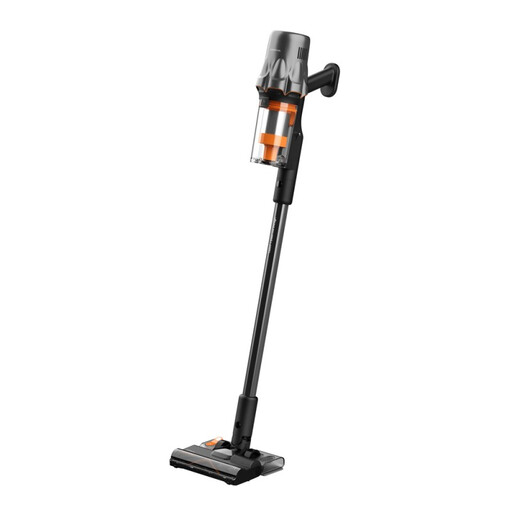
IDEAL FOR : Versatile and Deep Cleaning
Deerma T30W XT Cordless Vacuum Cleaner

Deerma T30W XT, 2-in-1 Cordless Vacuum and Mop

Why it's the right choice : For those who want an ultra-versatile device capable of vacuuming and mopping hard floors in a single pass. Here, the priority isn't the self-emptying station, but raw cleaning performance.

How It Avoids the Pitfalls

It avoids the "on-paper" power trap by delivering an effective 155 AW of power and a 9-cone cyclonic technology for suction that doesn't fade. Its 60-minute runtime is designed for extended standard use.

Key Advantage and Highlights

2-in-1 vacuum and mop function for a complete clean. T?V-certified anti-tangle brush and green light dust detection technology.

Looking for other options?

We have curated a full selection of products that meet our strict selection criteria and comply with European safety standards.

Frequently Asked Questions

Is a self-emptying station noisy?

The vacuum itself has a typical noise level during operation. It's the auto-empty cycle that is loud, but it only lasts for 10 to 20 seconds and only activates when the device is on its dock.

How often do you need to change the station's dust bag?

This depends on the size of your home, whether you have pets, and your cleaning frequency. On average, a bag lasts between 30 and 100 days.

Is HEPA filtration really necessary?

Absolutely, if you or a member of your household suffers from allergies, asthma, or if you have pets. A HEPA filter is the best guarantee for capturing allergens (pollen, dust mites, dander) and purifying the air in your home, whereas a standard filter would just recirculate them.