
Livraison le jour même ou le lendemain

Qualité garantie

Débloquez vos offres de bienvenue: Livraison GRATUITE | Jusqu'à -80 % | 30 jours d'essai gratuits à JoyPlus
Téléchargez l'application
The promise of a self-cleaning litter box is certainly appealing: no more daily scooping, fewer odours, and a consistently clean space for both you and your cat. But in a market saturated with models featuring complex functions and aggressive marketing, it's hard to know where to start. Telling a gimmick from a genuine innovation can quickly become a headache. As a product expert at Joybuy, my mission is to decode this market for you, helping you identify the criteria that truly matter and avoid the pitfalls that can turn a promising purchase into a regretful one.
The appeal of automation can sometimes make us overlook a few practical realities. Too many cat owners end up disappointed with a device that complicates their lives more than it simplifies them. Here’s a rundown of the most common disappointments.
To ensure your future smart litter box lives up to its promises, focus on these three essential technical points.
Your pet's safety is the absolute priority. A trustworthy device must integrate a full suite of sensors. Check for the presence of:
These technologies, like the xSecure system found in some models, guarantee risk-free operation, even when you're away or in a home with children and other pets.
The user-friendliness of an automatic cat litter box directly depends on its capacity. Keep an eye on two key figures:
The device should be compatible with common clumping litters (bentonite, tofu, mixed) to avoid forcing you to buy a specific, expensive brand. For odours, look for dual protection: a sealed waste drawer and an active deodorising system. More advanced technologies neutralise the ammonia molecules responsible for bad odours, rather than just masking them.
Instead of just a list of features, we've matched products to specific needs. The goal: to help you better visualise how they can fit into your daily life.
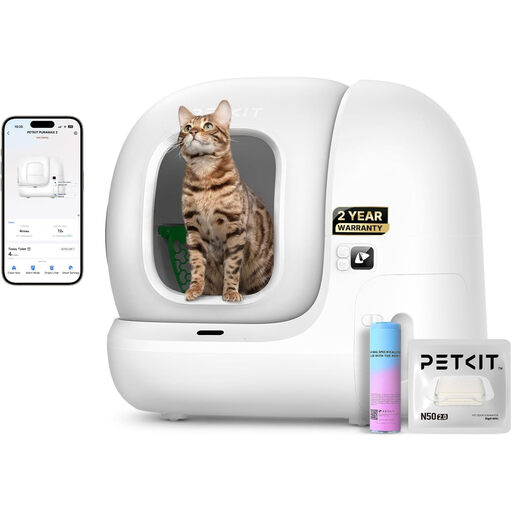
Why we chose it : Ideal for owners of multiple cats (up to 8 kg) or those who are often away. Its extra-large 76L capacity and 7L waste drawer mean less frequent maintenance. The PETKIT app allows for remote control and health tracking for each cat, perfectly suiting a modern, connected lifestyle.
It overcomes the cleaning and odour pitfalls with its non-stick Tri-Proof liner and N50 2.0 deodoriser, which the manufacturer claims neutralises 98% of ammonia. Its comprehensive xSecure safety system (heat, infrared, weight, and anti-pinch sensors) provides complete peace of mind.
Extended autonomy thanks to the 7L drawer. Compatible with all common clumping litters. Multi-sensor safety system for maximum protection.
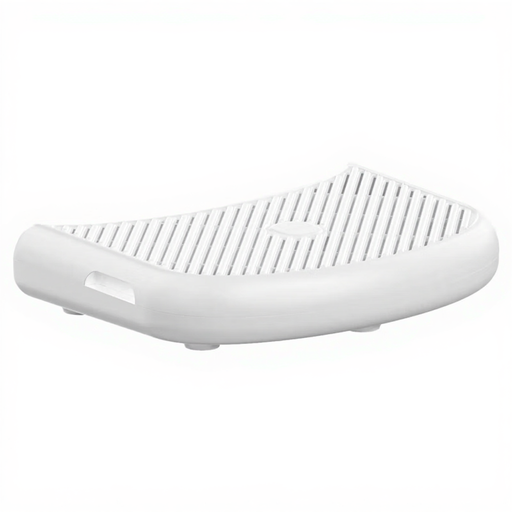
Why we chose it : This accessory is for those who already own a litter box (automatic or not) but struggle with litter tracked all over the house. It's a targeted solution to maximise cleanliness, especially useful for long-haired cats or homes with smooth floors.
This isn't a litter box, but a smart accessory that tackles a persistent problem: scattered litter. Its mesh design effectively traps granules stuck to your cat's paws, saving you from constantly sweeping around the box.
Dual function: its hollow structure serves as discreet storage for waste bags and the scoop. The collected litter can be easily poured back into the main box.
We have compiled a selection of products that meet our strict selection criteria and comply with European safety standards.
The adjustment period really depends on your cat's personality. To ease the transition, place the new device next to the old litter box for a few days without turning it on. Initially, disable the automatic cleaning so your cat can get used to the object without being scared by the noise or movement. Once they start using it regularly, you can switch on the automatic mode.
This depends on the number of cats and the capacity of the waste drawer. For a model like the PETKIT Pura Max 2 with a 7L drawer, the manufacturer estimates it can go about 15 days for a single cat. For multiple cats, plan to empty the drawer more frequently, about once a week. The mobile app will send you a notification when the drawer is full.
Recent models have made huge progress on this front. The motor noise during a cleaning cycle is generally low, often comparable to that of a modern refrigerator. However, be mindful of the sound of the litter falling, which can startle a more timid cat. It's best to place the device in a room where the noise won't disturb anyone, such as a laundry room or bathroom.