
Livraison le jour même ou le lendemain

Qualité garantie

Débloquez vos offres de bienvenue: Livraison GRATUITE | Jusqu'à -80 % | 30 jours d'essai gratuits à JoyPlus
Téléchargez l'application
The promise of a self-cleaning litter box is a dream come true: no more daily scooping, fewer odours, and a healthier living space for both you and your cat. But be warned—the market is flooded with models whose flattering spec sheets can hide deal-breaking flaws. As a product expert at Joybuy, my role is to help you decode the marketing jargon to make a truly informed choice.
Before you make a significant investment in one of these devices, let's review the three most common pitfalls that can turn a promising purchase into a bitter regret.
To avoid these traps, focus on objective technical criteria. These are what will make the difference between a disappointing high-tech gadget and a true ally in your daily life.
There are two main technologies:
The game-changer? Litter compatibility. A good device must be compatible with most commercial clumping litters (bentonite clay, corn, tofu, mixed, etc.). This versatility is your best guarantee against being locked into one brand, allowing you to continue using your cat's favourite litter.
If you have multiple cats, capacity isn't an option—it's a necessity. Pay attention to two distinct volumes:
A worthy smart litter box comes equipped with an array of sensors for safety. Prioritise models that combine weight sensors, infrared detectors, and anti-pinch safety mechanisms. This ensures the cleaning cycle will never start if your cat is inside or even nearby.
Finally, a true odor-control litter box does more than just collect waste. The top-performing models add an active treatment: a neutralising liquid dispenser, an ioniser, or a carbon filter that activates after each use to guarantee a consistently fresh environment.
Rather than an endless list, here is one model that meets specific needs and checks all our boxes for reliability.
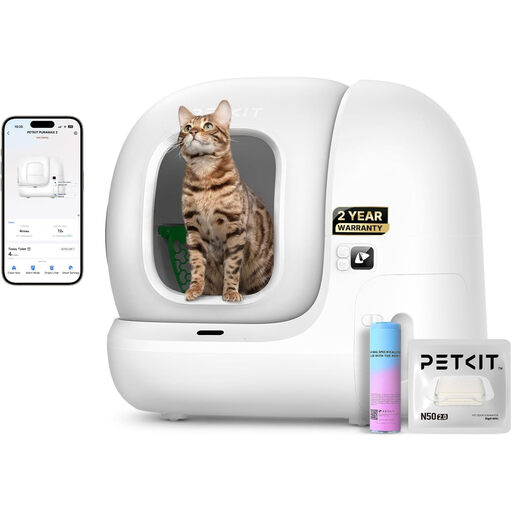
Why we recommend it: Designed for multi-cat households and discerning owners, this model combines a very large capacity (76L drum, 7L waste drawer) with advanced connectivity. The PETKIT app allows you to track the usage frequency and weight of each cat, providing valuable health indicators.
It addresses the safety pitfall with its comprehensive xSecure system (thermal, infrared, weight, and anti-pinch sensors). Its compatibility with most clumping litters on the market frees you from the proprietary consumables trap.
Its N50 2.0 deodorising module, which neutralises odours after each use, and its litter-trapping mat ensure impeccable hygiene and simplified maintenance.
We have curated a full range of products that meet our selection criteria and the strictest safety standards.
A quality model drastically reduces odours compared to a traditional tray. The rapid containment of waste and active deodorising systems are very effective. However, no device is magic. Regular maintenance is still essential: you'll need to empty the waste drawer every one to two weeks (depending on the number of cats) and plan for a full cleaning of the unit every month or two.
Most cats adapt very well, but a smooth transition is the key to success. Our tips:
The initial investment is higher, but the running costs can be managed. They mainly depend on the price of the clumping litter, compatible waste bags, and any refills for the deodorising system. By choosing a model that is compatible with standard litters, you stay in control of this expense.