
Livraison le jour même ou le lendemain

Qualité garantie

Débloquez vos offres de bienvenue: Livraison GRATUITE | Jusqu'à -80 % | 30 jours d'essai gratuits à JoyPlus
Téléchargez l'application
A self-cleaning cat litter tray can take the hassle out of daily scooping, but not all models are created equal. With promises of hands-free operation, mobile apps and odour-control features, it’s easy to overlook some important details when you’re buying.
Before choosing an automatic cat litter tray, take the time to check its internal dimensions, whether it works with your usual litter, and the cost of consumables. These factors will directly affect your cat’s comfort and the ongoing expense over the months ahead.
A large overall volume doesn’t guarantee weeks of use without intervention. You need to distinguish between the capacity of the litter compartment, the waste bin, and the number of cats using it. In a multi-cat household, the drawer will fill up much faster, even if the manufacturer claims a long period between empties.
A covered or automatic tray can look spacious from the outside, yet have an entrance that’s too low or a cramped interior. Always check the maximum weight limit, the height of the opening, and the actual internal dimensions. For a large cat, a covered litter tray needs to let them turn around and dig comfortably.
Proprietary bags, disposable trays, special litter and deodorisers can quickly add up. The PETKIT PUROBOT CRYSTAL DUO, for example, only works with PETKIT crystal litter and uses single-use waste bins. Other models accept several types of clumping litter, which gives you much more flexibility.
To reduce mess, choose a base with high enough sides, a properly sealed drawer, and a design that’s described as leak-proof. The Feandrea model has a sealed base and raised edges. According to its spec sheet, its internal dimensions of 50 × 40.5 × 34.5 cm suit cats weighing up to 15 kg.
A grid at the exit can also help stop litter from being scattered, catching any grains so they fall back into the tray. However, it won’t get rid of every trace around the unit – a mat placed at the exit is still strongly recommended.
A litter tray with safety sensors should stop the cycle or prevent it from starting when a cat is detected. The most common systems combine weight sensors, infrared sensors, proximity sensors or anti-pinch mechanisms. Also check what happens if something gets stuck, the stability of the base, and access to moving parts.
To help your cat adjust, leave the unit switched off or use it in manual mode for the first few days. That way, your cat can get used to it without being startled by any movement or unexpected noise.
A connected litter tray can let you start a cycle remotely, receive alerts when the waste bin is full, and track your cat’s weight or usage habits. Bear in mind that this information is for guidance only – it’s no substitute for veterinary advice or a medical diagnosis.
Also remember to check which Wi-Fi networks are compatible. The PETKIT PuraMax 2 works with 2.4 GHz Wi-Fi, while the PUROBOT CRYSTAL DUO supports both 2.4 GHz and 5 GHz networks. The stated noise level should also be considered in relation to where you plan to put it – in a quiet room, mechanical sounds will always seem more noticeable.
The models below are designed for different needs. Check each product’s page to confirm availability, what accessories are included, and the conditions of use.
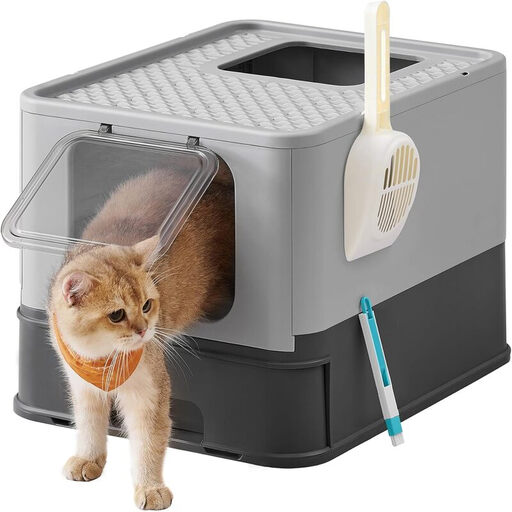
Why this suits this profile: This covered tray is a simple, affordable first step towards better hygiene, with no electronics or app required. It’s ideal for anyone who mainly wants to make scooping easier.
The sliding drawer, scoop and brush mean you’re not tied to proprietary bags or electronic parts. The leak-proof base helps prevent spills when the tray is used standing up.
Internal dimensions of 50 × 40.5 × 34.5 cm, maximum weight of 15 kg according to the spec sheet, removable door, and PP and PC surfaces that are easy to clean.
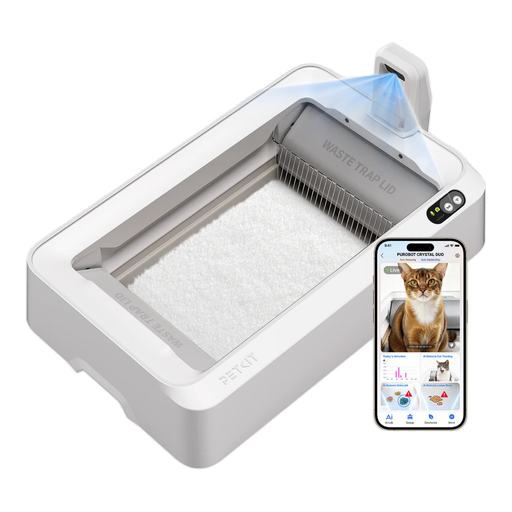
Why this suits this profile: This solution is aimed at users looking for a smart tray with a built-in camera, mobile app and automated usage tracking.
Its limited compatibility needs to be taken seriously – you must use PETKIT crystals and the designated disposable bins. It’s better to know this before you buy than to discover later that your usual litter won’t work.
Built-in camera, four claimed safety sensors, and scoop-free maintenance for up to 30 days for one cat, according to the product page.
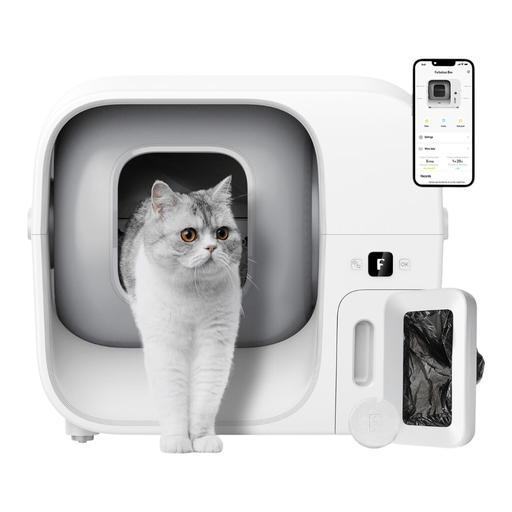
Why this suits this profile: With its 60 L waste tank, automatic bagging and app control, this model is designed for multi-cat households or people who are often away from home.
The sealed bag system reduces contact with waste. Proximity, weight and infrared sensors are claimed to monitor operation during cleaning cycles.
Stated noise level of up to 37 dB during bagging, behaviour and weight tracking via the app, and automatic bag refilling.
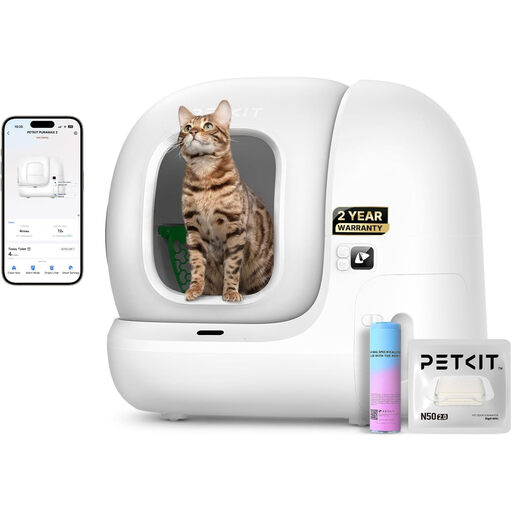
Why this suits this profile: This model is for those who want a large-capacity automatic litter tray with the ability to control it remotely.
The spec sheet states a weight range of 2 to 8 kg and compatibility limited to 2.4 GHz Wi-Fi. These constraints should be checked before purchase, especially if your cat is on the larger side.
76 L litter capacity, 7 L waste drawer, weight sensors, infrared and anti-pinch sensors, plus the PETKIT app.
We’ve put together a full, real-time selection of products that meet these strict criteria and European safety requirements.
To keep odours under control, an anti-odour litter tray needs to stay properly ventilated and should be emptied before it becomes saturated. No system removes the need for maintenance entirely, especially when it’s used by multiple cats.
The purchase price is only part of the budget. You also need to factor in bags, filters, deodorisers, disposable bins and, for some models, a specific type of litter. Units that work with standard clumping litter generally give you more freedom and can reduce costs in the long run.
Not necessarily. Check the maximum weight limit, the size of the entrance and the internal dimensions. Some models are described as suitable for cats weighing up to 10, 15 or 22 lb according to their spec sheets, while others have a much more restrictive range.
Yes. The automatic cycle removes waste, but the walls, sensors, grids, seals and drawers still need regular cleaning. This routine helps maintain a healthy environment for your cat and keeps the unit working properly.