
Livraison le jour même ou le lendemain

Qualité garantie

Débloquez vos offres de bienvenue: Livraison GRATUITE | Jusqu'à -80 % | 30 jours d'essai gratuits à JoyPlus
Téléchargez l'application
A self-cleaning cat litter tray can lighten the daily chore, but not all devices are created equal. Between automatic trays, connected models and covered boxes you clean yourself, the marketing claims can sometimes make the choice confusing.
Before you place an order, three pitfalls deserve your attention:
A cat needs to be able to get in, turn around and scratch without feeling cramped. For a large animal, check the interior dimensions, not just the external footprint. A model marketed as suitable for multiple cats may have an opening that is too narrow for certain body shapes.
The minimum and maximum supported weight are another key point. They must match your pet’s size, with a reasonable margin. The sensors on an automatic cat litter tray can lack precision if the cat is too light or if the device is placed on a soft rug.
Before first use, consult the manual and the product page. Rotating-sieve systems generally use clumping litter, made from bentonite, tofu or another compatible material. Conversely, some devices with a disposable tray are designed exclusively for crystals.
An unsuitable litter can cause blockages, poor waste separation or premature wear. This point is especially important with an automatic cat litter tray: its mechanism depends directly on how the litter absorbs liquids and forms clumps.
A safe cat litter tray must include several protections: a weight sensor, infrared detection, or automatic pause when a cat approaches. Also respect the weight limits stated by the manufacturer. Some systems may struggle to detect very light kittens.
Also consider how the device is cleaned:
An odour-control litter will not work miracles without maintenance. A full drawer, unsuitable litter or a poorly sealed bag can quickly spoil the user experience.
The models below meet different needs. The features listed come from the information provided for each product.
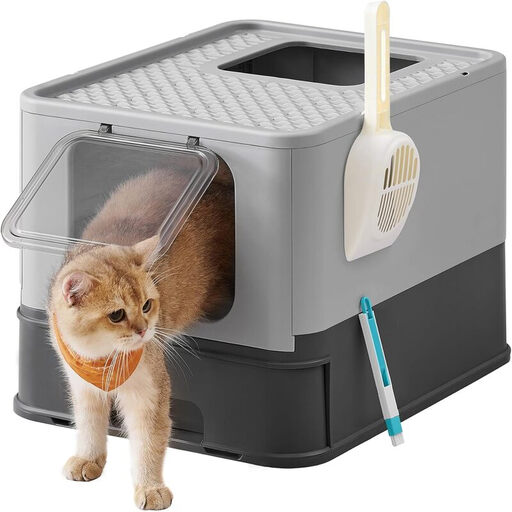
Why this choice might suit you: This covered tray is aimed at those who want to start with a simple solution, without a motor or app. It accepts cats up to 15 kg and offers an interior space of 50 × 40.5 × 34.5 cm.
It does not promise any autonomy without intervention: its removable drawer, scoop and brush make manual maintenance perfectly clear.
Leak-proof tray, high sides, top grid to limit scatter, and an adjustable or removable door.
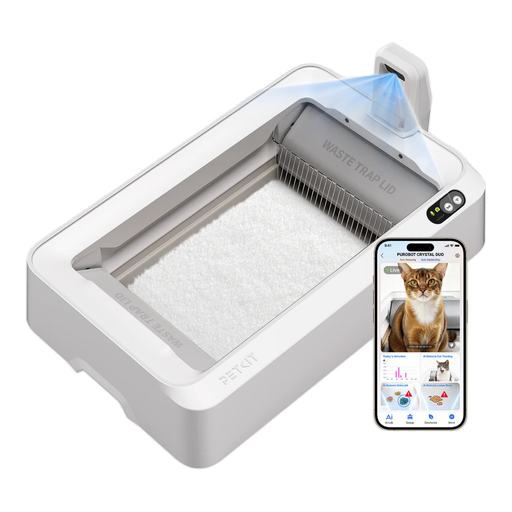
Why this choice might suit you: This model is aimed at users who want connected management, an integrated camera and operation with disposable trays filled with crystals.
Compatibility is clearly limited to PETKIT crystal litter and disposable trays: you know from the outset which consumables you will need to budget for.
Integrated camera, four safety sensors, dual-band Wi-Fi and claimed autonomy of up to 30 days for one cat.
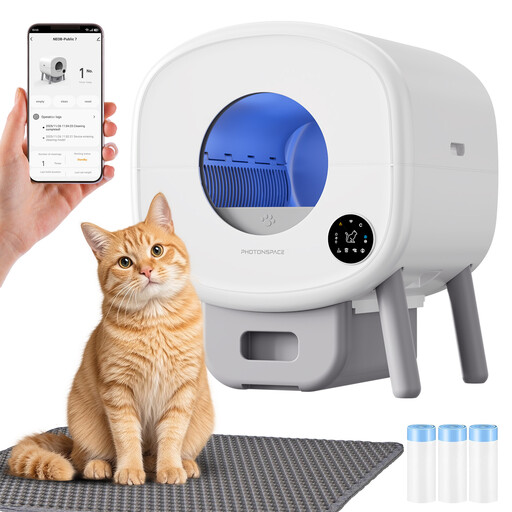
Why this choice might suit you: Its 95 L drum and 15 L waste drawer target households with multiple cats, provided you respect the maximum supported weight and installation instructions.
The drawer capacity and claimed autonomy of around 15 days are clearly stated. The device must be placed on a hard, flat floor, never on carpet.
Mobile app via 2.4 GHz Wi-Fi, weight and proximity sensors, enclosed waste compartment and compatibility with several clumping litters.
We have compiled a comprehensive, regularly updated selection of products that meet these demanding criteria, while also taking European safety standards into account.
Place the tray on a stable, flat and dry surface, away from splashes. During the first few days, disable the automatic mode if necessary so your cat can get used to the device and its noise. Using a litter they already know can help ease the transition.
The budget does not stop at the purchase price. Also remember to factor in:
A device with a large waste drawer can reduce how often you need to intervene, but it does not remove the need to regularly check the litter level and the condition of the sensors.
Yes, some models are designed for households with a multi-cat litter tray. However, check the drum capacity, drawer volume and weight limit. With several animals, you may need to empty it much more often than the claimed duration for a single cat.
The automatic cycle eliminates daily scooping, but regular maintenance is still essential. Empty the drawer according to alerts or its fill level, clean the parts specified in the manual and wipe the sensors. Never submerge the electronic base in water.
No. A litter tray with a mobile app can send notifications, track usage and sometimes allow remote control. However, a properly sized mechanical tray will be more suitable if you prefer to minimise settings, electronic consumables and reliance on Wi-Fi.