
Livraison le jour même ou le lendemain

Qualité garantie

Débloquez vos offres de bienvenue: Livraison GRATUITE | Jusqu'à -80 % | 30 jours d'essai gratuits à JoyPlus
Téléchargez l'application
A self-cleaning cat litter tray can lighten the daily chore, but not all automatic models are created equal. The number of cats, their weight, the type of litter accepted and the cost of consumables all directly affect how convenient it is to use.
Before ordering an automatic cat litter box, it’s worth knowing the most common pitfalls.
A claimed autonomy of 15 or 30 days depends on the number of cats, their size, how much litter you use and how often the cycle runs. In a multi-cat household, the waste bin will naturally fill up faster.
So take the time to look at each of these separately:
Systems that use proprietary bags or disposable trays make cleaning easier, but they can quickly add to your ongoing costs. On the other hand, a model that works with standard clumping litter gives you more flexibility.
To compare models realistically, don’t just look at the price of the unit itself. Also estimate the monthly cost of bags, filters, refills and any specific litter required.
A connected cat litter box might offer an app, send notifications or track your pet’s weight. These features are handy for spotting changes in their habits, but they don’t replace daily observation or a vet’s opinion if something unusual occurs.
Also remember to check the Wi-Fi connection, your smartphone’s compatibility and the app’s reliability before you buy.
If you have a large cat or several animals, choose a tank that’s spacious enough for each one to turn around and enter without difficulty. A large-capacity self-cleaning litter tray reduces how often you need to empty it, but it also takes up more space.
Measure the available space, taking into account:
Also check the authorised weight range. The Catlink Open-X, for example, is listed for cats from 1.5 to 10 kg, while the Furbulous model suits cats weighing up to around 10 kg.
A cat litter box with safety sensors must stop or prevent the cycle when a cat is in the cleaning area. Weight sensors, proximity sensors and infrared sensors all contribute to this protection, but their presence doesn’t mean you can ignore the manufacturer’s instructions.
When using it for the first time:
Where required for the relevant category, the CE marking indicates that the manufacturer declares the product complies with applicable European requirements. It is not a quality ranking between different models.
An anti-odour automatic litter tray must first and foremost seal waste properly and stay easy to maintain. Sealed bags, closed drawers and filters can help reduce odour spread, but no system will save you from emptying the bin once it’s full.
The stated noise level should also be considered in relation to the room where the tray will be placed. A quiet cat litter box will be especially welcome in a flat or near a bedroom. Removable, washable parts make periodic cleaning much simpler.
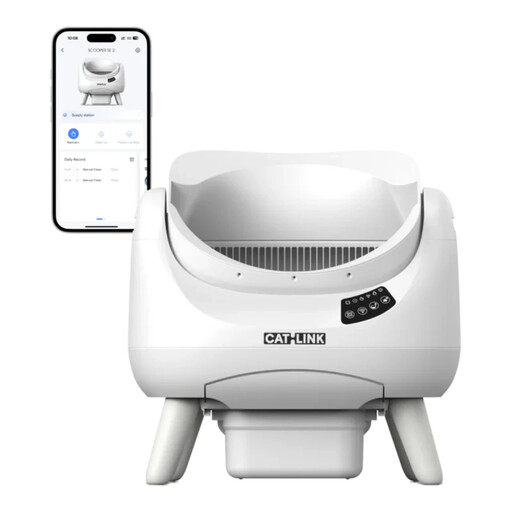
Why this choice suits this profile: Its open design makes it easier for your pet to adapt, while the sealed waste bin is claimed to last up to 15 days without emptying, depending on the number of cats and their usage.
The product page specifies a weight range of 1.5 to 10 kg and compatibility with clumping litter. That makes it easy to check the model suits your cat before you order.
A 12 L waste bin, individual cat identification and tracking claimed for up to 20 cats via the dedicated app.
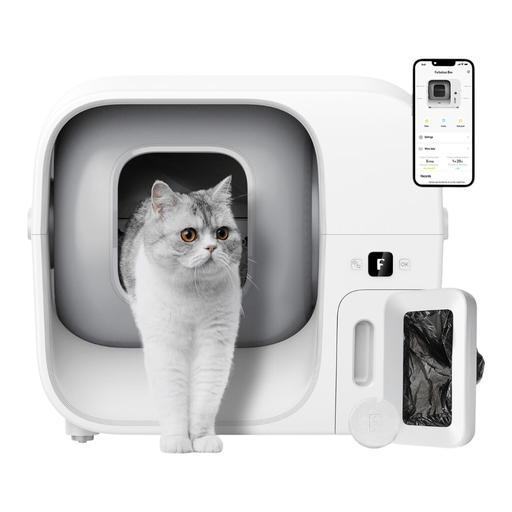
Why this choice suits this profile: With its 60 L volume and automated operation, this model is aimed at households that want to manage waste more easily and control the device remotely.
The product page details the presence of proximity, weight and infrared sensors. The manufacturer also mentions a TÜV Germany safety certification, which you can confirm in the supplied documentation.
Bags are compacted and then automatically refilled. Noise is claimed at up to 37 dB during compaction, with a control app and weight tracking.
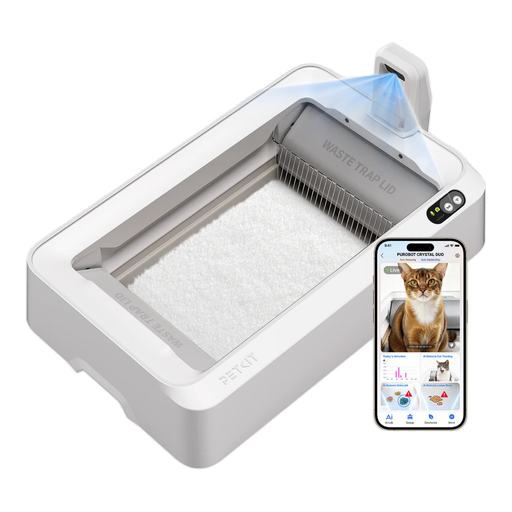
Why this choice suits this profile: This model is for users who are happy to adopt a disposable tray system and want to check usage data from an app.
Compatibility is clearly limited to PETKIT crystal litter and the trays are single-use. These constraints need to be factored into your running costs.
Cleaning claimed for up to 30 days for one cat, built-in camera, four safety sensors and tracking of urinary habits in the app.
We’ve put together a full list, updated in real time, of products that meet these demanding selection criteria and European safety regulations.
No. Some models accept clumping litter, while others require crystal litter or a proprietary consumable. Check this information on the product page before you start using it.
It all depends on the type of litter, how often you replace bags or disposable trays, the cost of filters and the electricity consumption. To get a realistic estimate, add up the cost of the necessary consumables over a month, taking into account the number of cats.
No. Tracking weight, how often your cat visits the tray or their urinary habits can help you notice a change, but it is not a diagnosis. If a change in behaviour or elimination persists, ask your vet for advice.