
Livraison le jour même ou le lendemain

Qualité garantie

Débloquez vos offres de bienvenue: Livraison GRATUITE | Jusqu'à -80 % | 30 jours d'essai gratuits à JoyPlus
Téléchargez l'application
An automatic self-cleaning cat litter box can save you from daily scooping and make life easier in a multi-pet household. But not all models are created equal, and more importantly, they don’t all meet the same needs. A unit that’s too narrow, an app that’s incompatible with your Wi-Fi network, or a waste drawer that’s too small can quickly turn a great idea into an extra hassle.
Before comparing models, here are the most common pitfalls and the criteria you need to examine.
A large drum doesn’t necessarily guarantee long autonomy. You need to distinguish between several figures:
For a single cat, a waste drawer of 7 to 12 litres may be sufficient depending on usage. For a self-cleaning litter box for multiple cats, it’s better to choose a larger container and check the manufacturer’s specifications. The claimed autonomy, sometimes 15 or 17 days, varies depending on the number of cats, their weight and the amount of litter used.
Odour management depends on several factors: the seal of the drawer, the closure of the bag, ventilation, the type of litter and how often it’s replaced. An odour-control litter tray therefore doesn’t eliminate the need for regular maintenance.
Systems with a closed compartment or sealed bag generally limit contact with waste. However, you still need to check the seals, clean the surfaces and replace consumables according to the instructions in the manual.
Some automatic models reject non-clumping litters, crystals or certain grain sizes. Others accept bentonite, mixed litters or tofu litter. The minimum weight also matters: with a kitten under 1.5 kg, some sensors may lack accuracy.
For an older cat, a large breed or a short-legged animal, measure the height of the entrance and the interior space before placing your order.
A large-capacity litter tray must offer enough space for your cat without becoming impossible to fit in your home. Measure the available area and allow enough clearance to open the drawer and remove removable parts.
As a guide, the models featured here offer an interior volume between 60 and 106 litres. This figure doesn’t replace the external dimensions. A low entrance or a ramp can also help an older, timid or small cat adapt.
Choose a safe litter tray equipped with weight, presence or proximity sensors, as well as an automatic stop when the cat approaches. For the sensors to work correctly, the base must be installed on a hard, flat and stable floor.
These devices don’t replace the need to supervise the unit during the first few uses. Cables must remain out of reach of the animal, and the electronic base must never be immersed.
A connected litter tray can offer remote control, alerts when the tray is full, a history of visits or even weight tracking. However, check compatibility with your home network: several models only work on 2.4 GHz Wi-Fi.
Cat health tracking should be considered a record of behaviours — frequency of use, duration or weight — and not a diagnosis. Any unusual or persistent change should prompt you to consult a vet.
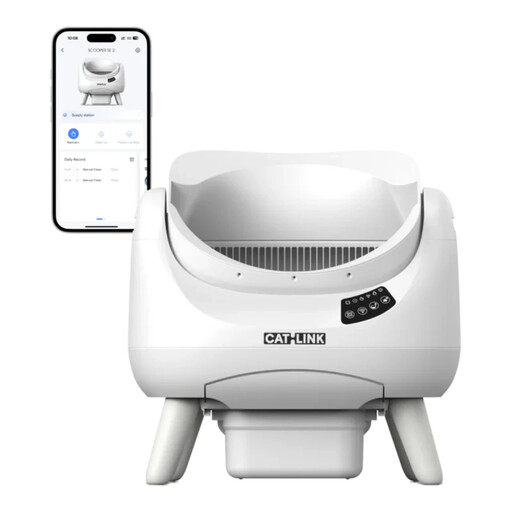
Why this choice suits this profile: Its open design and connected operation make it ideal for people who want to discover automatic litter trays with a relatively simple setup.
The waste drawer capacity is stated at 12 litres, while compatibility with cats weighing 1.5 to 10 kg is clearly specified. However, you must use clumping litter.
Closed 12-litre container, individual identification claimed for up to 20 cats and anti-slip mat included.
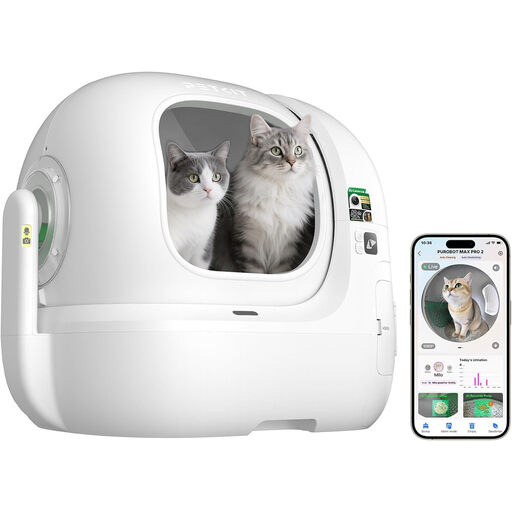
Why this choice suits this profile: Its wide-angle camera, app and 76-litre interior space are aimed at households that want more data and control.
The product page clearly distinguishes the camera, safety sensors, 8-litre waste drawer and compatibility with a 267 mm entrance.
Adjustable camera, privacy mode, multi-cat recognition and noise level claimed at 35 dB.
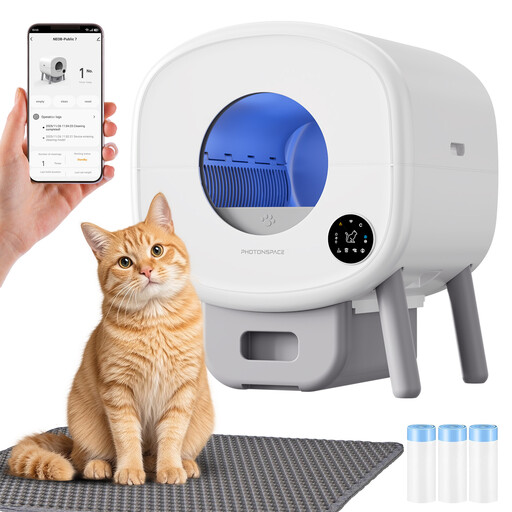
Why this choice suits this profile: Its 95-litre interior space and 15-litre waste drawer are ideal for multi-cat households or large animals.
The manual specifies the required stable surface, compatible litter types and the cat weight limit, set at 9.5 kg.
Large capacity, 2.4 GHz Wi-Fi app, weight sensors and infrared detectors that can pause the cycle when a cat approaches.
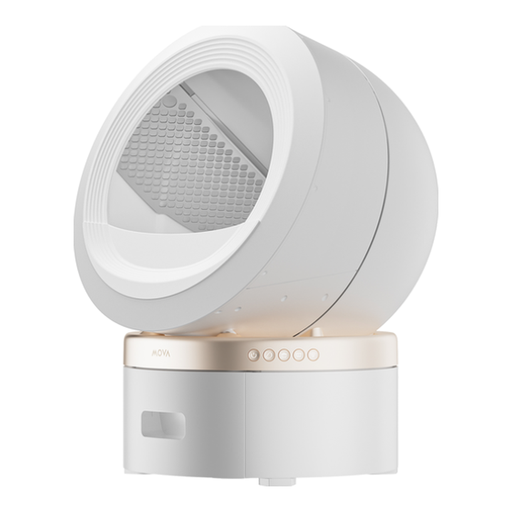
Why this choice suits this profile: Its semi-open entrance, spacious design and remote tracking features can suit a cat that prefers a less confined access.
The external dimensions of 552 × 583 × 764 mm and the 11-litre waste drawer are stated, making it easy to check the available space.
11-litre waste drawer, semi-open design, dual-compartment deodorisation and protection claimed at 12 levels.
We’ve put together a comprehensive list, updated in real time, of products that meet these strict selection criteria and European safety regulations.
To reduce the risk of malfunction with an automatic litter tray:
A no-manual-cleaning litter tray isn’t completely maintenance-free: the drawer, bags, walls and removable parts must stay clean to keep the unit working properly and to minimise odours.
Yes, some models are designed for multi-cat households and have a large interior volume or individual recognition function. However, you’ll need to empty the waste drawer more often than the claimed autonomy for a single cat suggests. Also check that each animal accepts the device.
The budget includes litter, replacement bags or trays, filters and, depending on the model, deodorising refills. Systems that use crystal trays may require specific consumables. Compare the price of refills before paying extra for a connected feature.
It can record data such as weight, frequency of visits or duration of use. A cat litter tray with an app therefore provides useful indicators, but this information does not constitute a medical diagnosis. If you notice any unusual and persistent change, seek advice from a vet.