
Livraison le jour même ou le lendemain

Qualité garantie

Débloquez vos offres de bienvenue: Livraison GRATUITE | Jusqu'à -80 % | 30 jours d'essai gratuits à JoyPlus
Téléchargez l'application
Emptying the litter tray every day quickly becomes a chore, especially in a multi-cat household. A self-cleaning cat litter box can lighten this load thanks to an automatic cleaning cycle, a mobile app or a sealed waste drawer. But not all marketing promises are created equal.
Before buying an automatic cat litter box, make sure to check its compatibility with your pet, the type of litter it accepts and the maintenance requirements. A device that looks appealing on paper may not actually suit your home or your habits.
A large drum does not guarantee several weeks of use. Autonomy depends on the number of cats, their weight, the amount of litter used and the capacity of the waste drawer. With three cats, the reservoir will fill up much faster than with just one.
So compare separately:
Some devices work with clumping litter, such as bentonite, tofu or certain blends. Others require exclusively mineral crystal litter. Using an incompatible product can disrupt the cleaning cycle, leave residue or accelerate wear and tear on the device.
A litter box with an AI camera may also need specific consumables. Check their availability and price before considering the device as a truly hands-off solution.
Sensors are essential, but their effectiveness also depends on where the device is placed, the stability of the floor and whether the stated weight range is respected. A soft or uneven surface can throw off the readings.
To limit odours, look for concrete features: a sealed drawer, anti-leak seals, a replaceable filter or deodoriser. Results vary depending on the type of litter, the number of cats and how often you empty it.
For a large cat or multiple animals, choose a big automatic litter box with plenty of interior space. The drum diameter and the height of the entrance matter just as much as the stated volume.
The PETKIT PuraMax 2 offers an interior capacity of 76 litres, a waste drawer of 7 litres and an entrance of 20 cm. It is suitable for cats weighing 2 to 8 kg. Meanwhile, the Photonspace XXL provides 95 litres of space and a 15-litre drawer, for animals weighing between 1.5 and 9.5 kg according to the manufacturer.
A safe litter box must stop or prevent the cycle when a cat approaches. Weight sensors, infrared, thermal or anti-pinch sensors can enhance this protection. However, they do not replace the need to follow installation precautions.
Place the device:
Also respect the minimum age and weight stated by the manufacturer. Kittens that are too light may not be detected properly by some sensors.
A connected litter box usually lets you schedule cycles, receive an alert when the drawer is full and track certain usage indicators. Before buying, check Wi-Fi compatibility: many models only work on a 2.4 GHz network, while others also support 5 GHz.
Tracking your cat's weight or how often they use the box can be useful, but these are operational indicators, not a medical diagnosis. If your cat's habits change unusually, consult a vet.
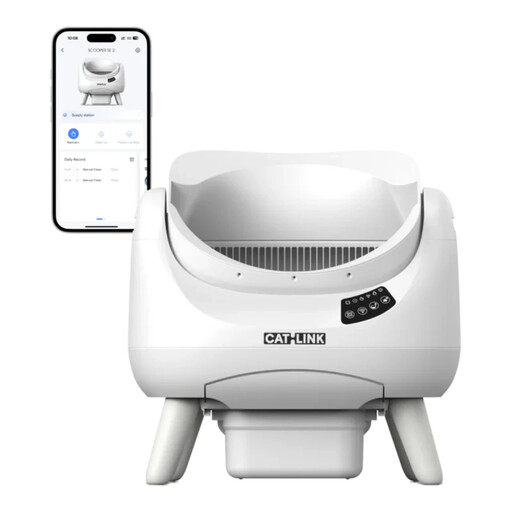
Why this choice suits this profile: With its price tag of 199.99 € and connected operation, this model offers an accessible first step towards reducing daily cleaning.
The sealed 12 L waste drawer limits contact with residue. However, you still need to consider Wi-Fi compatibility and empty the drawer based on actual usage.
Individual identification for up to 20 cats, usage tracking and a stated weight range of 1.5 to 10 kg.
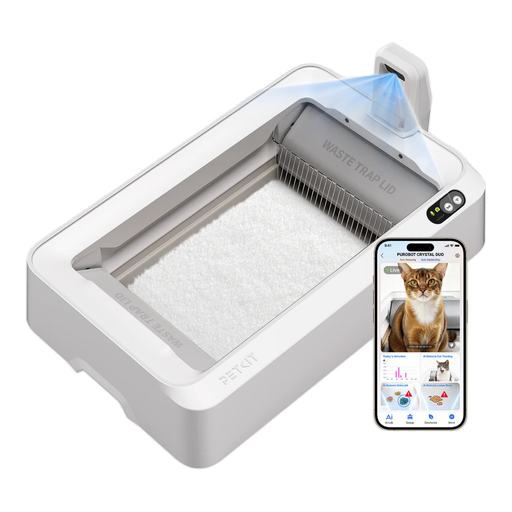
Why this choice suits this profile: This model is aimed at users who want a connected solution with an integrated camera and detailed tracking, provided they are happy with proprietary consumables.
The product page clearly states exclusive compatibility with PETKIT Crystal litter and disposable trays. This constraint must be factored into the running cost.
Integrated AI camera, dual Wi-Fi connectivity and claimed autonomy of up to 30 days for one cat, according to the product page.
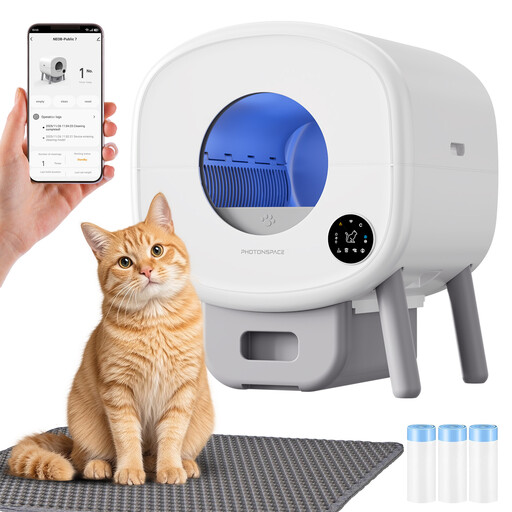
Why this choice suits this profile: Its XXL size is ideal for multi-cat households or large breeds, provided you have enough space for a stable installation.
The 95 L capacity and 15 L drawer clearly separate the litter space from waste storage. However, the model requires clumping litter and a 2.4 GHz Wi-Fi network.
Weight and proximity sensors, dedicated app and sealed waste storage.
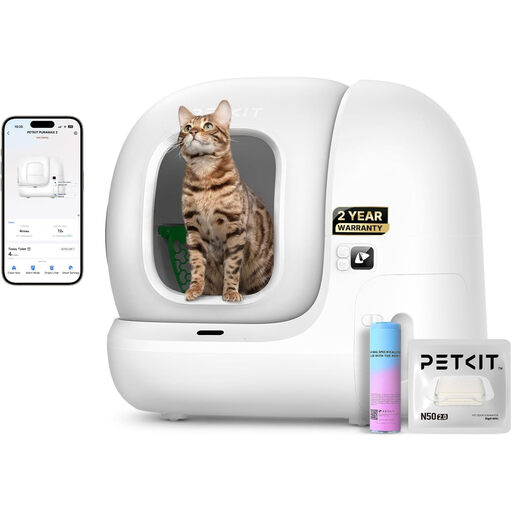
Why this choice suits this profile: It combines a 76 L drum, a mobile app and several cleaning modes to adapt to daily use or a multi-cat home.
The product page specifies the weight range of 2 to 8 kg, use on a flat surface and compatibility with common clumping litters. This information lets you quickly check if the model is suitable before buying.
XSecure sensor system, 7 L drawer and N50 2.0 deodoriser, which the product page claims neutralises up to 98 % of ammonia.
We have put together a comprehensive, real-time updated selection of products that meet these strict criteria as well as European safety requirements.
Yes, some models are designed for multi-cat households, but the claimed autonomy should be taken with a pinch of salt. Check the drawer capacity, the supported weight range and whether each animal can be identified. Even with a connected box, regular emptying is still essential.
Always follow the instructions in the manual. Models like the PETKIT PuraMax 2 accept several clumping litters, while the PETKIT PUROBOT CRYSTAL DUO works exclusively with PETKIT Crystal crystals. Do not mix different types of litter without the manufacturer's explicit approval.
The cost includes bags, filters or deodorisers, any disposable trays and compatible litter. To estimate the real budget, compare the price of consumables over several months rather than just the purchase price. Also plan for regular manual maintenance to keep the device hygienic and working properly.