
Livraison le jour même ou le lendemain

Qualité garantie

Débloquez vos offres de bienvenue: Livraison GRATUITE | Jusqu'à -80 % | 30 jours d'essai gratuits à JoyPlus
Téléchargez l'application
Scooping the litter box every day is a chore most cat owners would gladly do without. The promise of a self-cleaning cat litter box? To make that thankless task a distant memory. However, the market is flooded with models making tempting promises, and it's easy to end up with a device that complicates your life more than it simplifies it.
To avoid a costly disappointment, let's review the most common pitfalls and the criteria that truly make a difference.
To make the right choice, focus on the features that truly matter day-to-day: your pet's safety, ease of use, and your home's hygiene.
Your cat's safety is non-negotiable. A good self-cleaning litter box must incorporate multiple layers of protection to prevent any accidents. Look for a multi-layered safety system:
Size matters, especially if you have multiple cats or a large breed like a Maine Coon. There are two elements to consider:
An automatic litter box must, above all, be easy to maintain. The drum (or globe) should be easily detachable from the base for a thorough cleaning with water. The base, which houses the electronics, should never be submerged and only requires a wipe with a damp cloth.
Also, remember to check for compatibility with different types of litter. Most models are optimized for clumping litter (clay, corn, tofu...). Silica crystal or non-clumping litters are often not recommended, as the sifting mechanism is not designed for them.
To help you decide, here are a few models that check all the boxes, each tailored to a specific need.
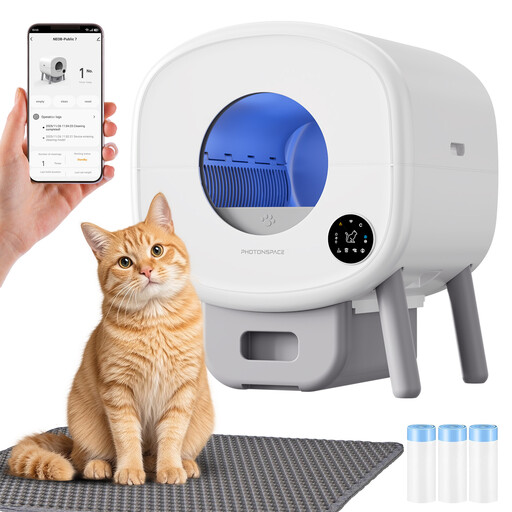
Why this model stands out: Specifically designed for households with multiple cats or large breeds, this model combines an XXL interior space with a very large waste drawer to maximize the time between disposals.
Its 15L waste drawer provides up to 15 days of autonomy for one cat, a direct solution to the problem of frequent emptying in multi-pet homes.
XXL Capacity: A 95L interior and a 15L waste drawer. Enhanced Safety: Equipped with weight and infrared sensors for maximum protection.
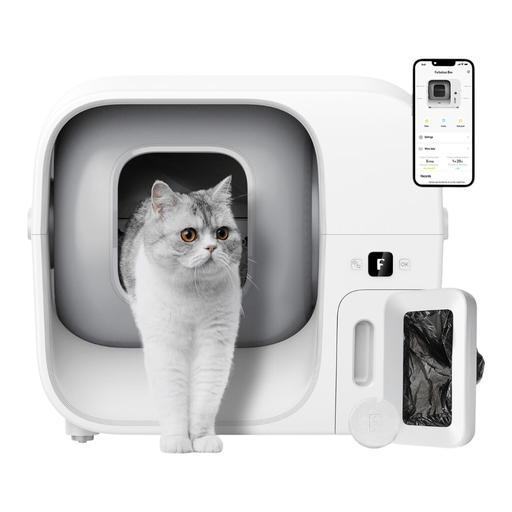
Why this model stands out: For those who dream of a truly 'zero-contact' experience, this model goes a step further: it automatically seals the full waste bag and replaces it with a new one.
It tackles the problem of odors and waste handling head-on. Its system hermetically seals each bag, blocking any odor leakage and eliminating all contact with the waste.
Automatic Bagging: Seals the waste and positions a new bag, a uniquely hygienic solution on the market. Quiet Operation: Advertised at just 37 dB.
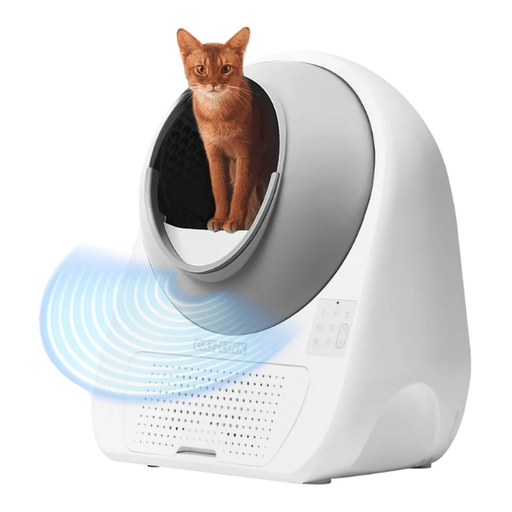
Why this model stands out: Perfect for tech-savvy owners who want to keep an eye on their companion's health. The dedicated app provides precise tracking of weight and visit frequency.
It goes beyond simple cleaning to become a connected health log. Its safety system combines radar, infrared, and weight sensors for maximum reliability.
App-Based Health Tracking: Monitors weight, duration, and frequency of use. High-Tech Deodorization: Combines a carbon filter and an ion generator to neutralize odors at the source.
We have curated a complete selection of automatic litter boxes that meet our selection criteria and European safety standards.
Most manufacturers advise against using automatic mode for kittens under 6 months old or weighing less than 1.5 kg (approx. 3.3 lbs), as the weight sensors may not detect them. For younger cats, it's best to keep the device in manual mode and start the cleaning cycles yourself, under supervision, until your kitten reaches the minimum required weight.
The adjustment period varies greatly from one cat to another. Some adapt in a few hours, while others may take several weeks. To ease the transition, place the new robot litter box next to the old one without plugging it in. Add a scoop of their used (but clean) litter to the new box to add a familiar scent. Once your cat starts using it, you can remove the old box and activate the automatic mode.
Beyond the initial investment, the running cost mainly involves consumables. You should budget for: