
Livraison le jour même ou le lendemain

Qualité garantie

Débloquez vos offres de bienvenue: Livraison GRATUITE | Jusqu'à -80 % | 30 jours d'essai gratuits à JoyPlus
Téléchargez l'application
Self-adhesive mirror mosaic tiles make it quick and easy to refresh a frame, wall, object or stage set. Applying them may seem straightforward, but certain details can complicate your project: adhesive that comes loose, insufficient quantities, uneven reflections or pieces that are too fragile to handle.
Before buying a silver mirror mosaic, it is therefore worth checking its material, packaging and compatibility with the surface. Here are the criteria to review when choosing DIY self-adhesive mirrors for domestic, creative or stage-design projects.
Some small decorative tiles are made from metallised plastic or acrylic. Although lighter, they do not necessarily provide the same reflection or appearance as a glass mirror tile. When making a DIY disco ball or decorating a lit stage, consistent reflections make all the difference.
The product listing should clearly state which material is used. The words ‘mirrored glass’ are far more informative than a vague promise of a shiny effect. Also remember to check the dimensions of each tile, not just those of the roll or pack.
Small formats are handy for following curves and filling narrow spaces, but their coverage remains limited. A single roll can quickly prove insufficient for a large mirror frame, wall panel or several objects.
To avoid running out of material, measure the surface to be covered, allow for cuts and include some extra for lost pieces or alignment mistakes. A pack containing several rolls is particularly practical for projects involving numerous elements.
A self-adhesive backing does not remove the need to prepare the surface properly. Dust, grease, moisture, flaky paint or a heavily textured surface can significantly reduce adhesion. Damp walls, textiles and surfaces exposed to substantial temperature changes require particular care.
Test the product on a small area before applying your entire mirrored wall decoration. For a permanent installation or one accessible to the public, check regularly that the tiles remain securely in place.
Glass provides a clear reflection, but it must be handled with care. Smoothed edges make the tiles easier to pick up, but do not eliminate the risk of cuts if a tile breaks. Wear thin gloves while sorting the tiles and keep them out of reach of children and pets.
The presence of glass does not automatically mean that the product is suitable for every installation. For stage decoration, a shop window or an event, check the venue’s rules, the strength of the surface and the distance from the public.
Square tiles are suitable for regular patterns, frames and flat surfaces. Small elements are also useful for cards, creative albums, decorative collages and craft projects. On a rounded surface, work in small sections and maintain an even gap between the rows if this is part of the design.
Always compare the actual tile size with your project’s requirements. A format that is too large may create gaps around curves, while a very small format will significantly increase application time.
Before applying the tiles:
Avoid touching the adhesive surface with your fingers. If the surface is porous, pre-treatment may be necessary. On a painted wall, make sure the paint is properly adhered and can withstand the possible removal of the tiles.
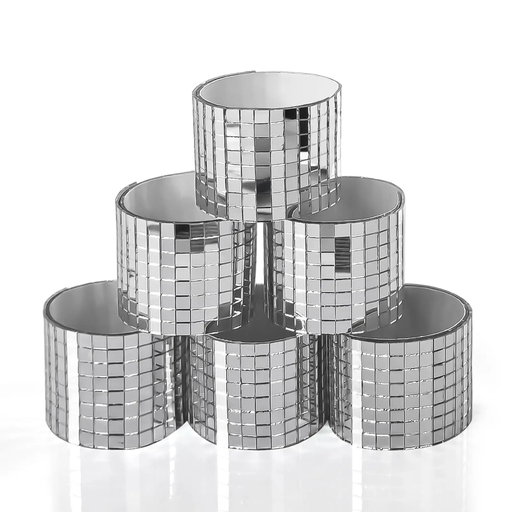
Why this choice suits this profile : The roll format lets you start with a small frame, card or decorative object, then move on to other creations without switching products.
The listing specifies that these are made from glass, have smoothed edges and feature a self-adhesive backing. You can therefore check the product’s characteristics before buying, rather than relying solely on the photograph.
The pack contains 6 rolls, with 2 364 pieces in total. Each roll measures 25.5 cm × 4 cm.
Why this choice suits this profile : The glass tiles and silver finish are ideal for projects where visual impact and consistent reflections are the top priorities.
The description distinguishes mirrored glass from a simple decorative coating and states that the edges are smoothed. The tiles must nevertheless be handled carefully.
The square pieces fit easily into frames, collages, ceilings, shop windows and decorative arrangements.
Why this choice suits this profile : This large quantity meets the needs of event decorators, artists and workshops creating several surfaces or stage sets.
The pack of 6 rolls reduces the risk of running out of pieces during your project. In a venue open to the public, also plan regular checks of the fixing and safety.
The self-adhesive backing means there is no need to buy glue separately. Suggested uses range from DIY disco balls to frames, walls, shop windows and stage props.
The lifespan of a decorative application depends on the surface, temperature, humidity and how often it is handled. Avoid applying the tiles near a significant heat source or in an area regularly exposed to condensation.
For cleaning, use a soft, dry or barely damp cloth. Avoid abrasive products, solvents and liquids that could seep between the pieces. If a tile comes loose, remove any adhesive residue before replacing it to maintain a completely flat surface.
Yes, provided that the paint is dry, clean, smooth and firmly adhered. First test the product in an inconspicuous area to check adhesion and assess the risk of pulling the paint away when the tiles are eventually removed.
They can be used for this type of craft project, provided that you work on a rigid, clean and properly prepared surface. Work in small areas and handle the pieces with gloves. For a suspended installation, also secure the supporting structure.
There is no universal lifespan. It varies according to the surface, preparation and room conditions. A dry, degreased surface, consistent pressure during application and regular inspections all help to reduce the risk of tiles coming loose.